XCT Insights
Stay Updated
Fullerene research, applications and company updates, delivered occasionally.
Latest from XCT
View all
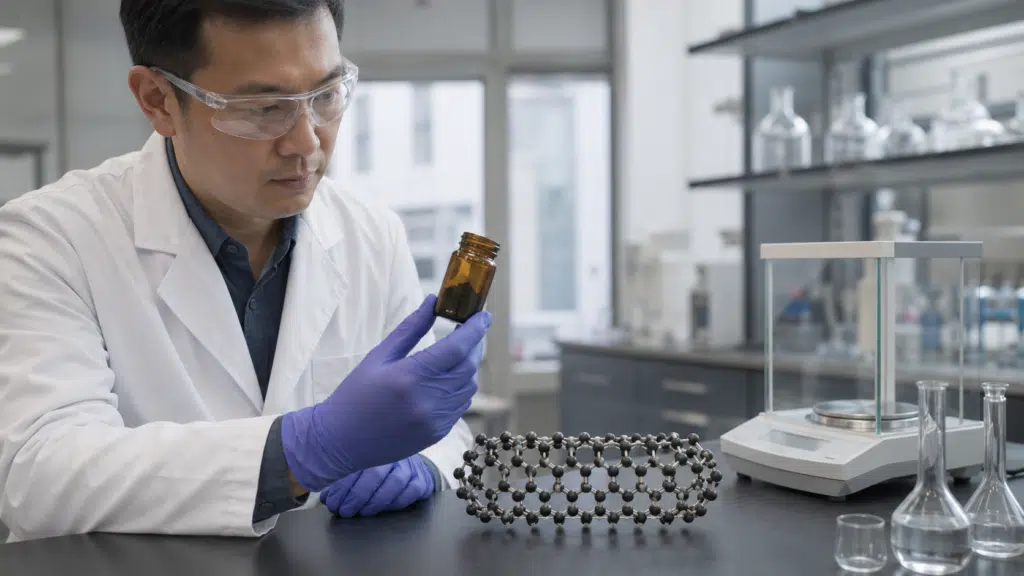
Selecting a Fullerene C70 supplier requires more than comparing a purity percentage and a price per gram. C70 is a defined molecular carbon cage, but commercial powders can differ in fullerene composition, residual processing materials, analytical documentation, batch scale and suitability for the buyer’s experiment.
A useful supplier evaluation begins with the intended application. A laboratory developing a C70 derivative, a team depositing organic electronic films and a distributor qualifying material for resale do not necessarily need the same evidence. The buyer should define which attributes could change the result, then ask the supplier for data that address those attributes.
This guide explains how to confirm material identity, interpret purity claims, compare quotations and prepare an RFQ that a Fullerene C70 supplier can answer accurately.
Pristine C70 consists of seventy carbon atoms in a closed cage. The commonly isolated molecule has an elongated geometry and lower symmetry than C60. Its formula is C70, its CAS Registry Number is 115383-22-7, and its molar mass is approximately 840.75–840.78 g mol−1, depending on the atomic weights and rounding convention used.12
These identifiers distinguish pristine C70 from C60, mixed fullerenes, functionalized C70 derivatives, endohedral fullerenes and fullerene-containing formulations. A listing that says only “fullerene powder” is therefore insufficient for a C70 purchase.
Before requesting a quotation, confirm:
If a project requires a derivative, the buyer should specify the complete chemical identity rather than assuming that a pristine C70 supplier also supplies the required functionalized material.
C60 and C70 belong to the same fullerene family, but they are not interchangeable grades of one product. C60 contains sixty carbon atoms and has a highly symmetrical, nearly spherical cage. C70 contains ten additional carbon atoms and has an elongated cage with more symmetry-distinct carbon environments.
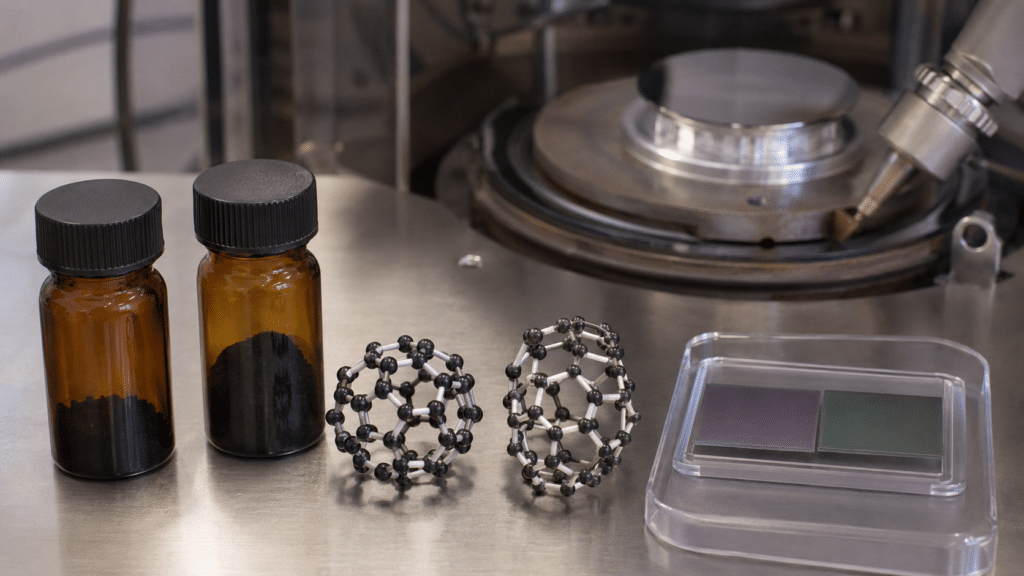
This difference affects molecular mass, optical absorption, chromatographic behavior, NMR spectra, film formation and the chemistry of derivatives. It also affects how a laboratory confirms identity. Under appropriate solution-state conditions, pristine C60 produces one symmetry-equivalent carbon environment in its 13C NMR spectrum, whereas C70 produces five.3
A buyer should therefore avoid substituting C60 for C70 solely because C60 is less expensive or more readily available. The correct choice depends on the experimental architecture, optical range, electron-accepting material system, deposition process or synthetic target. See XCT’s introduction to Fullerene C70 for the underlying structural distinction.
A reported percentage becomes meaningful only when it is connected to a method and calculation basis. “99% C70 by HPLC area” describes the relative detector response assigned to C70 among the peaks included in a defined chromatographic calculation. It is more informative than an unqualified statement such as “99% pure,” but it does not automatically describe every component in the powder.
HPLC is well suited to separating soluble fullerene species such as C60, C70 and selected higher fullerenes when the column, mobile phase and detector are appropriate. The result depends on sample dissolution, column selectivity, detector wavelength, integration rules and response differences between compounds.
A chromatographic percentage may not account for material that does not dissolve, does not pass through the selected system, co-elutes with another component or responds weakly at the detection wavelength. Residual solvents, water, elemental residues and insoluble carbonaceous material may require other methods.
When comparing two suppliers, request enough method context to determine whether their percentages are comparable:
The detailed C70 characterization guide explains the analytical scope of HPLC, UV–Vis, mass spectrometry and 13C NMR.
No single analytical method answers every procurement question. Instead of requesting every available test, identify which possible variation would disrupt the intended work.

HPLC is relevant when C60, higher fullerenes or other soluble fullerene components could complicate a reaction, optical measurement or device formulation. The report should connect the percentage to the actual method rather than present a number without conditions.
Mass spectrometry can support the presence of a molecular species with the expected C70 mass and isotope distribution. It does not, by itself, establish the bulk concentration of every impurity in the supplied powder.
UV–visible spectroscopy can provide a useful optical fingerprint when solvent, concentration, path length and instrument conditions are stated. It is particularly relevant when the buyer will use C70 in an optical or solution-processing experiment. A visible solution color is not a substitute for a recorded spectrum.
Solution-state 13C NMR can support the expected carbon environments of pristine C70 when the sample is sufficiently concentrated and suitably prepared. For derivative synthesis, NMR and mass spectrometry can also help distinguish the starting cage from functionalized products, although the appropriate evidence depends on the derivative.
Residual-solvent analysis may be relevant when volatile processing residues could affect weighing, solution preparation, thin-film deposition or reaction stoichiometry. Elemental analysis may be useful when a specified element could influence a sensitive electronic, catalytic or redox system. Thermal or solid-state methods should be requested only when they answer a defined project question.
A supplier may provide an example Certificate of Analysis during initial evaluation. That document can show the format and usual test panel, but purchase approval should be based on the documentation associated with the batch offered or shipped.
A useful batch-specific COA should identify the product, batch or lot, test items, methods or method references, results, specifications or acceptance criteria, test date and approving organization. The buyer should be able to connect the batch number on the document with the material received.
Check whether the reported purity refers specifically to C70 by the stated method. Also determine whether appearance, identity, moisture, residual solvent or elemental results are measured for that batch or merely reproduced as generic product statements.
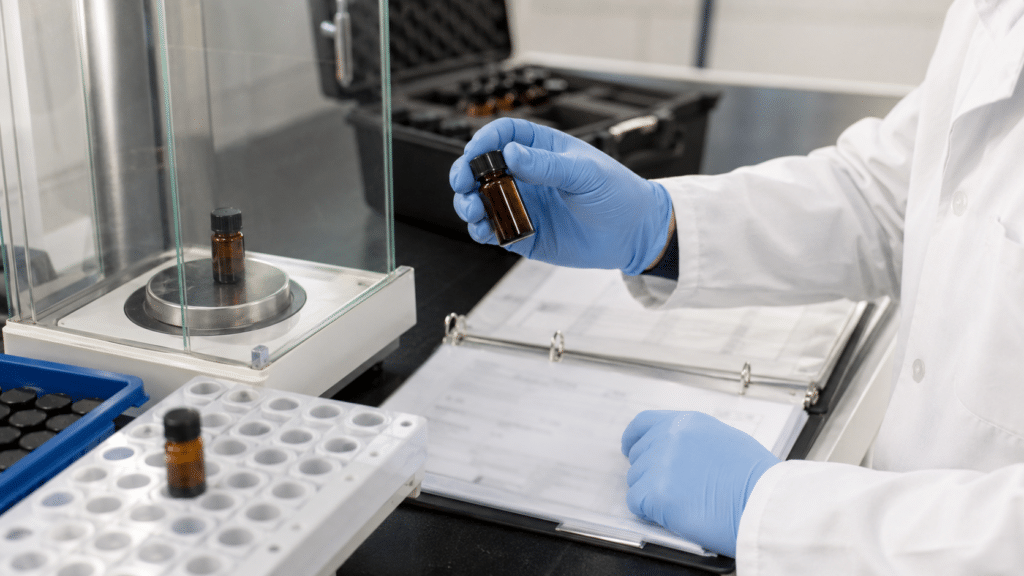
An SDS serves a different function. It communicates handling, storage, exposure and emergency information; it is not a certificate of molecular purity. OSHA describes the standardized SDS sections used to communicate chemical-hazard information.4 Procurement and EHS teams should review the current document before handling and transport decisions.
For organic electronic or photovoltaic research, the buyer may need to consider fullerene composition, residual processing materials, solution preparation, filtration behavior and film reproducibility. A high HPLC percentage is useful, but the process team should identify which material variables have previously affected coating, evaporation or device fabrication.
For functionalization, fullerene-related impurities can create additional reaction products that complicate purification. Residual solvent or moisture may also change weighing and reagent stoichiometry. The appropriate starting-material evidence should be chosen according to the reaction conditions and purification plan.
Optical experiments require control over solvent, concentration and aggregation as well as material identity. If the supplier provides a UV–Vis spectrum, compare it only with spectra recorded under compatible conditions.
A chemical distributor normally needs stable product identity, repeatable documentation, defined packaging, traceable lots and a clear change-notification process. The distributor should confirm whether the supplier can provide the same agreed specification across subsequent orders rather than judging only one sample.
C70 prices vary with purity grade, order quantity, batch availability, analytical requirements, packaging, destination and commercial terms. Public listings also use different units and package sizes. A low headline price may refer to a lower grade, a larger minimum quantity or a product without the documentation required by the buyer’s quality system.
Normalize quotations before comparing them. Each offer should refer to the same product identity, purity basis, quantity, documentation package, packaging format, delivery term and destination. Separate the material price from analytical surcharges, packaging, freight, taxes and import costs where possible.
XCT’s current Fullerene C70 product page provides available product information and reference price factors. A formal quotation should still be requested for the required batch, quantity and destination.
A sample order should test the material attribute that matters to the project. Simply confirming that the powder arrived does not qualify the material for a reaction or device process.
Record the sample batch, analytical documents, preparation procedure and application result. If the project proceeds to a larger order, ask whether the production batch will use the same specification and whether a new batch-specific COA will be supplied.
For ongoing programs, discuss:
Do not convert a supplier’s general capacity statement into an assumed delivery commitment. Quantity, batch availability and lead time should be confirmed for each quotation.
C70 should be protected from contamination and unnecessary exposure to light or moisture during storage and transport. Packaging requirements depend on quantity, handling workflow and destination. Small research quantities may require an amber vial or other light-shielding primary container, secure closure, secondary containment and protective cushioning.
Before shipment, confirm the package size, primary-container material, closure, number of containers, batch labeling and whether the packaging allows the laboratory to remove material without contaminating the remaining quantity.
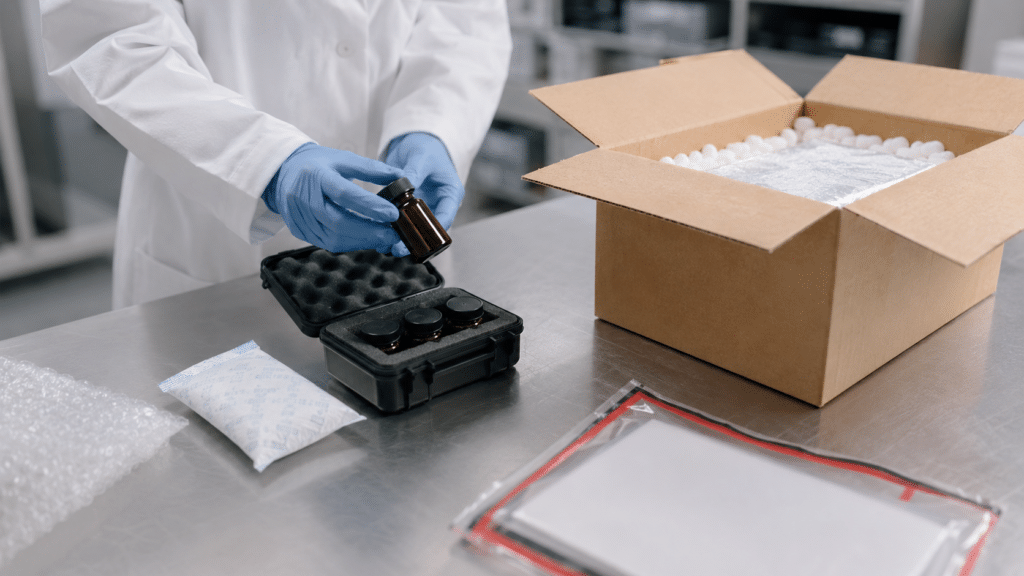
International buyers should also confirm the commercial invoice, packing list, COA, SDS and any destination-specific information requested by their customs broker or institutional compliance team. Customs classification and import requirements should be checked for the actual product form and destination; they should not be inferred from another supplier’s shipment.
A precise RFQ reduces unnecessary correspondence and prevents quotations for the wrong material. Include:
XCT supplies Fullerene C70 for research and advanced-material programs. Buyers can submit their C70 requirements for review of available grade, quantity, documentation, packaging and quotation details.
Verify the exact material identity, CAS number, purity method, batch-specific analytical documentation, application-relevant impurity controls, quantity, packaging, destination and commercial terms.
Not necessarily. An HPLC area percentage describes the detector response assigned to C70 relative to the integrated components under the stated method. Insoluble, nonresponsive, volatile or co-eluting components may require other analytical methods.
No. C60 and C70 have different molecular identities, analytical fingerprints and application behavior. A supplier should provide a C70-specific specification and supporting evidence.
The appropriate package commonly includes a batch-specific COA and a current SDS, together with commercial and shipping documents required for the destination. Additional analytical files should be selected according to the application risk.
State the exact product, target purity and analytical basis, quantity, application, required documents, packaging preference, destination and any impurity or testing requirements that affect acceptance.
For B2B procurement of Fullerene C70, 99.90% Purity, No metallic residue, buyers should confirm target purity, required quantity, application, destination country, COA, MSDS/SDS, packaging, storage conditions, and shipping requirements before requesting a formal quotation.

High-purity fullerene C70 is a nanomaterial composed of 70 carbon atoms, forming an elongated, rugby-ball-shaped structure. This molecule belongs to the fullerene…
Request product specifications, batch-specific COA, MSDS/SDS, sample availability, packaging details, and international shipping information before confirming your order.
Request DocumentsSubmit your product, purity, quantity, application, destination country, and documentation requirements. Our team will help confirm availability, COA, MSDS/SDS, packaging, and quotation details.