



Fullerene: The “Black Gold” of Nanotechnology
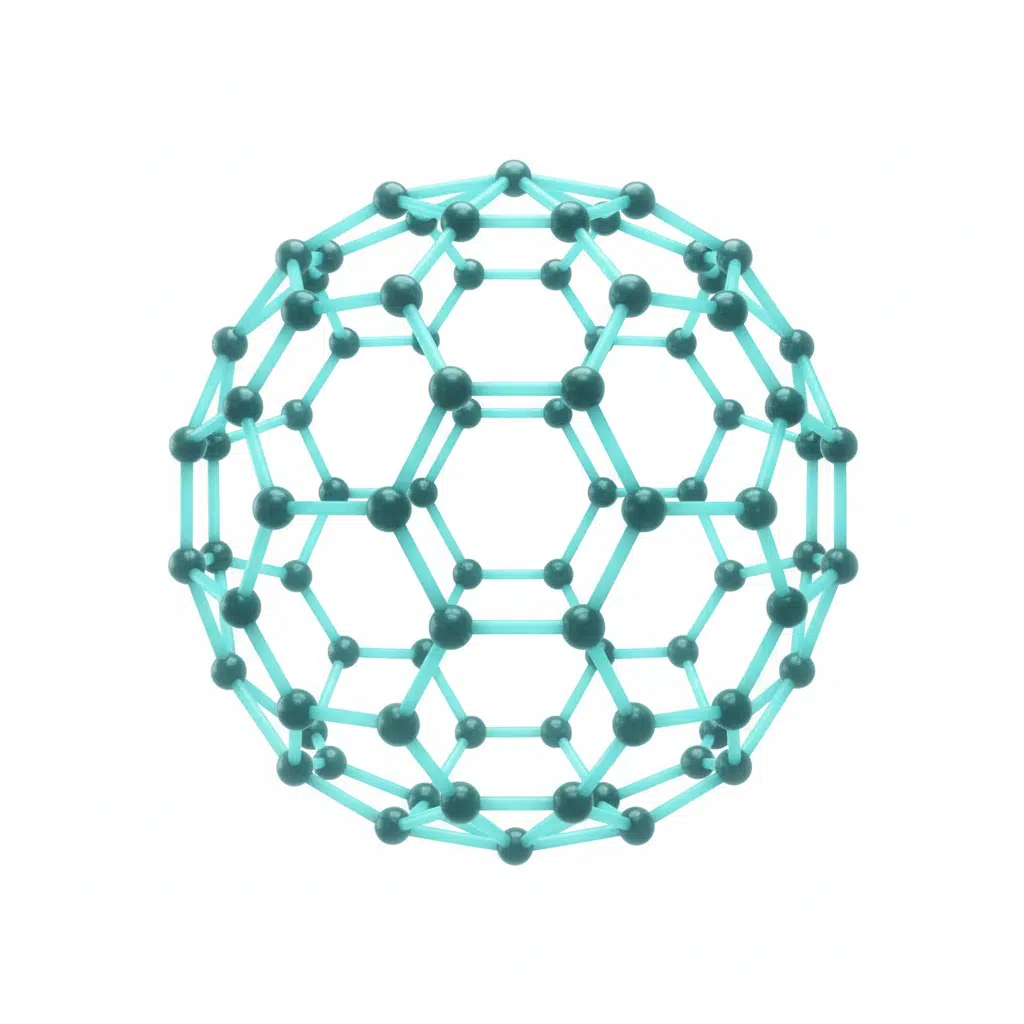
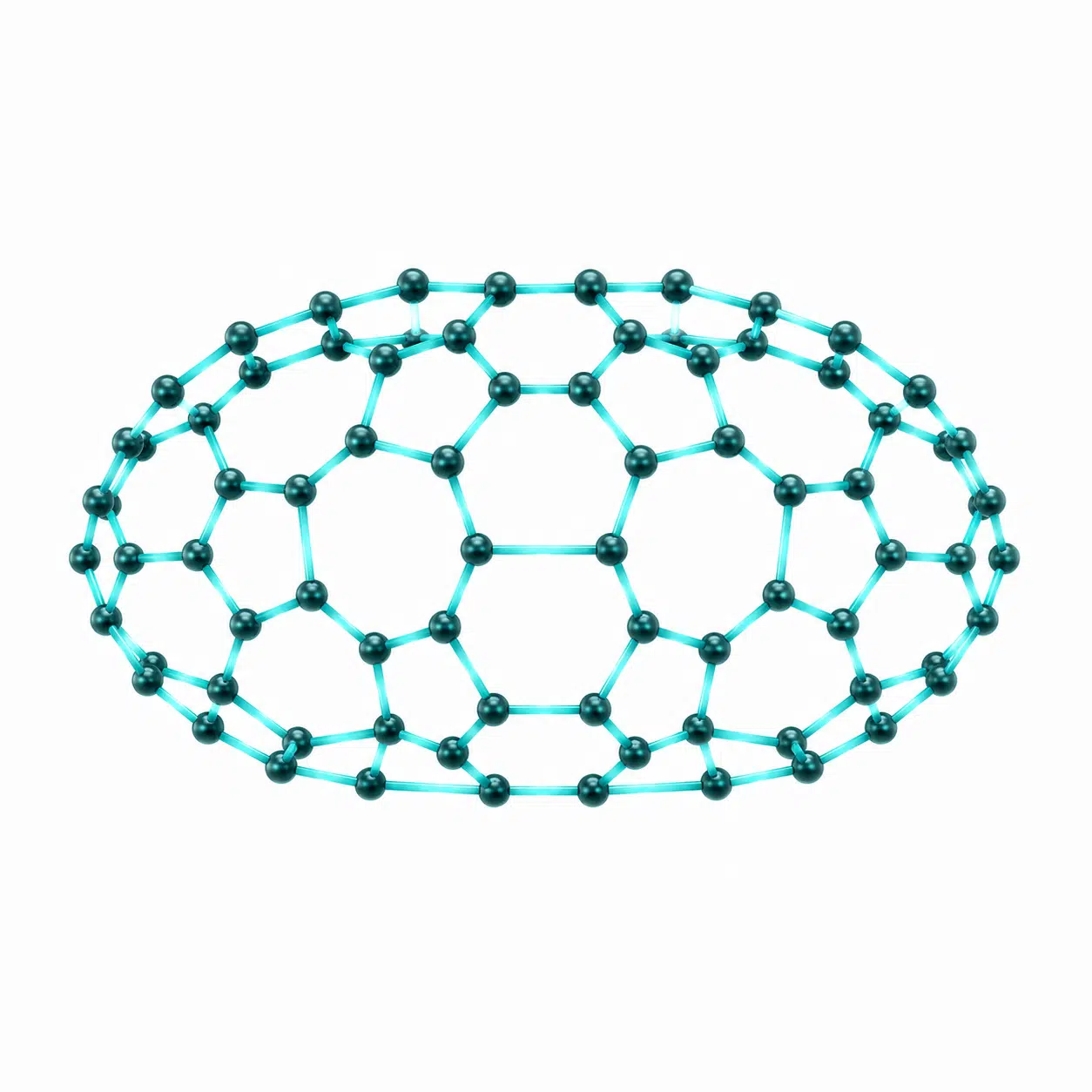
Fullerenes are cage-like molecules composed entirely of carbon atoms. Celebrated as the “Prince of Nanomaterials” for their exquisite symmetry and unique electronic profiles, they serve as a revolutionary cornerstone for the future of advanced materials.
Fullerene Application Frontiers
Empowering Global Industrial Innovation
Chemical Industry
Fullerenes serve as exceptional electron buffers in catalytic processes. Notably, C₆₀ enables ethylene glycol synthesis under mild pressure and enhances ammonia synthesis efficiency by 1.6 to 4.5 times, shattering traditional energy consumption bottlenecks in chemical manufacturing.
Material Science
As a high-performance additive, Fullerenes can reduce friction coefficients by 60%, extending the lifespan of aerospace engines and precision machinery. They are also pivotal in creating high-temperature superconductors and nonlinear optical materials with conductivity 2.3 times higher than traditional alternatives.
New Energy
As a core material for perovskite and flexible solar cells, Fullerenes have boosted photoelectric conversion efficiency from 3.8% to over 24%. In battery technology, they function as high-performance electrode materials and separator coatings, significantly improving cycle life and discharge capacity for Lithium-ion and Solid-state batteries.
Biomedicine
Renowned as the “Nano Prince,” Fullerenes offer antioxidant capacities 125 times greater than Vitamin C, effectively neutralizing free radicals for anti-aging and hair growth. Furthermore, their unique cage structure enables targeted drug delivery for oncology and serves as high-contrast agents for early tumor diagnosis.
Semiconductors
With a molecular size of approximately 1nm, Fullerenes are the premier candidates to replace silicon-based technologies. They are essential for the next generation of micro-nano devices and carbon-based chips, offering faster processing speeds and significantly lower power consumption.
Aerospace
Fullerenes significantly enhance the specific impulse of solid rocket propellants by up to 12% and provide superior thermal protection for spacecraft with coatings resistant to 1800°C. Their ultra-low friction in vacuum environments makes them ideal space-grade lubricants for satellite mechanisms.
Technological Breakthrough & Mass Industrial Production of Fullerenes by Healthyking
Traditional Arc Discharge Method
High Energy Consumption | Low Scalability
Healthyking Continuous Combustion Method
Low Cost | High Efficiency
Chemical Solvent Method
High Residue | Heavy Environmental Impact
Discover Authoritative
Industry Insights
Professor Francesco Paolucci
University of Bologna, Nanoscale, 2017.
The rigid, well-defined 3D structure of the C60 cage provides a unique platform for precise chemical functionalization. Unlike flexible polymers, the C60 framework ensures that the spatial orientation of therapeutic moieties remains fixed, which is critical for consistent biological interactions.
Professor René Janssen
Eindhoven University of Technology, Nature Communications, 2016.
By utilizing fullerene multi-adducts, we can precisely tune the Lowest Unoccupied Molecular Orbital (LUMO) levels to optimize the open-circuit voltage in solar devices. This degree of molecular tunability is a hallmark of fullerene chemistry.
Adapted from Nature, 2015 – 2021
Fullerene C60 is an ideal precursor for synthesizing new carbon materials due to its unique cage structure and high symmetry. The collapse of C60 cages under high pressure and temperature leads to the formation of a new type of ultrahard bulk amorphous carbon that can scratch diamond.
Despite the rise of non-fullerene acceptors, the high electron mobility and deep-lying LUMO levels of fullerenes continue to make them essential components for achieving high fill factors in stable, large-area organic photovoltaic modules.
The observation of superconductivity in alkali-metal-doped C60 remains one of the most intriguing phenomena in molecular solids. The strong electron-phonon coupling and the high symmetry of the C60 molecule are fundamental to the high transition temperatures observed in these systems.
Despite the rise of non-fullerene acceptors, the high electron mobility and deep-lying LUMO levels of fullerenes continue to make them essential components for achieving high fill factors in stable, large-area organic photovoltaic modules.
The observation of superconductivity in alkali-metal-doped C60 remains one of the most intriguing phenomena in molecular solids. The strong electron-phonon coupling and the high symmetry of the C60 molecule are fundamental to the high transition temperatures observed in these systems.