XCT Insights
Stay Updated
Fullerene research, applications and company updates, delivered occasionally.
Latest from XCT
View all

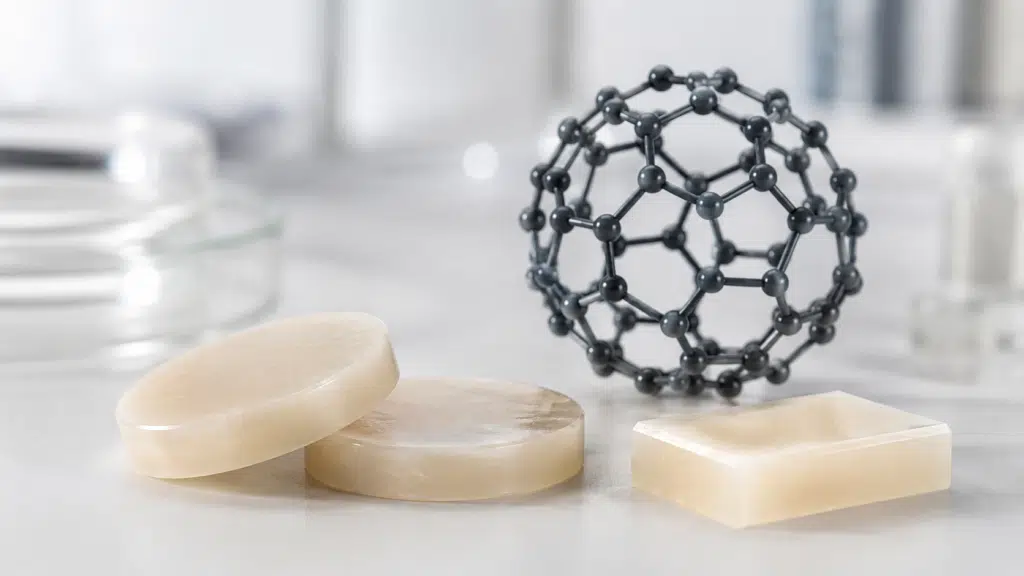
Fullerene C60 in dental materials is an emerging research topic at the intersection of carbon nanotechnology, resin formulation, surface engineering, antibacterial material studies, and dental biomaterials. The interest is understandable: C60 has a nanoscale spherical carbon cage structure, distinctive electronic behavior, and derivative chemistry that may be useful in advanced material systems.
Dental materials are demanding. A restorative resin, adhesive, coating, cement, or implant-related material may need mechanical strength, bonding durability, low water sorption, wear resistance, color stability, cytocompatibility, aging resistance, and regulatory clearance in the target market. Adding C60 creates research possibilities, but it also creates formulation and validation challenges.
A 2026 review in Journal of Materials Science: Materials in Medicine discussed Fullerene C60 in dental materials and summarized its potential relevance in dentistry, including physicochemical behavior, biological research interest, and possible material-system applications.[1] That means C60 is a material worth studying under controlled laboratory and formulation conditions.
Fullerene C60 is a spherical carbon molecule composed of 60 carbon atoms. It is also known as C60 fullerene, Carbon 60, buckminsterfullerene, or Fullerene C₆₀. Its CAS number is 99685-96-8, its molecular formula is C60, and its molecular weight is approximately 720.6 g/mol.[2]
Researchers are interested in C60 because it is not a conventional dental filler. Traditional dental composites often rely on glass fillers, silica, zirconia-containing particles, resin monomers, photoinitiators, silane coupling agents, and stabilizers. C60 adds a different class of material behavior. Its closed carbon cage, electron-accepting properties, surface chemistry, and ability to form derivatives make it relevant to several experimental directions.
In dental materials, the research interest usually falls into four broad areas. The first is resin composite modification, where C60 or C60 derivatives may be studied as nanoscale additives or functional components. The second is coating and surface research, including dental substrate or implant-related surface concepts. The third is antibacterial and biofilm-related material research, especially when C60 is studied under light activation or as part of a broader antimicrobial model. The fourth is antioxidant-related biomaterial research, which must be discussed carefully and kept within research-oriented language.
The central question is not whether C60 is scientifically interesting. It is whether C60 can be integrated into a dental material without damaging the properties that make that material useful. Any additive must be evaluated for its effect on polymerization, viscosity, curing depth, filler loading, bond strength, wear behavior, water sorption, color, translucency, aging, cytocompatibility, and long-term stability.
Fullerene C60 in dental materials is best understood as a research platform rather than a single product category. It may be studied in resin composites, adhesive-related materials, coatings, photodynamic antibacterial systems, and implant-related surface concepts. Each application area has a different technical question.
In dental resin composites, C60 may be evaluated as a nanoscale additive or as part of a modified filler system. A researcher may ask whether it affects surface interaction, mechanical behavior, bacterial adhesion, oxidative stability, or aging performance. But resin composites are complex materials. A change that improves one property may weaken another. A formulation may show promising antibacterial behavior but lose translucency, polishability, flexural strength, or curing depth.
In coating and surface research, fullerene-based systems may be explored for surface modification, interface behavior, or biomaterial response. The 2026 review on Fullerene C60 in dental materials discusses fullerene-related coating concepts and carbon nanocomposite coatings in dental material research.[1] This should be framed as research interest, not as evidence that C60 coatings are commercially approved dental implant coatings.
In antibacterial material research, C60 may be studied because fullerene structures and fullerene derivatives can participate in photochemical and redox-related processes. A 2024 study evaluated NanoCare, UV-activated Fullerene C60, and Morinda oleifera against Streptococcus mutans, while also examining bond integrity of composite resin to caries-affected dentin.[3] This is relevant to dental material developers because it connects antibacterial testing with a restorative-material question. It does not justify a broad claim that every C60-containing dental resin is antibacterial or clinically protective.
For dental material developers, the useful conclusion is narrow but important: C60 may be worth studying, but the final material system must prove its own performance under defined test conditions.
Resin composites are among the most important areas for dental material innovation, but they are also unforgiving formulation systems. A composite must balance handling, light curing, mechanical performance, wear behavior, esthetics, water behavior, and biological response.
Adding Fullerene C60 may influence several of these properties at once. If C60 disperses poorly, it may form agglomerates inside the resin matrix. Agglomeration can create weak points, inconsistent optical behavior, and unreliable test results. A material that looks uniformly mixed in a vial may still show microscopic clustering after curing.
Photopolymerization is another concern. Dental resin composites often depend on controlled light curing. If C60 absorbs or scatters light in the curing range, it may affect curing depth, degree of conversion, or final mechanical performance. This does not mean C60 cannot be studied in light-cured systems. It means the curing behavior must be tested rather than assumed.
Color and translucency are also practical constraints. Fullerene C60 is not a colorless additive. If it darkens the material or reduces translucency, it may be unsuitable for highly esthetic visible restorations. It might still be considered in non-esthetic experimental systems, coatings, liners, or research formulations where optical appearance is less critical. The correct conclusion depends on actual formulation data.
Mechanical performance must be evaluated as a complete system. Flexural strength, compressive behavior, wear resistance, surface roughness, polishability, water sorption, and aging response should all be tested when the formulation moves beyond early screening. C60 should not be marketed as automatically strengthening dental resin unless the finished material has data supporting that claim.
Dental adhesive research introduces a different set of challenges. Adhesion to enamel or dentin depends on surface preparation, monomer chemistry, solvent behavior, moisture control, hybrid layer formation, polymerization, and aging. A small additive can influence several of these variables.
If C60 is introduced into an adhesive, primer, or interface-modification concept, researchers must ask practical questions. Does it disperse in the adhesive system? Does it affect viscosity? Does it interfere with monomer infiltration? Does it change light curing? Does it improve or weaken bond strength after aging? Does it influence the interface under wet conditions?
These questions matter because a dental adhesive is not just a chemical mixture. It is an interface-forming material. A promising molecular property does not automatically translate into durable bonding. The result must be tested through bond strength, nanoleakage, interface morphology, aging, and relevant biological evaluation.
Antibacterial dental restorative materials have been studied for decades. A 2018 review in American Journal of Dentistry noted that many antibacterial agents have been tested in experimental dental formulations, but translation into commercial materials is more limited.[4] This is a useful caution for C60 research. Laboratory activity is only the beginning of the evaluation pathway.
Antibacterial claims are attractive in dental materials because oral biofilms and secondary caries are major concerns in restorative dentistry. But antibacterial claims are also sensitive. They should be tied to defined test conditions and should not be generalized beyond the evidence.
When Fullerene C60 is discussed in antibacterial dental research, the details matter. Was the C60 pristine or functionalized? Was it activated by UV light or another light source? What concentration was used? Which bacterial strain was tested? Was the model planktonic culture, biofilm, dentin, resin, saliva-like medium, or another system? Was bond strength tested at the same time? Was the effect sustained after aging?
The 2024 study involving UV-activated Fullerene C60 and S. mutans is relevant because it evaluated antibacterial activity and bond integrity under a specific experimental design.[3] But it remains a defined study, not a universal claim. It does not prove that C60 prevents tooth decay, eliminates oral bacteria, or guarantees antibacterial dental performance in all formulations.
Responsible language should use phrases such as “studied for antibacterial activity,” “evaluated under light-activated conditions,” “investigated in dental material research,” or “explored for biofilm-related material concepts.” It should avoid phrases such as “prevents tooth decay,” “kills oral bacteria,” “clinically proven dental protection,” or “approved antibacterial dental additive” unless a specific final product has completed the required validation and regulatory review.
Photodynamic concepts require the same discipline. C60 and fullerene derivatives may be investigated under light activation, but dental materials used in the oral environment must be evaluated for realistic activation conditions, material stability, cytocompatibility, mechanical performance, and long-term behavior.
The main challenge with Fullerene C60 in dental materials is not the molecule itself. The challenge is integration. A dental material is a complete formulation, and C60 must work inside that formulation without creating unacceptable trade-offs.
Dispersion is usually the first technical barrier. C60 is generally not water-soluble and is commonly handled in selected organic solvent systems for research purposes. In resin materials, its compatibility depends on the resin matrix, filler system, dispersant strategy, mixing method, particle condition, and concentration. Poor dispersion can lead to inconsistent results.
Compatibility is the second barrier. C60 may interact with photoinitiators, monomers, fillers, coupling agents, or stabilizers. It may influence polymerization kinetics, curing depth, viscosity, or filler packing. These effects may be helpful, neutral, or harmful depending on the system. They must be measured.
Color and translucency are practical barriers. Many restorative dental materials must match natural tooth appearance. If C60 causes visible darkening or optical instability, its use may be limited to research systems, coatings, sub-surface materials, or non-esthetic applications. This is not a failure; it is a formulation boundary.
Durability is the final barrier. Dental materials operate in a wet, mechanically active, temperature-changing environment. A promising initial result must be followed by aging studies, water sorption testing, wear evaluation, bond durability, surface roughness analysis, and biological assessment. C60 should be judged as part of that complete material system.
A practical evaluation pathway should begin with the material system, not with a claim. Researchers should first define whether C60 will be studied in a resin composite, adhesive, coating, photodynamic model, implant-related surface, or another experimental system.
After that, early tests may focus on dispersion, concentration range, solvent compatibility, resin compatibility, curing behavior, and visual appearance. If the material passes early screening, the next stage may examine mechanical behavior, bond performance, surface roughness, aging, water sorption, and biological response.
For antibacterial or photodynamic research, the test model must be defined clearly. Bacterial strain, activation condition, exposure time, medium, substrate, aging condition, and control group all affect interpretation. The result should be reported as a result under those conditions, not as a broad clinical conclusion.
For projects moving closer to commercialization, regulatory and application-specific requirements become much stricter. A research additive does not become a dental-grade ingredient merely because it has interesting laboratory behavior. Market-specific review, finished-product testing, and regulatory documentation are required before any clinical or consumer-facing claims can be made.
If you are evaluating Fullerene C60 for dental material research, define the material system first. A resin composite project, adhesive interface project, coating study, and antibacterial photodynamic model may require different C60 forms, dispersion strategies, and test methods.
For general research reference, you may review Fullerene C60 product information or contact The Fullerene to discuss material identity, purity options, sample availability, and technical documentation.
Fullerene C60 is studied in dental material research, including resin composites, coatings, antibacterial systems, and related biomaterial concepts. It should be described as a research material unless a specific final product has completed the required testing and regulatory review.
C60 has been investigated in antibacterial dental research, including studies involving UV-activated Fullerene C60 against Streptococcus mutans.[3] However, this does not mean every C60-containing resin is antibacterial. Antibacterial behavior must be tested in the actual formulation under defined conditions.
No unsupported claim should be made that C60 prevents tooth decay. Dental caries prevention is a clinical and regulatory claim. C60 may be studied in antibacterial or biofilm-related material research, but final claims require appropriate product-level evidence and regulatory review.
C60 may be studied in resin composites, dental adhesives, coating systems, implant-related surface materials, photodynamic antibacterial systems, and experimental nanocomposites. Suitability depends on formulation compatibility and test results.
The main challenges include dispersion, resin compatibility, curing behavior, color change, translucency, mechanical performance, aging behavior, and cytocompatibility. C60 must be evaluated as part of a complete dental material formulation.
Only if verified documentation supports that specific claim in the target market. Without such documentation, C60 should be described as a research or industrial material for dental material development, not as a certified dental-grade ingredient.
[1] R. Ghanipour et al., “Fullerene C60 in dental materials: a comprehensive review of carbon nanotechnology applications and future prospects,” Journal of Materials Science: Materials in Medicine, 2026. The review discusses Fullerene C60 properties and potential research applications in dental material systems. Source
[2] Ossila, “C60 Buckminsterfullerene.” The page identifies C60 fullerene as Carbon 60 / buckminsterfullerene with CAS number 99685-96-8 and describes its 60-carbon spherical structure. Source
[3] Y. F. AlFawaz et al., “Antibacterial efficacy of NanoCare, Fullerene (C60) activated by UV light, and Morinda Oleifera against S. Mutans and bond integrity of composite resin to caries affected dentin,” Photodiagnosis and Photodynamic Therapy, 2024. The study evaluated UV-activated Fullerene C60 against Streptococcus mutans and examined bond integrity of composite resin to caries-affected dentin. Source
[4] L. Chen, B. I. Suh, and J. Yang, “Antibacterial dental restorative materials: A review,” American Journal of Dentistry, 2018. The review summarizes antibacterial agents studied in dental restorative materials and notes the gap between experimental evaluation and commercial use. Source
For B2B procurement of Fullerene C60 (Pure), 99.95% Purity, No metallic residue, buyers should confirm target purity, required quantity, application, destination country, COA, MSDS/SDS, packaging, storage conditions, and shipping requirements before requesting a formal quotation.
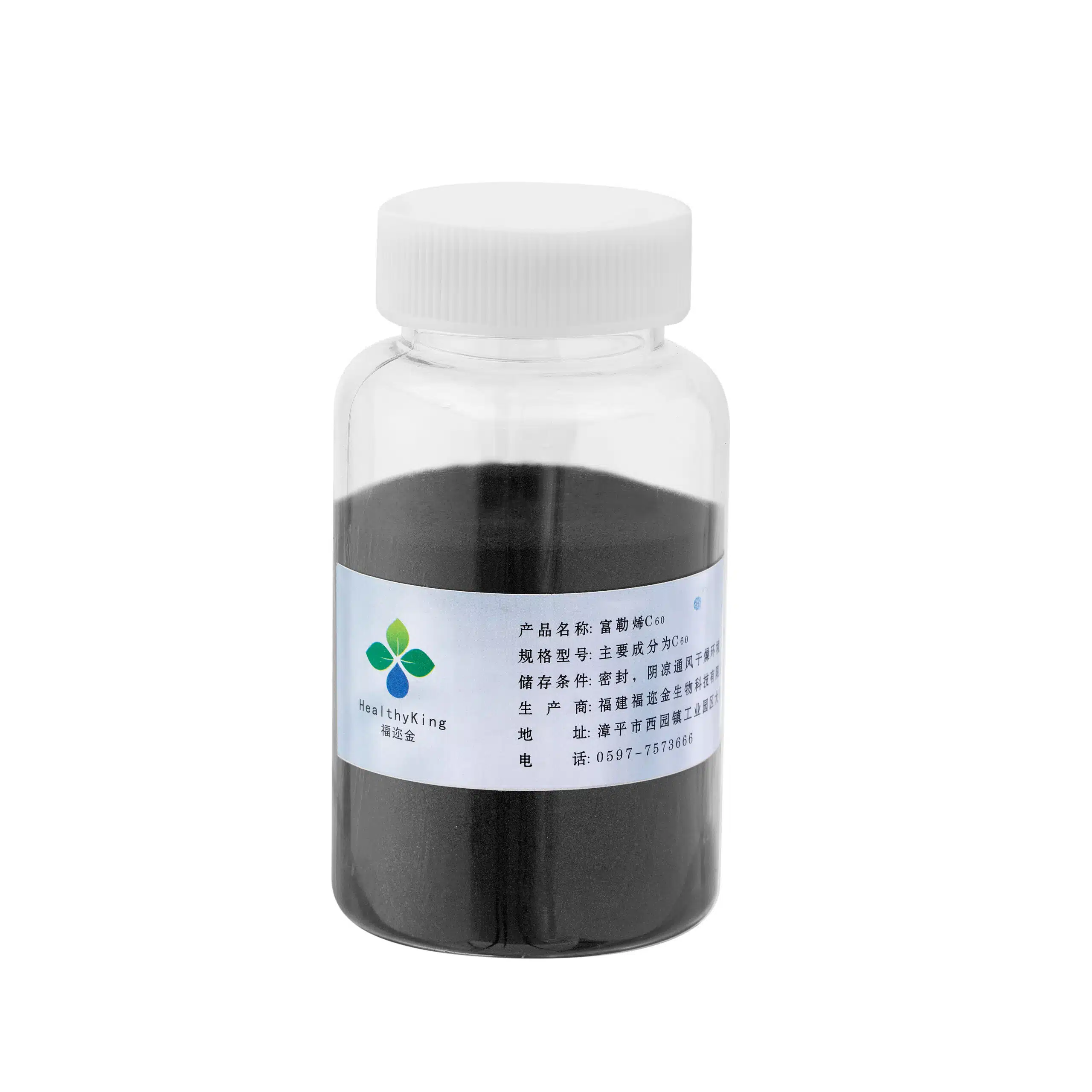
High-purity fullerene C60 is a highly refined nanomaterial designed specifically for the most demanding scientific and industrial applications. This ultra-pure form ensures…
Request product specifications, batch-specific COA, MSDS/SDS, sample availability, packaging details, and international shipping information before confirming your order.
Request DocumentsSubmit your product, purity, quantity, application, destination country, and documentation requirements. Our team will help confirm availability, COA, MSDS/SDS, packaging, and quotation details.