


Importing Fullerene C60 or Fullerene C70 from China can be a practical sourcing option for laboratories, research institutions, chemical distributors, formulation companies, electronics manufacturers, photovoltaic researchers, and advanced material buyers. However, international fullerene procurement should not be handled as a simple catalog purchase.
For most buyers, the real question is not only “Can this supplier ship to my country?” A better question is:
Can the supplier provide the correct fullerene material, suitable purity, batch-specific COA, MSDS/SDS, appropriate packaging, export documentation, and clear communication before shipment?
Fullerene materials are used in research and industrial contexts where purity, batch consistency, documentation, and storage conditions may affect downstream testing or procurement approval. A reliable import process should start before payment, not after the goods are already packed.
This guide explains how overseas buyers can prepare to import Fullerene C60 and C70 from China, what documents to request, what packaging and shipping details to confirm, and how to submit a clear RFQ to The Fullerene for quotation support.
Why Buyers Import Fullerene from China
China is an important source of fullerene materials for global B2B buyers. International buyers may look for Chinese fullerene suppliers when they need high-purity Fullerene C60, Fullerene C70, sample quantities, bulk availability, technical communication, and export support.
Typical buyers include:
| Buyer Type | Common Import Need |
|---|---|
| Laboratories | Small samples, COA, MSDS/SDS, clear product identity |
| Research institutions | High-purity C60/C70 for controlled experiments |
| Chemical distributors | Stable supply, export documents, repeatable batches |
| Electronics companies | High-purity fullerene for organic electronics or semiconductor research |
| New energy companies | C60/C70 for photovoltaic and energy material research |
| Lubricant and coating manufacturers | C60 samples for formulation evaluation |
| Cosmetic formulation researchers | Research-use C60 with documentation caution |
| Procurement managers | Clear RFQ, documents, packaging, lead time, and shipping details |
For these buyers, importing fullerene is not only a logistics task. It is a procurement quality-control process. The supplier should help the buyer confirm material identity, purity, documents, packaging, and shipping feasibility before the order is placed.
Step 1: Confirm Whether You Need C60, C70, or Another Fullerene Material
Before asking for a quotation, buyers should confirm the exact product. “Fullerene” is a broad term. It may refer to Fullerene C60, Fullerene C70, mixed fullerenes, higher fullerenes, or fullerene derivatives.
The two most common materials for international procurement are Fullerene C60 and Fullerene C70.
| Product | Common Names | Typical Use Context |
|---|---|---|
| Fullerene C60 | C60 fullerene, Carbon 60, buckminsterfullerene | Advanced materials, lubricants, coatings, electronics, photovoltaics, research |
| Fullerene C70 | C70 fullerene, Carbon 70 | Organic electronics, photovoltaic research, molecular electronics, advanced materials |
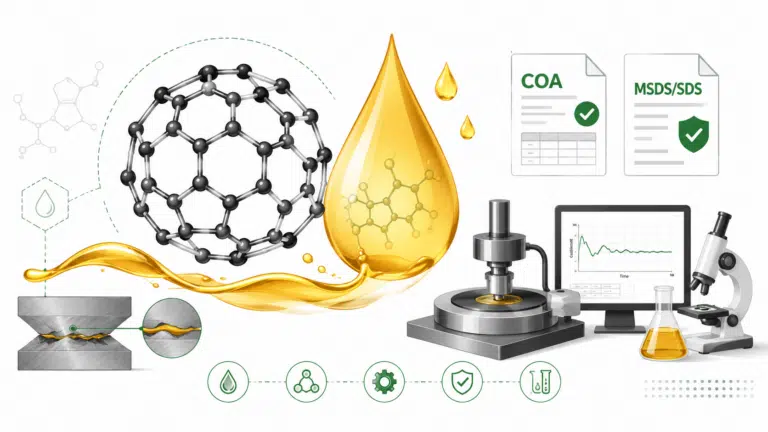
Fullerene C60 is a spherical carbon molecule composed of 60 carbon atoms. It is commonly supplied as powder or crystalline material and is widely studied in material science, nanotechnology, organic electronics, photovoltaic research, lubricant formulation, coatings, cosmetic formulation research, and biomedical research.
Fullerene C70 contains 70 carbon atoms and has a more elongated molecular structure compared with C60. It may be considered in organic electronics, photovoltaic research, molecular electronics, and advanced material systems.
A reliable supplier should not quote “fullerene” vaguely. The quotation should clearly state the product name, purity, quantity, packaging, and available documentation.
Step 2: Select the Right Purity Grade Before Import
Purity is one of the most important purchasing factors when importing fullerene. Higher purity may be relevant for sensitive research, electronics, photovoltaics, or precision material applications. Lower purity grades may be acceptable for early-stage exploratory research or less demanding industrial evaluation.
For Fullerene C60 and C70, available purity grades may include:
- 99.00%
- 99.50%
- 99.90%
- 99.95%
The right purity depends on the buyer’s application. A laboratory conducting preliminary research may have different requirements from a semiconductor company or photovoltaic material developer. A distributor may also need different purity grades for different downstream customers.
Buyers should avoid two common mistakes.
The first mistake is choosing only by the lowest price. A lower price may not be useful if the product lacks clear purity documentation or batch traceability.
The second mistake is assuming that the highest purity is always required. Higher purity may increase cost and lead time, so the grade should be selected according to actual use requirements.
When submitting an RFQ, buyers should state the target purity clearly. If unsure, they should explain the application so the supplier can help confirm suitable options.
Step 3: Request Batch-Specific COA
A Certificate of Analysis, or COA, is one of the most important documents in fullerene procurement. Buyers should request batch-specific COA before confirming an order.
A useful COA may include:
- Product name
- Batch number
- Purity
- Test method
- Appearance
- Manufacturing or release date when available
- Supplier or quality department information
- Impurity information when available
The important point is batch specificity. A generic product description is not enough. The COA should correspond to the actual batch being shipped.
When reviewing the COA, buyers should check whether the product name, purity, batch number, and test method match the quotation. For high-purity fullerene used in electronics, photovoltaics, formulation development, or research, the buyer should also confirm whether the test method is suitable for their internal quality review.
COA does not guarantee that the material will perform in every application. It is a quality review document. Final performance still depends on formulation, processing, testing method, and application conditions.
Step 4: Review MSDS/SDS Before Shipment
MSDS/SDS should be reviewed before importing, storing, handling, or using Fullerene C60 or C70. It provides information related to handling, hazard communication, storage, transportation, and safety precautions.
For international buyers, MSDS/SDS may also be useful for:
- Internal laboratory safety review
- Logistics provider review
- Import documentation preparation
- Warehouse handling
- Formulation or R&D approval
- Distributor compliance review
Buyers should avoid suppliers who describe fullerene materials simply as “safe,” “non-toxic,” or “no risk.” Responsible procurement should follow MSDS/SDS, laboratory safety procedures, and destination-market requirements.
The Fullerene can provide MSDS/SDS support for buyer review before shipment, depending on product type, order details, and documentation requirements.
Step 5: Confirm Packaging for International Shipping
Packaging is especially important for fullerene import. C60 and C70 should be protected from light, moisture, and contamination during storage and transportation. Poor packaging may create handling issues, material loss, contamination risk, or customer complaints.
Buyers should confirm:
- Packaging size
- Packaging material
- Whether the package is sealed
- Whether it is light-shielding
- Whether it is moisture-protected
- Whether the label includes product and batch information
- Whether small sample packaging is available
- Whether custom packaging is available for distributors or bulk buyers
Possible packaging options may include sealed light-shielding aluminum foil bags, plastic bottles, small laboratory packages, or custom packaging depending on quantity, purity, and shipping requirements.
For standard Fullerene C60 products, sample or small packaging may be available depending on current inventory and buyer requirements. Bulk packaging should be confirmed before order placement.
Step 6: Start With a Sample Order When Appropriate
For new buyers, a sample order is often the most practical first step. This is especially relevant for laboratories, formulation developers, electronics researchers, photovoltaic material teams, and distributors evaluating a new supplier.
A sample order helps buyers check:
- Product appearance
- Packaging quality
- COA format
- MSDS/SDS availability
- Supplier response speed
- Shipping process
- Internal testing results
- Batch communication quality
For standard products, sample quantities may start from small gram-level orders depending on purity, inventory, packaging, and destination. Buyers should confirm availability before ordering.
A sample order is not only a technical test. It is also a supplier evaluation step. If the supplier cannot communicate clearly during a small sample order, that is a warning sign before bulk procurement.
Step 7: Clarify Shipping and Export Support
International fullerene shipment depends on product type, quantity, packaging, destination country, carrier availability, documentation requirements, and customs review. Buyers should confirm shipping conditions before payment.
The Fullerene may support international delivery through express logistics providers such as DHL or FedEx, depending on product type, quantity, destination, and regulatory requirements. The final shipping method should be confirmed for each order.
Buyers should ask:
- Which shipping method is available for my destination?
- What documents will be included?
- What is the estimated dispatch time?
- What is the estimated transit time after shipment?
- Can the supplier provide tracking information?
- Is the packaging suitable for international transport?
- Are there any destination-specific document requirements to confirm?
Delivery time may vary due to product availability, customs clearance, carrier schedule, weather, and documentation review. Buyers should not rely on absolute delivery promises. A responsible supplier should provide realistic estimates, not guaranteed customs claims.
Step 8: Prepare the Basic Import Documents
The exact import document requirements vary by destination country, product form, customs classification, and buyer type. However, international fullerene procurement often involves several common documents.
These may include:
| Document | Purpose |
|---|---|
| Commercial invoice | Supports customs declaration and payment record |
| Packing list | Shows packaging details, quantity, and shipment information |
| COA | Supports quality review and batch verification |
| MSDS/SDS | Supports handling, safety, and logistics review |
| Product specification | Confirms product identity and technical information |
| CAS number | Helps identify the chemical material when applicable |
| Shipping document | Supports transport and tracking |
| Import permit or additional documents | May be required depending on destination and end use |
Buyers should confirm import requirements with their customs broker, logistics provider, or internal compliance team. The supplier can support product-side documentation, but the importer is usually responsible for confirming destination-country import requirements.
Step 9: Be Careful With HS Code Questions
Many buyers ask for an HS code before importing fullerene from China. This is reasonable, but it should be handled carefully.
A supplier may provide product information or a suggested classification based on previous export experience. However, customs classification should be confirmed based on product form, destination country, customs broker advice, and local import rules.
Buyers should not rely on an unverified HS code copied from another shipment. Incorrect classification may cause customs questions, duty calculation issues, or shipment delays.
A better process is:
- Request product name, formula, CAS number, COA, MSDS/SDS, and product specification.
- Share the information with your customs broker or import team.
- Confirm the classification before shipment.
- Align the commercial invoice and packing list with the confirmed product description.
This approach reduces avoidable import risk.
Step 10: Understand What Affects Fullerene Import Cost
The total import cost is not only the product price per gram. It may include product type, purity grade, quantity, packaging, testing requirements, documentation, shipping method, destination country, customs handling, and payment terms.
Important cost factors include:
- C60 vs C70
- Purity grade
- Sample vs bulk quantity
- Batch availability
- Documentation requirements
- Packaging format
- Shipping method
- Destination country
- Customs or import handling
- Special testing or custom purity requirements
- Payment and delivery terms
Buyers should request a formal quotation based on their actual requirements. A reliable RFQ should include product name, target purity, quantity, application, destination country, required documents, packaging preference, and expected delivery timeline.
Do not compare suppliers only by unit price. A lower price may not be a better option if documents are incomplete, packaging is poor, shipping support is unclear, or batch consistency is uncertain.
Step 11: Avoid Risky Supplier Claims
When importing fullerene, buyers should be cautious with suppliers who make exaggerated claims. Fullerene materials are used in advanced research and industrial contexts, but responsible suppliers should avoid unsupported medical, health, regulatory, or performance claims.
Be careful if a supplier claims:
- “C60 cures disease”
- “C60 is safe for human consumption”
- “FDA approved”
- “Medical grade”
- “Guaranteed device efficiency”
- “Guaranteed customs clearance”
- “No documents needed”
- “Best price in the world”
- “No impurities”
A reliable supplier should provide clear specifications, batch-specific COA, MSDS/SDS, realistic shipping communication, and careful technical support.
For biomedical, cosmetic, antioxidant, photodynamic, or health-related research, buyers should use research-oriented language and confirm regulatory requirements in their target market. Fullerene materials should not be marketed with unsupported treatment, cure, human consumption, or anti-aging claims.
Import Checklist for Fullerene Buyers
Before importing Fullerene C60 or C70 from China, buyers should confirm the following:
| Category | Buyer Should Confirm |
|---|---|
| Product | Fullerene C60, Fullerene C70, mixed fullerene, or derivative |
| Purity | Target purity and available grade |
| Quantity | Sample or bulk order |
| Application | Research, formulation, electronics, photovoltaics, lubricants, coatings, etc. |
| COA | Batch-specific Certificate of Analysis |
| MSDS/SDS | Handling, storage, and shipping review |
| Packaging | Sealed, light-shielded, moisture-protected where suitable |
| Labeling | Product name, batch number, and quantity where applicable |
| Shipping method | Express, freight, or other confirmed method |
| Dispatch time | Confirm before payment |
| Destination | Country, city, and delivery address |
| Customs documents | Commercial invoice, packing list, product documents |
| HS code | Confirm with broker or import team |
| Payment terms | Confirm before order |
| Quality dispute process | Clarify before bulk purchase |
| Reorder support | Confirm batch consistency and future availability |
How to Submit an RFQ for Fullerene Import
To receive an accurate quotation, buyers should provide enough information from the beginning. A vague message such as “Please quote C60” usually causes delays.
A better RFQ should include:
- Product name: Fullerene C60 or Fullerene C70
- Target purity
- Required quantity
- Sample or bulk order
- Destination country
- Application or intended use
- Required documents: COA, MSDS/SDS, product specification, etc.
- Packaging preference
- Expected delivery timeline
- Company name
- Contact person
- Phone or WhatsApp if applicable
- Any special quality or testing requirement
Example RFQ:
We are looking to import Fullerene C60 for research use. Please quote 99.90% and 99.95% purity options for 5 g and 100 g. Destination country: United States. Please provide COA, MSDS/SDS, product specification, packaging details, estimated dispatch time, shipping options, and payment terms.
This gives the supplier enough information to check availability, recommend suitable options, and prepare a practical quotation.
How The Fullerene Supports International Buyers
The Fullerene supports B2B buyers who need high-purity Fullerene C60, Fullerene C70, and advanced fullerene materials for research, formulation, distribution, and industrial applications.
International buyers can contact The Fullerene to request:
- Fullerene C60 and C70 purity options
- Product specifications
- Batch-specific COA
- MSDS/SDS
- Sample availability
- MOQ information
- Packaging options
- Storage recommendations
- International shipping support
- RFQ and quotation details
- Technical communication for application-oriented selection
The goal is not only to ship material. The goal is to help buyers confirm the right product, documentation, packaging, and procurement conditions before shipment.
FAQ
Can I import Fullerene C60 from China?
Yes. Many B2B buyers import Fullerene C60 from China for research, formulation, distribution, electronics, photovoltaics, lubricants, coatings, and advanced material applications. Buyers should confirm product identity, purity, COA, MSDS/SDS, packaging, and shipping details before ordering.
What is the most important document when importing Fullerene C60?
A batch-specific COA is one of the most important quality documents. Buyers should also request MSDS/SDS, product specification, commercial invoice, and packing list when applicable.
Should I request MSDS/SDS before shipment?
Yes. MSDS/SDS should be reviewed before handling, storage, transportation, or formulation work. It may also support logistics and internal safety review.
Can the supplier provide the HS code?
A supplier may provide product information or a suggested classification based on past export experience, but buyers should confirm HS code and customs classification with their customs broker or import team.
Should I start with a sample order?
For most new buyers, yes. A sample order helps verify material quality, documentation, packaging, supplier communication, and shipping process before bulk procurement.
What purity should I choose for imported Fullerene C60?
The correct purity depends on your application. Exploratory research may not require the highest purity, while electronics, photovoltaic, analytical, or high-performance material research may require higher purity. Buyers should confirm purity through batch-specific COA.
Can customs clearance be guaranteed?
No. Customs clearance depends on destination-country rules, customs classification, documents, carrier process, and importer compliance. Buyers should avoid suppliers who guarantee customs clearance without reviewing shipment details.
What should I include in a fullerene import RFQ?
Include product name, target purity, quantity, sample or bulk order status, application, destination country, required documents, packaging preference, and expected delivery timeline.
Can The Fullerene support international shipping?
The Fullerene can support international shipping communication for Fullerene C60 and C70 depending on product type, quantity, destination, and documentation requirements. Buyers should confirm shipping details before ordering.
Can Fullerene C60 be imported for biomedical or cosmetic research?
Fullerene C60 may be studied in biomedical or cosmetic formulation research, but buyers should use research-oriented language and confirm local regulatory requirements. No treatment, cure, human consumption, or regulatory approval claims should be made unless independently verified.