
XCT Insights
Stay Updated
Fullerene research, applications and company updates, delivered occasionally.
Latest from XCT
View all


The global lubricants market in 2026 is navigating one of the most aggressive, compressed, and disruptive repricing cycles in modern industrial history. Driven by systemic macroeconomic pressures, acute base oil shortages, and a fundamental shift from competition-driven to cost-driven pricing, industrial operators and fleet managers face double-digit price increases across all finished lubricant categories.
Simultaneously, the geopolitical and regulatory landscape is shifting rapidly. In Southeast Asia, major green energy policies—most notably Vietnam’s nationwide transition to E10 biofuels effective June 1, 2026 —are introducing severe chemical and tribological challenges to standard engine oils.

To survive this dual squeeze of rising procurement budgets and harsher operating conditions, forward-looking enterprises must pivot from traditional “oil-as-a-commodity” purchasing to advanced tribological strategies. Integrating high-performance fullerene lubricant additives, such as XCT, offers a highly viable pathway to mitigate these cost increases. By analyzing the physical and chemical mechanics of zero-dimensional (0D) nanomaterials, industrial blenders and procurement teams can leverage these technologies to extend oil drain intervals, protect machinery against corrosive biofuel dilution, and drastically lower the Total Cost of Ownership (TCO).
The primary catalyst behind the 2026 lubricant price volatility is the escalation of conflicts in the Middle East, specifically the military operations known as “Operation Epic Fury,” which shut down the Strait of Hormuz—a bottleneck carrying roughly 20% of the world’s petroleum supply. The resulting supply shock pushed Brent and WTI crude oil prices from a stable $60–$70 range up to nearly $100 per barrel in early 2026.
                                  [Operation Epic Fury]
                                            │
                                 (Strait of Hormuz Close)
                                            │
                                ┌───────────┴───────────┐
                       [Crude: ~$100/bbl]
                                │                       │
                     (Additive / Solvent Costs) (Group I, II, III Shortages)
                                └───────────┬───────────┘
                                            │
While finished lubricants do not immediately track daily spot crude due to typical 2-to-6-month supply chain lags and fixed-term contracts , the sustained high feedstock costs have triggered a broad-based repricing wave. Refineries have adjusted their operations to prioritize high-margin “slices of the barrel” like diesel and jet fuel, deprioritizing base oil production and causing extreme supply tightness in Group I, II, and III base oils. Furthermore, petrochemical feedstocks have experienced severe upward pressure. For instance, CITGO Petroleum Corporation implemented price adjustments on aromatic solvents (toluene and xylene) by $0.12 per pound, driving up the costs of coatings, industrial cleaners, and complex additive packages.
The 2026 repricing cycle is characterized by its rapid sequence of announcements. The table below outlines the historic price hikes announced by major manufacturers and independent blenders, demonstrating how rapidly these cost pressures are translating to the end-user.
| Company | Announced Date | Effective Date | Lag (Days) | Price Increase Details |
| Phillips 66 | April 6, 2026 | April 20, 2026 | 14 | Up to 35% on finished lubricants |
| Chevron | April 17, 2026 | May 18, 2026 | 31 | Up to 30% across lubricating oils, greases, and coolants |
| ExxonMobil | April 7, 2026 | May 4, 2026 | 27 | Up to 30% on all finished lubricants |
| Nu-Tier Brands | May 27, 2026 | June 1, 2026 | 5 | Up to 30% on all finished lubricants |
| Shell (SOPUS) | April 16, 2026 | May 1, 2026 | 15 | Up to 25% (applies to Non-Janus pricing) |
| Petro-Canada / HF Sinclair | May 26, 2026 | June 10, 2026 | 15 | Up to 25% on finished lubricants and greases |
| Advance Lubrication (ALS) | May 26, 2026 | June 1, 2026 | 6 | 20%–25% (Conventional); 15%–20% (Full Synthetics/Dexos1) |
| Castrol (BP Lubricants) | April 20, 2026 | May 20, 2026 | 30 | Up to 15% on Automotive & Heavy-Duty products |
| TotalEnergies | April 8, 2026 | April 20, 2026 | 12 | Up to 15% (Minerals & Greases); up to 18% (Synthetics) |
| Valvoline Global | April 1, 2026 | April 13, 2026 | 12 | Up to 12% across product lines |
| Omni Specialty Packaging | April 17, 2026 | April 21, 2026 | 4 | +$3.75/gal (Non-Synthetic); +$5.00/gal (Synthetic) |
| AOCUSA | April 7, 2026 | April 9, 2026 | 2 | +$3.89/gal (Synthetic); +$2.89/gal (Conventional); +$0.39/lb (Greases) |
As industrial operators grapple with rising lubricant costs, they must also face more severe operating conditions. Following Circular 50/2025/TT-BCT, Vietnam is mandating the nationwide rollout of E10 biofuel (gasoline blended with 10% ethanol) starting June 1, 2026. Major state-backed distributors, including Petrolimex and PVOIL, have upgraded their terminal blending and retail infrastructures to meet this target.
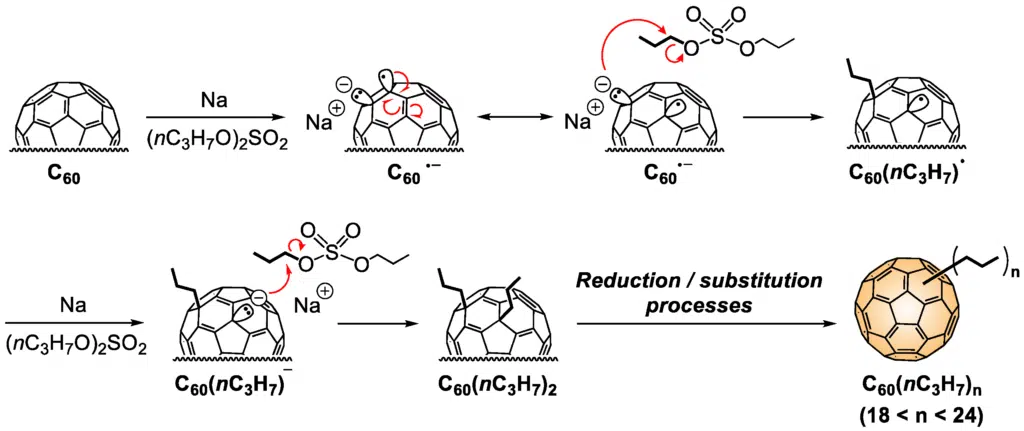
While E10 represents a major step forward for environmental protection, agricultural value-addition, and national energy security , it introduces severe degradation risks to internal combustion engine lubricants :
To align with green mandates, many operations are shifting toward biodegradable, plant-based lubricants (derived from vegetable oils like palm, soybean, and sunflower oil). These lubricants offer high biodegradability (>60% in 28 days under OECD 301 standards) and superior natural viscosity indices (VI > 220), reducing mechanical energy losses by 5% to 15% compared to conventional minerals.
However, raw vegetable oils exhibit major structural vulnerabilities :
To overcome these structural limitations, the tribology sector has turned to carbon-based nanotechnology, specifically fullerene ($C_{60}$) nanoparticles.
        ┌──────────────────────────────────────────────────┐  ◄── Upper Friction Body
        │                 ●       ●       ●                │
        │             ●       ●       ●       ●            │  ◄── 0D Fullerene (C60)
        │                 ●       ●       ●                │      "Nano-Ball Bearings"
        └──────────────────────────────────────────────────┘  ◄── Lower Friction Body
Fullerene ($C_{60}$) is a zero-dimensional (0D) Buckminsterfullerene molecule comprising 60 $sp^2$-hybridized carbon atoms arranged in a highly rigid, spherical cage. Under boundary and mixed lubrication conditions, $C_{60}$ mitigates friction and wear through three main physical mechanisms :
Unlike other nanostructured additives, fullerene provides a unique balance of friction reduction, wear resistance, and long-term suspension stability.
| Additive Type | Optimal Concentration | COF Reduction | Wear Rate Reduction | Dispersion Stability | Primary Bottlenecks |
| Fullerene ($C_{60}$) | 0.05% – 0.25 wt% | Up to 10% | 45% – 81% | Excellent | High raw material costs |
| Carbon Nanotubes (MWCNTs) | 0.05% – 0.20 wt% | ~20% | Moderate | Poor | Tubular structures easily entangle and precipitate without surfactants |
| Graphene Sheets (rGO) | 0.05% – 0.075 wt% | 30% – 65% | 50% – 80% | Poor | Two-dimensional sheets stack, agglomerate, and clog filters |
| Titanium Dioxide ($TiO_2$) | 0.30 wt% | Up to 86% | High | Moderate | High density causes gravity settling in low-viscosity bases |
$C_{60}$’s zero-dimensional isotropic structure avoids the stacking and entangling issues that plague graphene sheets and carbon nanotubes. Because of its mild lipophilic nature (909 mg/L solubility in olive oil) , surface modification with chemistry like ethyl oleate ensures that fullerene remains fully suspended in engine and industrial lubricants at concentrations up to 0.25 wt% without sedimentation.
Beyond its physical tribological performance, fullerene $C_{60}$ is highly chemically active, earning the moniker of a molecular “radical sponge” due to its ability to trap multiple free radicals per cage. In oil autoxidation cycles, heating generates highly reactive peroxyl radicals ($\text{LOO}^\bullet$) that propagate oxidative chain reactions, causing oil viscosity to spike, acids to build up, and sludge to deposit.
$C_{60}$ intercepts this pathway by undergoing addition reactions with these radical intermediates:
$$\text{C}_{60}+n\text{LOO}^\bullet\longrightarrow\text{C}_{60}(\text{OOL})_n$$
In unsaturated vegetable oils and synthetic esters (such as ethyl oleate), the peroxyl radical is transferred from the oil matrix to the fullerene, creating stable fullerene oxides (such as $\text{C}_{60}\text{O}$) and preventing the breakdown of the base oil. In saturated esters like ethyl palmitate, $C_{60}$ remains completely stable and unreactive up to 70 °C for several hours.
While pure $C_{60}$ acts as an effective high-temperature inhibitor for saturated hydrocarbons, its radical scavenging rate is less efficient in highly polyunsaturated oils. However, covalently conjugating $C_{60}$ with conventional hindered phenols (like BHT, BHA, or TBHQ) creates a powerful hybrid antioxidant with outstanding performance above 100 °C :
$$\text{ArOH}+\text{LOO}^\bullet\longrightarrow\text{ArO}^\bullet+\text{LOOH}$$
$$\text{ArO}^\bullet+\text{C}_{60}\longrightarrow\left[\text{C}_{60}\text{-ArO}\right]^\bullet$$
In this system, the active hydrogen on the hindered phenol ($\text{ArOH}$) rapidly captures the peroxyl radical, and the resulting phenoxyl radical ($\text{ArO}^\bullet$) is then stabilized by the highly delocalized $\pi$-electron system of the fullerene core.
Non-isothermal oxidation kinetics calculated using the Ozawa-Flynn-Wall method demonstrate that these phenol-fullerene conjugates delay oxidative degradation far longer than either component used alone. This makes them an outstanding additive system for bio-lubricants and synthetic industrial gear oils operating under high thermal stresses.
Additionally, extensive toxicology profiling shows that aqueous colloid $C_{60}$ has very low toxicity. It exhibits low toxicity on human embryonic kidney cells ($\text{HEK293}$ $IC_{50}=383.4\ \mu\text{g/mL}$) and an in vivo lethal dose limit ($\text{mouse}$ $LD_{50}=721\text{ mg/kg}$). At industrial concentrations ($<0.1\text{ wt}\%$), it is highly safe for cosmetics, pharmaceuticals, and manufacturing lubrication.
To justify moving to a nano-enhanced lubrication strategy in the face of the 2026 price hikes, procurement and operations managers must evaluate the investment using a comprehensive Total Cost of Ownership (TCO) model:
$$TCO=(V_{\text{lube}}\times P_{\text{lube}})+C_{\text{add}}+M_{\text{wear}}+E_{\text{friction}}$$
Where:
In 2026, the purchase price $P_{\text{lube}}$ has increased by 12% to 35% across the board. Relying on cheap, standard oils results in more frequent changeouts, higher $V_{\text{lube}}$, and severe risk of mechanical downtime $M_{\text{wear}}$.
Integrating fullerene additives increases the additive cost ($C_{\text{add}}$). However, this is highly optimized by XCT’s strategic bulk pricing of $39 per gram, making nano-enhanced lubrication highly cost-competitive. At this price point, a minor addition of XCT (typically 0.05% to 0.1 wt%) delivers a rapid, compounding return on investment (ROI):
Biofuel blends like E10 introduce ethanol and combustion moisture into the crankcase, forming water-oil emulsions that destroy the oil film. The combustion of ethanol also generates corrosive formic acid, which breaks down conventional anti-wear boundary films like ZDDP. Fullerene-enhanced lubricants containing XCT prevent this degradation because the spherical $C_{60}$ molecules provide a highly robust, physical nano-boundary layer that is immune to acidic corrosion, ensuring continuous lubrication even in diluted systems.
While graphene and carbon nanotubes require expensive functionalization and high concentrations of chemical surfactants to prevent severe agglomeration and filter clogging , XCT fullerene requires no surfactants to remain stable in base oils. With a low optimal treat rate of 0.05% to 0.1 wt%, and a strategic bulk price of just $39/g, industrial blenders can formulate high-performance, stable lubricants without the dispersion and filtering issues associated with other nanocarbons, yielding an exceptionally low cost-per-liter surcharge.
At temperatures exceeding 100 °C, conventional hindered phenols (like BHT or BHA) oxidize and degrade rapidly, losing their radical-scavenging capabilities. In contrast, in a fullerene-phenol conjugate, the phenol captures the initial peroxyl radical, and the resulting phenoxyl radical is stabilized by the $C_{60}$ carbon cage. This synergy, verified by the Ozawa-Flynn-Wall method, significantly extends the lifetime of the antioxidant system, making it highly suitable for high-temperature and high-pressure machinery.
While pure vegetable oils cannot replace synthetic base oils due to their poor thermal-oxidative stability and low-temperature properties , utilizing high-purity fullerene additives solves these chemical vulnerabilities. $C_{60}$ acts as a physical extreme-pressure barrier and a high-temperature chemical antioxidant, enabling plant-based lubricants to withstand heavy loads and high-temperature environments, transforming them into high-performance, green lubricants.
For B2B procurement of Fullerene C60 (Pure), 99.95% Purity, No metallic residue, buyers should confirm target purity, required quantity, application, destination country, COA, MSDS/SDS, packaging, storage conditions, and shipping requirements before requesting a formal quotation.
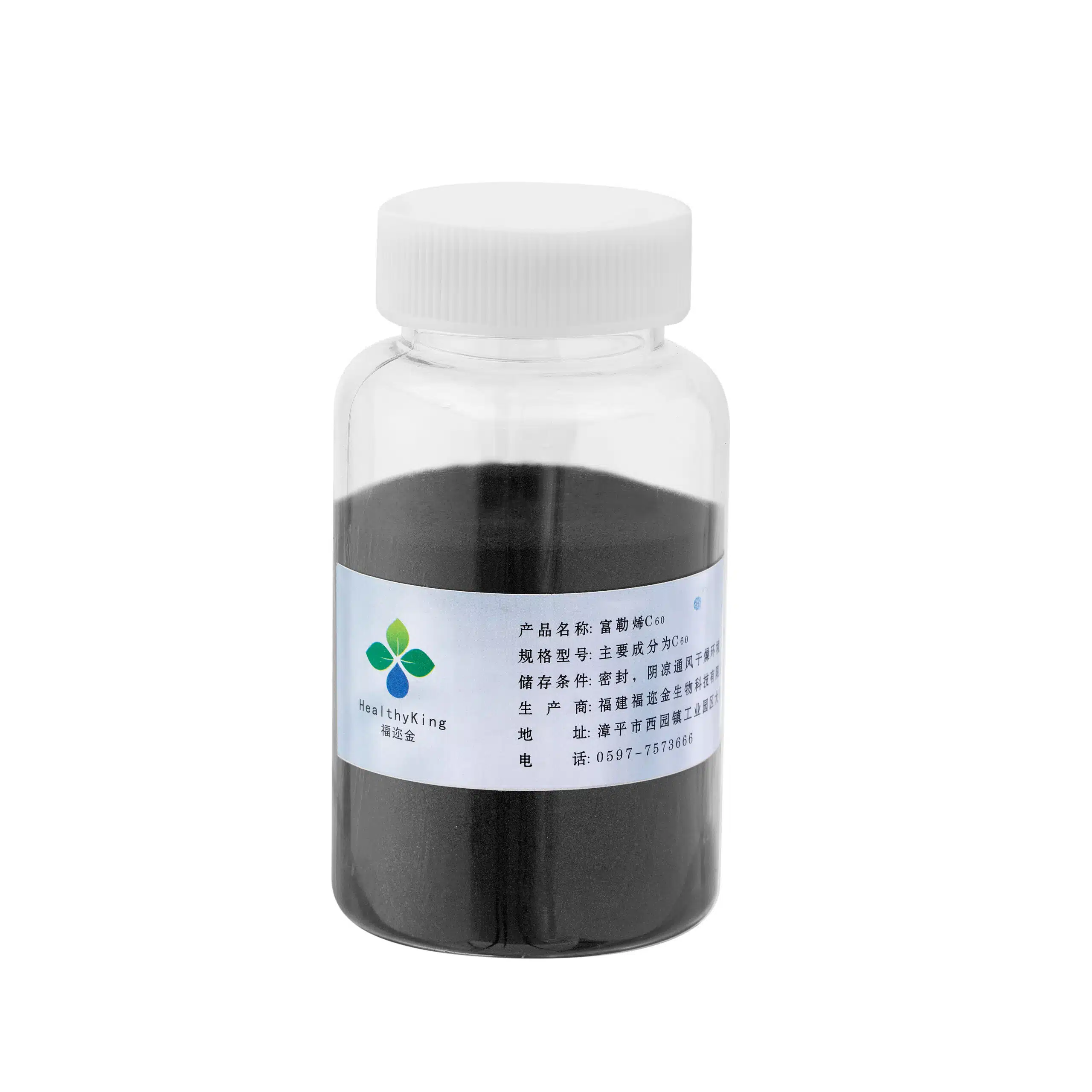
High-purity fullerene C60 is a highly refined nanomaterial designed specifically for the most demanding scientific and industrial applications. This ultra-pure form ensures…
Request product specifications, batch-specific COA, MSDS/SDS, sample availability, packaging details, and international shipping information before confirming your order.
Request DocumentsSubmit your product, purity, quantity, application, destination country, and documentation requirements. Our team will help confirm availability, COA, MSDS/SDS, packaging, and quotation details.