XCT Insights
Stay Updated
Fullerene research, applications and company updates, delivered occasionally.
Latest from XCT
View all

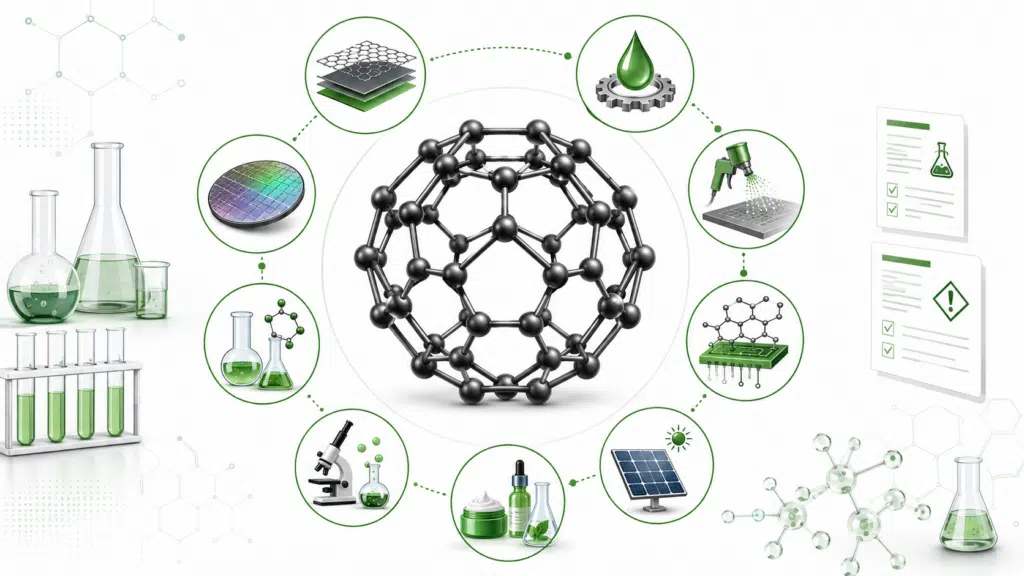
C60 fullerene is used and studied in several high-value research and industrial fields, including advanced materials, lubricants, coatings, organic electronics, photovoltaic materials, cosmetic formulation research, biomedical research, and chemical synthesis.
Its application value comes from its unusual molecular structure. Fullerene C60 is made of 60 carbon atoms arranged in a closed spherical cage. This structure gives C60 distinctive electronic, optical, surface, and chemical behavior compared with common carbon materials such as graphite, carbon black, graphene, or carbon nanotubes.
In practical terms, C60 is not used as a universal additive. It is used where its molecular carbon cage, electron-accepting behavior, radical-related chemistry, surface interaction, or nanoscale structure may be useful. The exact performance depends on purity, dispersion, formulation system, solvent compatibility, processing method, and testing conditions.
C60 is widely used as a molecular carbon material in advanced materials research. Unlike bulk carbon powders, C60 has a defined molecular structure. This makes it useful in studies involving nanomaterials, polymer composites, molecular assemblies, functional surfaces, and carbon-based material systems.
In advanced materials, C60 may be introduced to explore changes in mechanical behavior, electronic interaction, surface properties, thermal behavior, or molecular organization. It can also be used as a building block for fullerene derivatives, where chemical modification changes its solubility, compatibility, or interaction with other materials.
Common advanced material research directions include:
For this type of work, high-purity Fullerene C60 is often preferred when the project requires reproducible material behavior, especially in sensitive research or technical development.
C60 fullerene is studied as a lubricant additive because of its nanoscale spherical structure and its possible interaction with friction surfaces. In lubricant research, C60 may be evaluated for friction reduction, anti-wear behavior, surface protection, and boundary lubrication systems.
The idea is not that C60 simply “makes any oil better.” Its value depends on whether it can be dispersed properly in the base oil or lubricant system and whether the test conditions match the target application. In laboratory tribology studies, fullerene-containing lubricant systems are often evaluated through friction coefficient testing, wear scar analysis, surface morphology observation, and dispersion stability testing.
C60 lubricant research is especially relevant to:
For lubricant formulation work, dispersion is a central issue. C60 is not water-soluble, and its behavior depends strongly on the selected oil, solvent, additive package, concentration, and mixing process.
C60 is also explored in coating and surface material research. In coating systems, C60 may be studied as a functional nanocarbon component that can influence surface interaction, wear behavior, film structure, or material stability.
This application is closely related to the compatibility between C60 and the coating matrix. A coating system is affected by resin type, solvent, curing conditions, filler dispersion, film thickness, and final operating environment. C60 becomes relevant when the formulation can disperse or integrate it effectively.
Typical coating-related application directions include:
For coatings, C60 is best understood as a research and formulation material rather than a ready-made performance solution. Its value must be confirmed through formulation trials and application-specific testing.
C60 is one of the most important fullerene materials in organic electronics research. Its electron-accepting behavior makes it useful in studies involving charge transfer, thin-film devices, molecular electronics, and organic semiconductor systems.
In organic electronic devices, materials are often selected based on their electronic energy levels, film behavior, charge transport characteristics, interface compatibility, and purity. C60 is commonly discussed as an electron acceptor or interfacial material in different organic electronic systems.
Application directions include:
For this field, material purity and batch consistency are especially important. Small impurities or batch differences may affect experimental reproducibility, film quality, and electronic behavior.
C60 fullerene has a long history in organic photovoltaic research and is also studied in perovskite solar cell-related material systems. Its relevance comes mainly from its electron-accepting properties and its role in charge transport or interfacial layers.
In organic photovoltaics, fullerene materials and fullerene derivatives have been used as acceptor materials. In perovskite and other solar material systems, C60 may be studied in electron transport layers, interface modification, or device stability research.
Common new energy research directions include:
C60 does not guarantee higher device efficiency by itself. Device performance depends on the full material stack, processing method, layer quality, testing protocol, and stability conditions. However, C60 remains a relevant material for researchers developing or comparing electron-accepting and interfacial materials.
C60 and its derivatives are investigated in biomedical research because of their unique photophysical behavior, radical-related chemistry, and ability to be chemically modified. In biological environments, pristine C60 has limited water solubility, so water-soluble fullerene derivatives such as fullerols or functionalized C60 derivatives are often studied instead.
Biomedical research involving C60 and fullerene derivatives includes several directions.
C60 derivatives are studied as potential carriers or components in drug delivery systems. Their carbon cage structure can be chemically modified, allowing researchers to attach functional groups, improve water compatibility, or design fullerene-based molecular systems.
In this area, the research focus is usually not pristine C60 powder alone. Functionalized fullerenes are often more relevant because biological systems usually require water-compatible materials. Researchers may study fullerene derivatives for molecular transport, carrier design, targeted delivery concepts, or interaction with biological membranes.
Fullerenes are studied as photosensitizer materials because they can generate reactive oxygen species under suitable light irradiation. This property makes fullerene materials relevant in photodynamic research, including photodynamic therapy research and antimicrobial photodynamic inactivation research.
The mechanism is based on light activation and reactive oxygen species generation. However, this should be understood as a research field, not as a claim that commercial C60 powder treats disease. Medical use requires strict regulatory review, safety evaluation, formulation design, and clinical validation.
C60 and some fullerene derivatives are also studied in antioxidant-related research because of their radical-scavenging behavior under certain conditions. This is sometimes described in research literature as a “radical sponge” concept.
The practical interpretation should be careful. Radical-related behavior depends on fullerene structure, functionalization, solvent or biological medium, concentration, light exposure, and experimental conditions. It should not be translated into direct human health claims without appropriate evidence and regulatory approval.
C60 is studied in cosmetic formulation research because of its antioxidant-related material behavior and interest in advanced skincare material systems. In this field, the most common research interest is not the use of raw C60 powder directly, but the evaluation of C60 or fullerene derivatives in controlled formulation systems.
Cosmetic formulation research may examine:
C60 should not be described as a proven anti-aging ingredient, wrinkle treatment, or skin disease prevention material unless supported by appropriate regulatory and clinical evidence. For B2B material sourcing, the correct focus is formulation research, documentation, purity, compatibility, and regulatory review.
C60 is also used as a starting material in chemical synthesis and fullerene derivative development. Because the fullerene cage can undergo functionalization, C60 is important in the preparation of modified fullerenes for research in materials, electronics, biology, and nanotechnology.
Chemical synthesis applications may include:
In this field, researchers usually care about product identity, purity, solvent behavior, batch consistency, and analytical documentation. A clear Certificate of Analysis is important because impurities may affect reaction behavior and downstream characterization.
C60 has also been studied in doped fullerene materials, including alkali-metal-doped fullerene systems. These materials are part of fullerene solid-state research and have been investigated for electronic and superconducting properties.
This is a more specialized research area and is usually relevant to academic laboratories, materials physics groups, and advanced electronic material researchers. It is not a standard industrial use of ordinary C60 powder, but it remains an important part of fullerene science.
The most relevant C60 application depends on the user’s field.
For material science, C60 is mainly valued as a defined molecular carbon nanomaterial. For lubricants and coatings, it is evaluated as a functional additive or surface-interaction material. For organic electronics and photovoltaics, it is important because of its electron-accepting behavior. For biomedical and cosmetic formulation research, C60 and its derivatives are mainly studied for radical-related behavior, photodynamic activity, and functionalized material systems. For chemical synthesis, C60 is used as a molecular starting material for fullerene derivatives.
A simple way to understand C60 applications is this:
C60 is most useful when the project needs a molecular carbon material with specific electronic, optical, radical-related, or surface-interaction behavior.
It is less useful when the project only needs a cheap carbon filler or a generic powder additive.
After identifying the application, the next step is selecting the right C60 material. The main purchasing factors are purity, documentation, form, packaging, storage, and supplier communication.
Important sourcing details include:
For sensitive applications such as organic electronics, photovoltaics, biomedical research, and cosmetic formulation research, buyers should pay close attention to purity and batch consistency. For formulation work such as lubricants and coatings, compatibility and dispersion behavior are also important.
C60 is typically stored in a sealed container in a cool, dry place away from light. During procurement, buyers should confirm packaging, storage guidance, COA, MSDS/SDS, and shipping requirements before placing an order.
C60 fullerene is mainly used and studied in advanced materials, lubricants, coatings, organic electronics, photovoltaic research, biomedical research, cosmetic formulation research, and chemical synthesis.
C60 is useful in electronics and photovoltaic research because it has electron-accepting behavior and can participate in charge transfer and thin-film material systems.
Yes. C60 and fullerene derivatives are investigated in biomedical research, including drug delivery research, photodynamic research, and antioxidant-related studies. Biological research often uses functionalized or water-soluble fullerene derivatives rather than pristine C60 powder alone.
C60 is studied in cosmetic formulation research, especially in antioxidant-related material systems. Finished cosmetic use requires formulation testing, safety review, and regulatory confirmation in the target market.
Yes. C60 is studied as a lubricant additive for friction and wear-related research. Its performance depends on dispersion, base oil, concentration, testing method, and application conditions.
Pristine C60 is generally insoluble in water. Water-soluble fullerene derivatives, such as fullerols or functionalized C60 derivatives, are often used when aqueous compatibility is required.
The appropriate purity depends on the application. Electronics, photovoltaic, and high-performance research usually require higher purity and stronger batch consistency. Early-stage industrial exploration may use a different purity level depending on testing goals.
For B2B procurement of Fullerene C60 (Pure), 99.95% Purity, No metallic residue, buyers should confirm target purity, required quantity, application, destination country, COA, MSDS/SDS, packaging, storage conditions, and shipping requirements before requesting a formal quotation.
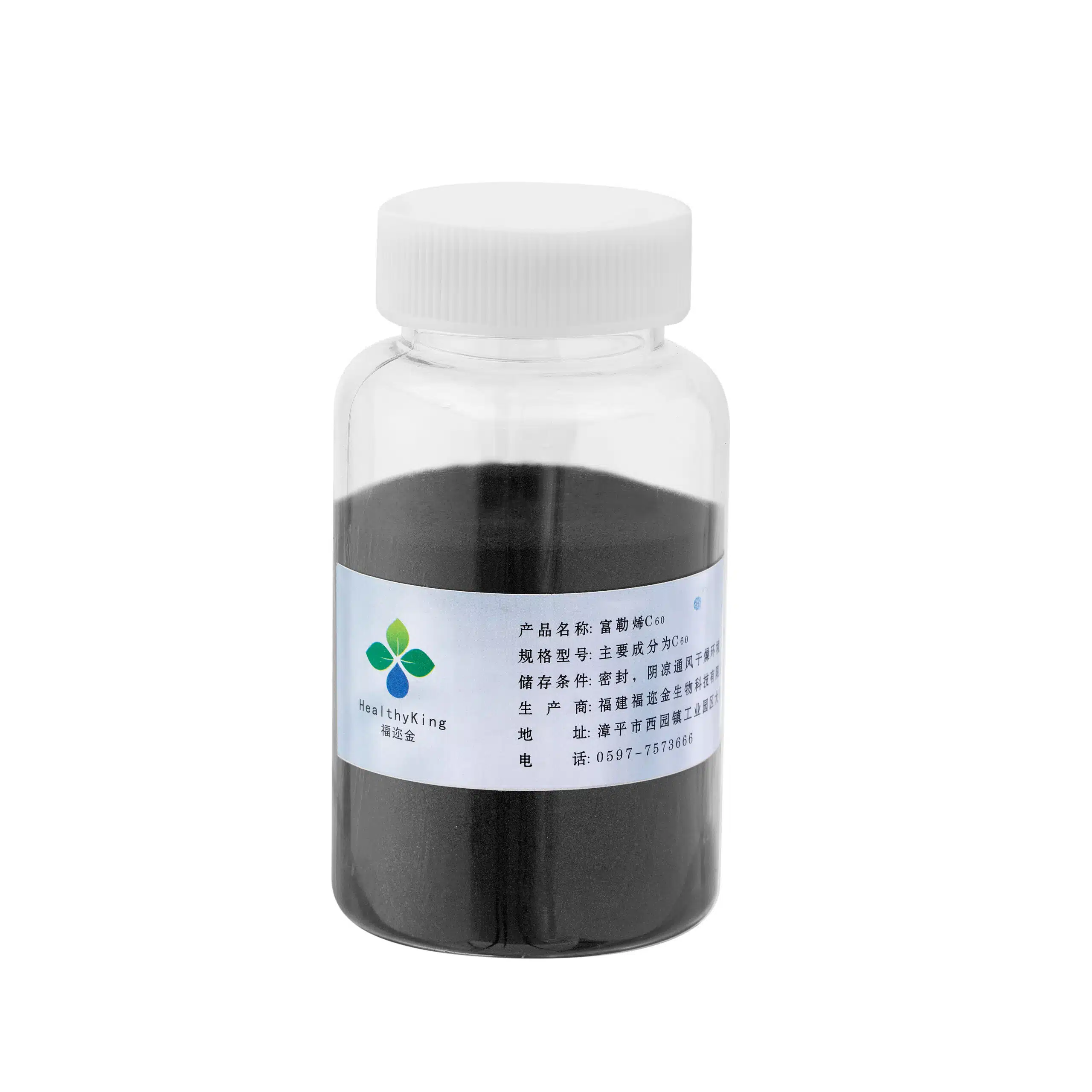
High-purity fullerene C60 is a highly refined nanomaterial designed specifically for the most demanding scientific and industrial applications. This ultra-pure form ensures…
Request product specifications, batch-specific COA, MSDS/SDS, sample availability, packaging details, and international shipping information before confirming your order.
Request DocumentsSubmit your product, purity, quantity, application, destination country, and documentation requirements. Our team will help confirm availability, COA, MSDS/SDS, packaging, and quotation details.