XCT Insights
Stay Updated
Fullerene research, applications and company updates, delivered occasionally.
Latest from XCT
View all

Fullerene is considered valuable in medicine-related research because it combines several unusual properties in one carbon-based molecular structure. C60 fullerene has a closed cage made of 60 carbon atoms, a highly conjugated π-electron system, strong chemical stability, and the ability to form many functionalized derivatives. These features make fullerene and its derivatives useful in biomedical research areas such as drug delivery, photodynamic research, antioxidant-related studies, antimicrobial photodynamic inactivation, imaging research, and nanomedicine material design.
The important point is that pristine C60 powder is not usually the final medical-use material. In many biomedical studies, researchers use modified fullerene derivatives instead of raw C60 because biological environments often require water compatibility, functional groups, controlled interaction with cells, and carefully designed safety profiles. Examples include fullerols, carboxylated fullerenes, malonic acid derivatives of C60, cationic fullerenes, and other water-soluble or functionalized fullerene systems.
In simple terms, fullerene is interesting for medicine because it can behave as a molecular carbon scaffold, a radical-active material, a photosensitizer platform, and a functional carrier after chemical modification.
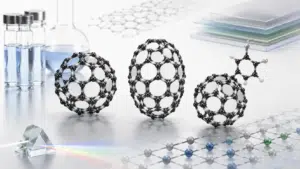
The biomedical interest in fullerene starts with its structure. C60 is a spherical carbon cage, often described as a soccer-ball-like molecule. Unlike carbon black, graphite, or ordinary carbon powder, C60 is a defined molecule with a consistent cage structure. This makes it easier to study, modify, and design for specific research functions.
For basic chemical identity, readers can refer to the PubChem record for C60 fullerene.
The surface of the fullerene cage can be chemically modified. Researchers can add hydroxyl groups, carboxyl groups, amino groups, malonic acid groups, or other functional groups to change how the molecule behaves in water, biological media, or material systems. This is one reason fullerene derivatives are more common than pristine C60 in biomedical research.
For medical research, this tunability matters. A material that is too hydrophobic may aggregate and become difficult to use in biological systems. By introducing suitable functional groups, researchers can improve dispersion, water compatibility, molecular targeting, or interaction with biological structures.
Pristine C60 is generally insoluble in water, which limits its direct use in biological environments. Medicine and biology usually involve aqueous systems, so fullerene needs chemical modification before it can be studied effectively in many biomedical settings.
This is why water-soluble fullerene derivatives are important. Fullerols, carboxylated fullerenes, and C60 malonic acid derivatives are examples of fullerene-based structures designed to improve water compatibility. These derivatives allow researchers to evaluate fullerene behavior in cell culture systems, biological fluids, drug delivery models, and photodynamic studies.
Water compatibility is not just a convenience. It affects dispersion, aggregation, cellular interaction, transport behavior, and experimental reproducibility. In biomedical research, the chemical form of fullerene is often more important than the word “fullerene” itself.
Fullerene derivatives are studied in drug delivery research because the fullerene cage can act as a nanoscale molecular platform. Its surface can be functionalized with groups that improve solubility, attach active molecules, or influence interaction with cells.
Fullerene derivatives have been reviewed as research materials for drug delivery and related nanomedicine systems in Biomedical applications of functionalized fullerene-based nanomaterials.
In drug delivery research, fullerene-based systems may be explored for carrying small molecules, improving molecular transport, or building targeted delivery concepts. Some studies also examine fullerene derivatives as carriers for genes, DNA-related systems, or other bioactive molecules.
The key advantage is design flexibility. Researchers can modify the fullerene surface to change how the material behaves. Hydrophilic groups can improve water compatibility. Charged groups can influence biological interaction. Targeting groups may be introduced in experimental systems to study selective delivery concepts.
However, fullerene drug delivery remains a research field. A fullerene material is not automatically a drug carrier simply because it has a nanoscale structure. Its usefulness depends on derivative design, solubility, toxicity evaluation, dosage model, biological target, and regulatory pathway.
Fullerene is also studied in photodynamic research because it can generate reactive oxygen species under suitable light irradiation. This property makes certain fullerene derivatives interesting as photosensitizer materials.
Photodynamic research usually involves three components: a photosensitizer, light, and oxygen. When the photosensitizer is activated by light, it may transfer energy or electrons to surrounding oxygen molecules and generate reactive oxygen species. These reactive species are then studied for their effects in biological or antimicrobial systems.
Fullerenes are relevant here because their conjugated carbon cage can absorb light and form excited states. Under appropriate conditions, fullerene derivatives may generate singlet oxygen or other reactive oxygen species. This is why they are investigated in photodynamic therapy research and antimicrobial photodynamic inactivation research.
The use of fullerenes as photosensitizer platforms is discussed in the review Fullerenes as Photosensitizers in Photodynamic Therapy.
The application should be described carefully. Fullerene photodynamic research does not mean raw C60 powder is a cancer treatment or an approved antimicrobial product. It means functionalized fullerene systems are studied as photosensitizer platforms under controlled experimental conditions.
Antimicrobial photodynamic inactivation, often shortened as aPDI, is another medicine-related research area where fullerene derivatives are studied. The mechanism is similar to photodynamic research: a photosensitizer is activated by light and generates reactive oxygen species that can affect microbial cells.
Cationic fullerene derivatives are especially relevant in this area because charged functional groups can improve interaction with microbial surfaces. Researchers study these materials to understand how fullerene-based photosensitizers interact with bacteria, fungi, or other microorganisms under light exposure.
This field is attractive because antimicrobial resistance has increased interest in non-traditional antimicrobial strategies. Fullerene-based aPDI is not simply a chemical disinfectant approach. It is a light-activated material strategy that depends on molecular design, irradiation conditions, oxygen availability, and microbial target.
For biomedical material suppliers and researchers, the important requirement is material definition. The fullerene derivative, charge, purity, solubility, and batch consistency can all influence the research result.
Fullerene and some fullerene derivatives are also investigated for antioxidant-related behavior. C60 has often been described in research as a “radical sponge” because its π-conjugated structure can interact with free radicals under certain conditions.
This radical-related behavior is one reason fullerene derivatives are studied in oxidative stress models, skin-related research, and broader biological material research. The same material family may show different behavior depending on functionalization, solvent, concentration, light exposure, and biological environment.
This point matters because fullerene can be discussed in both reactive oxygen species generation and radical-scavenging research. These are not contradictions. Under light activation, certain fullerene derivatives may generate reactive oxygen species. Under other conditions, some fullerene derivatives may show radical-scavenging or antioxidant-related behavior.
For medicine-related research, this dual behavior is one of the reasons fullerene is scientifically interesting. It can be designed and studied in different directions depending on its chemical modification and experimental environment.
Fullerene derivatives are studied in cancer-related research mainly through two directions: drug delivery research and photodynamic research.
In drug delivery studies, fullerene-based systems may be explored as carriers or molecular platforms for delivering active molecules. In photodynamic studies, fullerene derivatives may be studied as photosensitizers that generate reactive oxygen species under light irradiation.
Some laboratory and preclinical studies have examined fullerene derivatives in tumor-related models. However, this does not mean fullerene should be described as a cancer treatment in commercial material content. Cancer therapy requires clinical evidence, regulatory approval, dosage control, safety evaluation, formulation design, and medical supervision.
A precise statement is: fullerene derivatives are investigated in cancer-related biomedical research, especially in drug delivery and photodynamic research.
Fullerene is also studied in skin-related and cosmetic formulation research because of its antioxidant-related behavior and interest in reactive oxygen species control. Skin is frequently exposed to ultraviolet radiation, which can generate oxidative stress. This has led researchers to study fullerene derivatives in skin models, keratinocyte research, and cosmetic formulation systems.
In this field, fullerene is usually discussed as an antioxidant-related material or advanced formulation ingredient candidate. The research may focus on dispersion, stability, interaction with oils or carriers, and behavior under light or oxidative conditions.
The correct commercial wording should remain cautious. Fullerene should not be claimed to prevent aging, reverse wrinkles, prevent skin cancer, or guarantee UV protection unless supported by appropriate regulatory and clinical evidence. For B2B sourcing, the more accurate framing is: C60 and fullerene derivatives are studied in cosmetic formulation research and skin-related oxidative stress models.
Some fullerene-based materials, especially metallofullerenes, are studied in imaging and diagnostic research. Metallofullerenes are fullerene cages that contain metal atoms or clusters inside the carbon cage. This structure can give them properties relevant to imaging contrast, magnetic behavior, or biomedical material design.
For example, gadolinium-containing fullerene systems have been investigated in MRI contrast research. The fullerene cage can help isolate and organize metal species while functional groups can be added to improve water compatibility and biological behavior.
This is a more specialized field than C60 powder supply. It usually involves engineered fullerene derivatives or metallofullerene materials rather than standard pristine C60. Still, it shows why the fullerene cage is useful as a biomedical platform: it can be modified externally and, in some cases, can host atoms or clusters internally.
Fullerene derivatives have also been studied in gene delivery and nucleic acid delivery research. Because the fullerene surface can be modified with charged or functional groups, researchers can design fullerene-based materials that interact with DNA, RNA, or cell membranes.
Gene delivery research requires careful material design. The delivery material must interact with nucleic acids, protect or transport them, and release them under suitable conditions. Fullerene derivatives are studied because they offer a compact molecular scaffold that can be chemically functionalized.
As with drug delivery, this is a research direction rather than a finished medical claim. The performance and safety of any fullerene-based gene delivery material depend on its structure, charge, solubility, toxicity profile, and biological system.
A common misunderstanding is to treat “C60 fullerene” and “medical fullerene material” as the same thing. They are not always the same.
Pristine C60 is important as a starting material and research material, but biomedical systems often require fullerene derivatives. Functionalization can improve water solubility, reduce aggregation, introduce targeting groups, change surface charge, and modify biological interaction.
This is why many medicine-related studies use terms such as functionalized fullerene, fullerol, carboxyfullerene, cationic fullerene, fullerene derivative, or metallofullerene. These materials are based on the fullerene cage, but their practical behavior can be very different from pristine C60 powder.
For researchers and procurement teams, the exact chemical form should always be confirmed before ordering. If the project requires water-soluble fullerene, drug delivery research material, or photodynamic research material, standard C60 powder may not be sufficient.
Fullerene is valuable in medicine-related research because several properties overlap:
First, it has a defined nanoscale carbon cage structure. This gives researchers a stable molecular platform.
Second, it has rich surface chemistry. The fullerene cage can be functionalized to change solubility, charge, targeting behavior, or compatibility.
Third, it has photodynamic behavior. Some fullerene derivatives can generate reactive oxygen species under light activation.
Fourth, it has radical-related chemistry. Fullerene derivatives may be studied in antioxidant-related or oxidative stress models.
Fifth, it can interact with biological systems after suitable modification. This makes it relevant to drug delivery, gene delivery, photodynamic research, and biomaterial design.
These properties explain why fullerene is not just another carbon material. Its value comes from the combination of molecular structure and chemical tunability.
For solvent behavior, see the classic ACS paper Solubility of C60 in organic solvents.
For biomedical research, the most important question is not only whether the material is “C60.” The exact derivative, purity, solubility, documentation, and intended research use matter.
Researchers should confirm:
For pristine Fullerene C60, purity grades such as 99.00%, 99.50%, 99.90%, and 99.95% may be available depending on supplier and batch. Higher purity is often preferred for sensitive biomedical material research, but the correct grade depends on the study design and analytical requirements.
Fullerene is good for medicine-related research because it is a chemically tunable molecular carbon platform. Its closed carbon cage, photodynamic activity, radical-related behavior, and ability to form water-soluble derivatives make it relevant in drug delivery research, photodynamic research, antimicrobial studies, antioxidant-related research, imaging material development, gene delivery research, and cosmetic formulation studies.
The most important distinction is between pristine C60 and functionalized fullerene derivatives. Pristine C60 is a valuable starting material and research material, but many biomedical applications require modified fullerenes with improved water compatibility and designed biological interaction.
Fullerene should not be presented as an approved medicine or proven treatment without regulatory and clinical evidence. Its strongest current value is as a research-use nanomaterial platform for biomedical material development.
Fullerene is useful in medicine-related research because it has a stable carbon cage, rich surface chemistry, photodynamic behavior, and radical-related activity. These properties make it relevant to drug delivery research, photodynamic research, antioxidant-related studies, and biomedical material design.
Pristine C60 should not be described as a medicine without verified regulatory approval. In biomedical research, fullerene derivatives are often studied as research materials, carriers, photosensitizers, or functional nanomaterials.
Biological systems are usually aqueous. Since pristine C60 is poorly soluble in water, researchers often use water-soluble derivatives such as fullerols or functionalized C60 compounds for biomedical studies.
Fullerene derivatives are studied in drug delivery research because their surfaces can be chemically modified to improve solubility, attach functional groups, or interact with biological systems.
Yes. Certain fullerene derivatives are studied as photosensitizers because they can generate reactive oxygen species under light irradiation. This is a research direction and should not be treated as a finished therapeutic claim.
Some fullerene derivatives are studied for antioxidant-related or radical-scavenging behavior. The effect depends on chemical structure, functionalization, solvent, concentration, light exposure, and experimental conditions.
It depends on the application. Some projects use pristine C60 as a starting material, while others require water-soluble fullerene derivatives, cationic fullerenes, fullerols, carboxyfullerenes, or metallofullerenes.
For B2B procurement of Fullerene C60 (Pure), 99.95% Purity, No metallic residue, buyers should confirm target purity, required quantity, application, destination country, COA, MSDS/SDS, packaging, storage conditions, and shipping requirements before requesting a formal quotation.
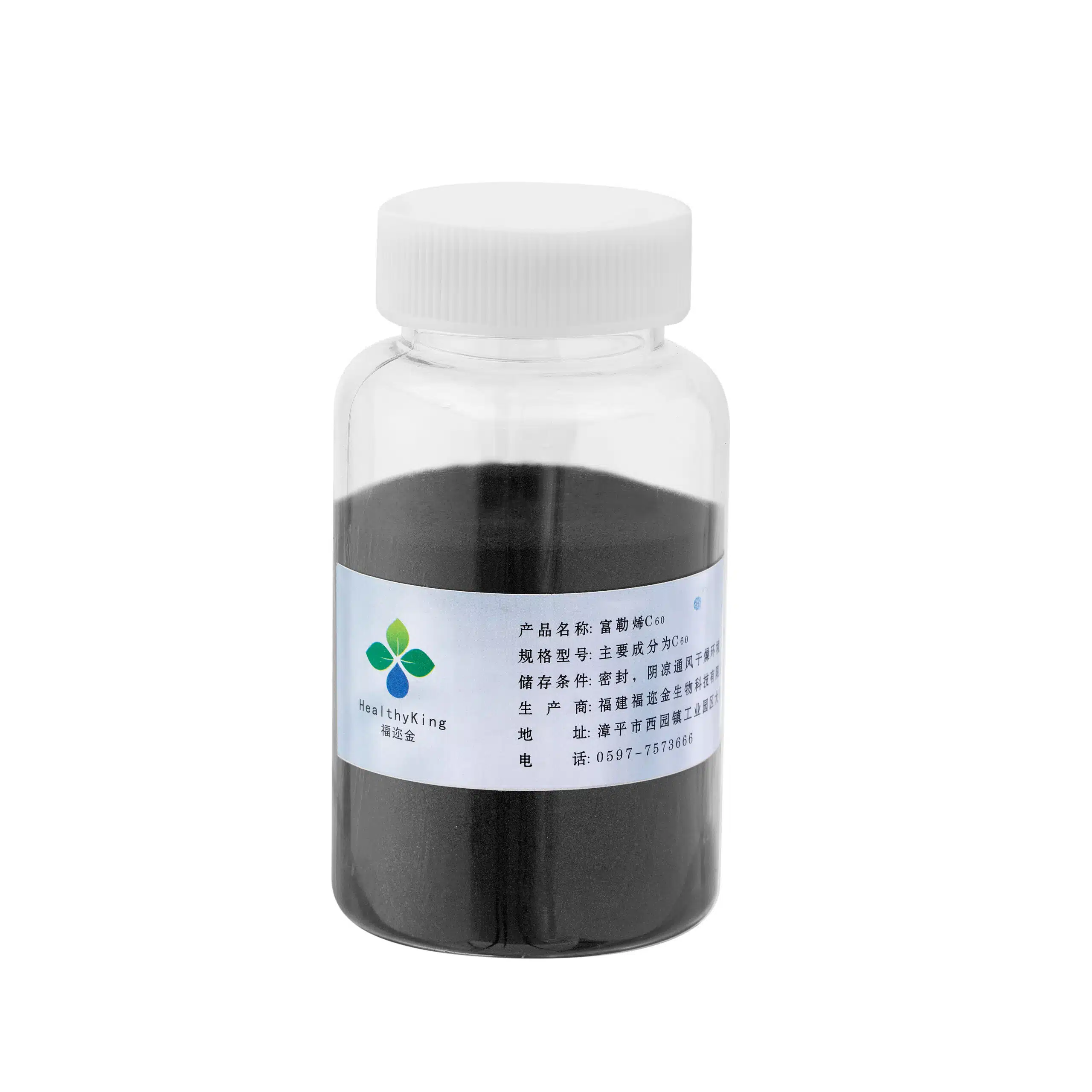
High-purity fullerene C60 is a highly refined nanomaterial designed specifically for the most demanding scientific and industrial applications. This ultra-pure form ensures…
Request product specifications, batch-specific COA, MSDS/SDS, sample availability, packaging details, and international shipping information before confirming your order.
Request DocumentsSubmit your product, purity, quantity, application, destination country, and documentation requirements. Our team will help confirm availability, COA, MSDS/SDS, packaging, and quotation details.