
XCT Insights
Stay Updated
Fullerene research, applications and company updates, delivered occasionally.
Latest from XCT
View all
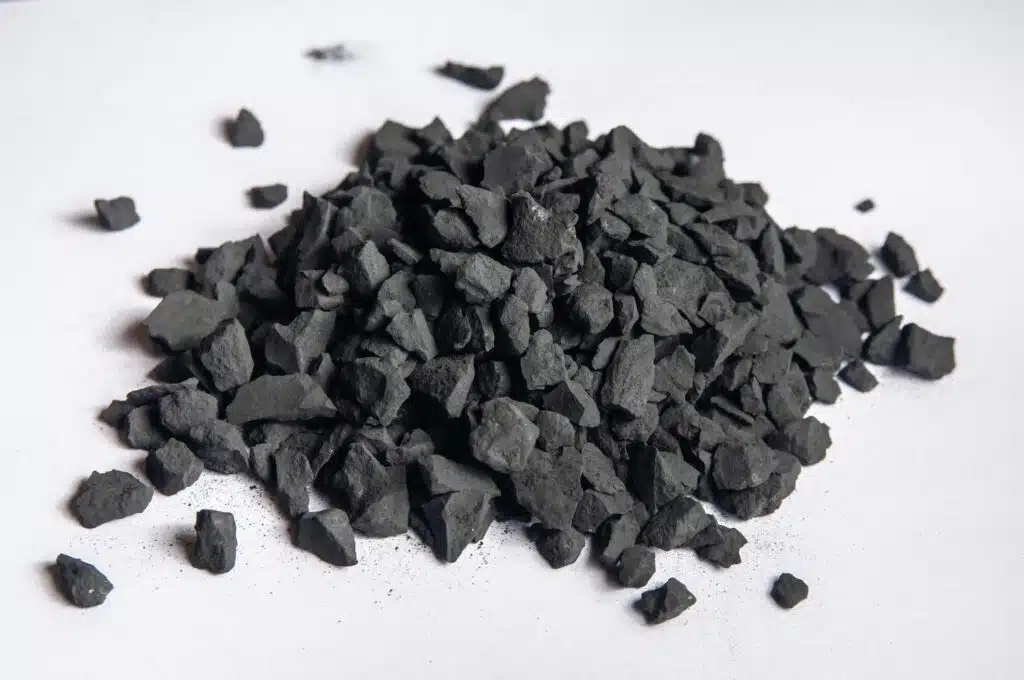
Shungite is a carbon-rich rock best known from the Paleoproterozoic formations of Karelia, Russia. It entered fullerene science in 1992, when researchers reported C60 and C70 in a carbon-rich geological specimen. That finding remains historically important because it demonstrated that closed carbon cages could be investigated outside deliberately manufactured soot.
It does not follow, however, that every shungite stone contains a useful or measurable concentration of free C60. Shungite-bearing rocks vary substantially in carbon content, mineral composition and geological history. Fullerene recovery from a carbonaceous matrix can be extremely low, while some laser-based analytical methods can generate fullerene ions from other carbon precursors during measurement. The scientifically defensible question is therefore not simply whether “shungite contains C60,” but which sample was tested, how it was prepared, which analytical methods were used and whether formation artifacts and contamination were excluded.
Shungite is not a single pure compound. The name is applied to carbonaceous rocks associated with the Paleoproterozoic Onega structure in Karelia. Their carbon occurs alongside variable proportions of silicate, sulfide, carbonate and other mineral phases.
Descriptions such as “elite,” “noble,” “Type I” or “Type III” are widely used in commercial markets, but they should not be mistaken for a universal analytical standard. Carbon percentages and mineral contents can vary within a deposit, between localities and even within a hand specimen. A recent mineralogical investigation, for example, examined shungite samples with substantially different carbon contents and identified mineral components including vanadium carbides in the studied material.[1]
This heterogeneity has two practical consequences. First, a result obtained from a carefully selected high-carbon specimen cannot automatically describe a lower-carbon commercial rock. Second, the non-carbon fraction matters. Quartz, aluminosilicates, sulfides and trace-element-bearing minerals can affect grinding, extraction, adsorption, leaching and instrumental analysis.
Shungite is therefore better described by a measured composition than by appearance or trade name. At minimum, scientific reporting should identify the sampling locality, carbon content, major mineral phases and preparation history.
In 1992, Buseck, Tsipursky and Hettich reported C60 and C70 in a carbon-rich Precambrian shungite specimen. The study used high-resolution transmission electron microscopy and Fourier-transform mass spectrometry. Importantly, the researchers employed both laser desorption and thermal desorption/electron-capture approaches to address whether the fullerene signal might have been created solely by laser irradiation.[2]
The paper provided evidence for fullerene molecules in the specimen examined. It should be cited as a sample-specific analytical result rather than proof of a predictable C60 concentration in every shungite-bearing rock.
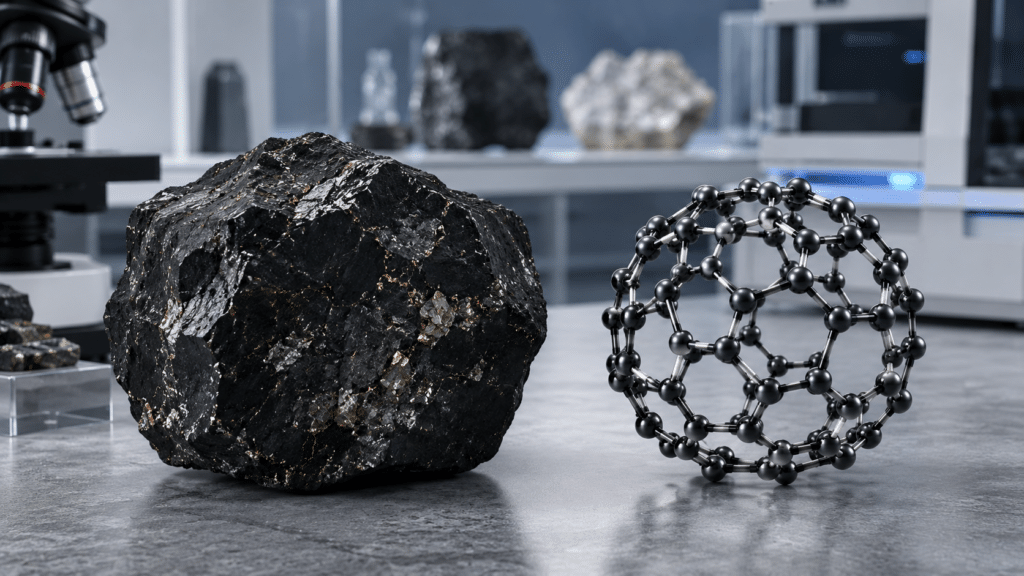
The distinction is critical because natural fullerene occurrence may be spatially heterogeneous and present at trace concentrations. Two pieces of rock sold under the same general name may have different carbon structures, mineral inclusions and extraction behavior. Visual classification cannot confirm molecular C60.
The original result also does not mean that shungite is chemically equivalent to isolated, purified C60. A rock containing a trace molecular component remains a multicomponent geological material. Its environmental, toxicological and processing behavior is controlled by the complete rock, not only by a possible fullerene fraction.
Much of the carbon in shungite is generally discussed as structurally disordered, graphene-like or nanographitic material rather than a bulk collection of individual C60 cages. Diffraction, microscopy, spectroscopy and neutron-scattering studies have supported models involving nanoscale sp2-carbon sheets, turbostratic stacks, pores and multilevel aggregates.
One published model describes high-carbon shungite as a fractal assembly based on nanoscale reduced-graphene-oxide-like sheets. The authors noted that earlier fullerene-like descriptions of shungite globules were superseded by evidence that the globules contain stacks of small graphene-based fragments.[3]
This structural model should itself be treated as a model supported by a body of experimental observations, not as a universal molecular formula for every shungite. Natural geological carbon is chemically and structurally heterogeneous. Terms such as “graphene oxide,” “reduced graphene oxide,” “nanographite” and “fullerene-like carbon” can describe related structural ideas, but they are not interchangeable analytical identities.
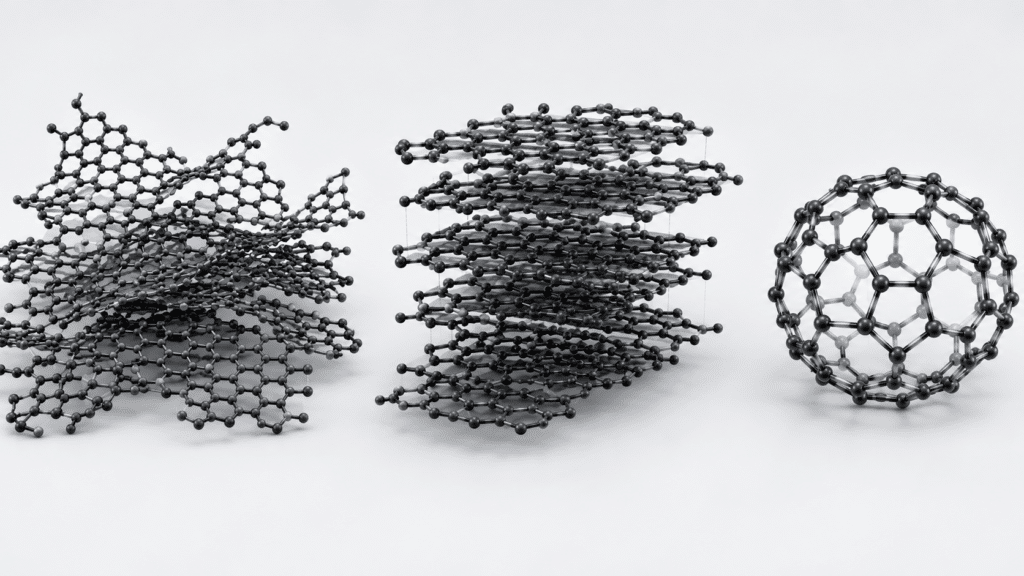
In particular, a curved sp2-carbon fragment is not necessarily C60. Molecular C60 has a defined composition, cage topology and molecular mass. Curvature, nanoscale dimensions or a broad carbon-cluster signal cannot independently establish that identity. Readers needing the molecular distinction can consult the introduction to the structure and identity of Fullerene C60.
Pristine C60 dissolves in selected nonpolar and aromatic solvents, which makes solvent extraction a logical route for examining carbonaceous samples. Geological matrices complicate that apparently simple procedure.
Jehlička and colleagues added known quantities of synthetic C60 to graphite, shungite, coal and quartz, then evaluated several extraction procedures. At low concentrations, recovery from carbonaceous matrices was commonly below 5–6%. The authors attributed the losses to processes including interaction with solid surfaces and possible decomposition during extraction.[4]
This experiment has an important analytical implication: failure to detect C60 in an extract does not always prove that the original sample contained none. If the matrix retains most of the molecule, the concentration reaching the instrument may fall below the method’s detection limit.
Low recovery does not justify assuming that an undetected sample contains C60 either. Recovery must be measured. A defensible procedure includes matrix spikes in which known C60 is added to a comparable portion of the sample before extraction. The recovered amount helps show how much of the target survives the complete preparation and analysis.
Blank samples are equally important. Solvents, extraction vessels, filters and laboratory surfaces can introduce contamination. Because geological fullerene measurements may concern very low concentrations, a signal is meaningful only when it is distinguishable from procedural blanks and supported by a validated calibration.
Laser desorption or laser-ablation mass spectrometry can detect carbon clusters with high sensitivity, but the laser is not always a passive sampling tool. It supplies enough energy to fragment, rearrange and ionize carbonaceous material.
Experiments on graphite, amorphous carbon and aromatic carbon precursors have shown that direct laser vaporization can produce C60, C70 and other fullerene ions during irradiation.[5] More recent ion-mobility mass-spectrometry research has also demonstrated fullerene formation from graphitic and polycyclic aromatic precursors during laser-desorption processing.[6]
A peak at the nominal mass of C60 can therefore require additional evidence when it originates from direct irradiation of a carbon-rich solid. This does not automatically invalidate every laser-based geological detection. It means the method must show that the detected molecule existed before analysis rather than being formed within the instrument.
Useful controls can include varying laser fluence, analyzing non-fullerene carbon reference materials, comparing signal distributions, examining solvent extracts and confirming the result by a second method that does not rely on the same formation mechanism. The 1992 shungite study’s use of thermal as well as laser desorption was relevant to this exact concern.
Analytical confidence increases when chromatographic retention, molecular mass, isotope distribution and an orthogonal spectroscopic response all support the same identity. A general overview of what different techniques can and cannot establish is available in the guide to C60 characterization methods.
No single instrument answers every part of the question. A robust study begins by documenting the geological sample and separating identification from quantification.
Representative sampling is essential. A small, lustrous carbon-rich fragment may not represent a larger shipment or surrounding rock. Multiple subsamples should be collected, homogenized where appropriate and retained for confirmatory work. Carbon content and major mineral phases should be measured rather than inferred from a seller’s category.
For extractable C60, the laboratory should validate the solvent, extraction time and solid-to-liquid ratio. Procedural blanks, unspiked samples, matrix spikes and duplicate extractions help distinguish contamination, poor recovery and real sample variability.
Chromatographic separation is valuable because it can distinguish an analyte with the expected retention behavior from an unresolved mixture of carbonaceous compounds. Mass spectrometry can then support molecular identity, but ionization conditions and possible in-source formation must be considered. Where concentrations permit, UV-visible or vibrational spectra can provide complementary evidence.
Reporting only “C60 detected” is insufficient for a quantitative claim. A useful report should state the result per mass of original rock, the extraction recovery, detection and quantification limits, blank response, calibration procedure and measurement uncertainty.
No. Even when C60 is confirmed in a shungite specimen, the rock and isolated C60 remain fundamentally different materials.
Purified synthetic C60 is a defined molecular material produced through carbon-vaporization or combustion-derived processes followed by extraction, separation and purification. The article on arc-discharge fullerene synthesis explains why fullerene-containing soot is not itself purified C60.
Shungite contains a complex carbon matrix and mineral phases. Crushing or soaking it does not selectively produce a characterized C60 product. Nor does a historical detection establish that the fullerene fraction is extractable, consistent between samples or suitable for a particular industrial or biological use.
The two materials should therefore not be compared through broad labels such as “natural C60” and “synthetic C60.” The relevant comparison is between two analytically defined samples, including molecular composition, mineral or elemental content, extractable fraction and intended processing route.
Shungite can interact with dissolved substances through adsorption and surface chemistry, but adsorption capacity alone does not establish that an untreated rock is safe for drinking-water treatment. A material may remove one contaminant while releasing another.
Jurgelāne and Ločs evaluated shungite for drinking-water treatment and detected the release of several elements, including nickel, copper, lead, cadmium, zinc, chromium and arsenic. In their experimental conditions, lead and cadmium exceeded applicable limits for several days, while nickel remained above its limit for as long as two weeks.[7]
The result should not be generalized into a fixed leaching profile for every shungite sample. It demonstrates why each source and particle preparation requires testing. Mineral composition, particle size, washing, water chemistry, contact time and prior use can all affect release.
Claims that “elite shungite” is automatically safer or more effective are not supported by appearance or carbon percentage alone. Drinking-water treatment materials require evaluation of both contaminant removal and substances released into the treated water. Microbiological safety, hydraulic performance and changes over repeated use also matter.
Consumers should not be advised to place an uncharacterized geological rock in drinking water on the assumption that its carbon content or possible trace C60 guarantees purification.
Chemical assays and preclinical studies have examined shungite powders or extracts, but they do not establish a general health benefit. A laboratory radical assay measures reactions under defined chemical conditions. It does not demonstrate absorption, dose, efficacy or safety in humans.
Likewise, an animal topical experiment applies to the specific powdered material, vehicle, concentration, exposure and model used. It cannot validate commercial stones, drinking-water preparations, oral products or purified C60. Differences in trace elements and mineral phases may be biologically relevant.
This article therefore does not present shungite as an antioxidant supplement, dermatological treatment or source of bioavailable C60. It also does not use shungite research to promote C60 oil. The evidence and safety boundaries for oil formulations belong in the separate review of C60 in olive oil and ESS60.
A claim that a commercial rock “contains C60” should be accompanied by sample-specific evidence. The supplier should identify the analyzed lot, sampling method, laboratory, extraction procedure, recovery controls, analytical technique and quantitative result.
A mass spectrum without blanks or complementary analysis is not enough to establish bulk composition. A certificate stating only total carbon also cannot establish molecular C60. Conversely, an unsuccessful extraction without recovery data cannot conclusively rule out a trace concentration.
Researchers purchasing geological carbon should define whether they need a mineral specimen, sorbent candidate, carbon-structure reference or verified source of an extractable molecule. If the project requires controlled molecular C60, a characterized C60 material is normally the more direct experimental input.
Shungite remains scientifically interesting because it records complex geological carbon transformation and contains nanoscale, structurally disordered carbon. The reported occurrence of C60 and C70 in a particular specimen is an important part of fullerene history.
The evidence does not support describing every shungite stone as fullerene-rich, medically active or safe for untreated drinking water. Reliable conclusions require representative sampling, matrix-aware extraction, artifact controls and orthogonal identification.
The Fullerene supplies defined C60 and C70 materials for controlled scientific and industrial research. Supported by a globally respected scientific research network, The Fullerene represents a leading level of fullerene products and technical capability in Asia. Shungite and purified molecular fullerenes should nevertheless remain clearly separated in specifications, experimental design and public claims.
If your project compares geological carbon with molecular C60 or C70, share the analytical objective, fullerene identity and required material information with The Fullerene. XCT can discuss an appropriate research material without treating shungite as an equivalent source of purified C60.
Discuss Your Fullerene Research Requirement
No. C60 and C70 were reported in a specific carbon-rich shungite specimen, but shungite-bearing rocks are heterogeneous. A result from one sample cannot establish the fullerene content of every commercial stone or deposit.
Not by itself. The method must address contamination, extraction recovery and possible fullerene formation during laser desorption. Confidence improves when chromatography, mass spectrometry and an independent technique support the same identity.
No. Shungite is a multicomponent geological rock, whereas purified C60 is a defined molecular material. Trace detection in a rock does not establish purity, extractability or equivalent performance.
Safety cannot be assumed. Published testing found that some shungite samples released metals including lead, cadmium and nickel into water. Both contaminant removal and material leaching require sample-specific evaluation.
No. Chemical assays and preclinical shungite studies apply to their specific rocks, extracts and test systems. They do not establish human health benefits, oral safety or the effects of purified C60.
For B2B procurement of Fullerene C60 (Pure), 99.95% Purity, No metallic residue, buyers should confirm target purity, required quantity, application, destination country, COA, MSDS/SDS, packaging, storage conditions, and shipping requirements before requesting a formal quotation.
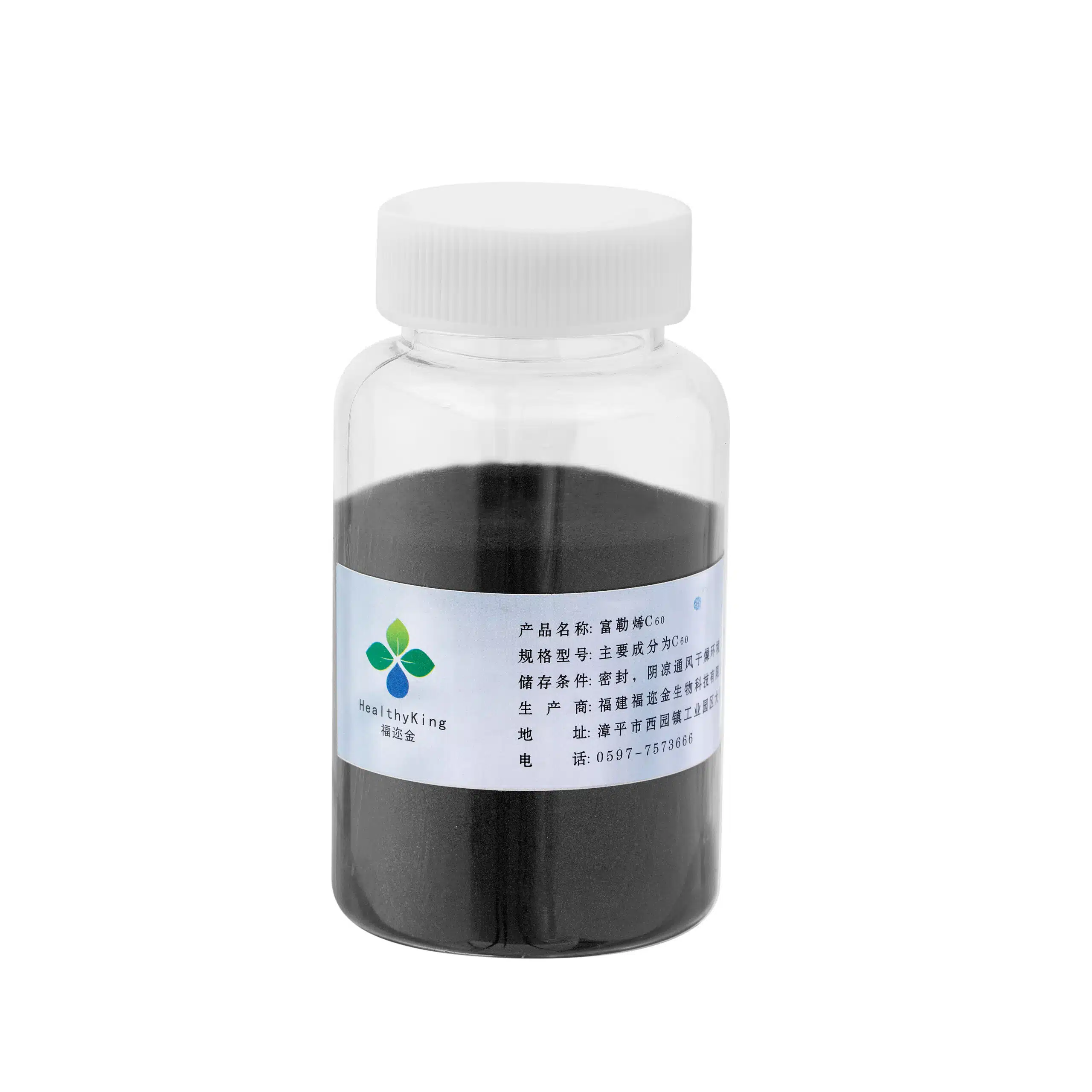
High-purity fullerene C60 is a highly refined nanomaterial designed specifically for the most demanding scientific and industrial applications. This ultra-pure form ensures…
Request product specifications, batch-specific COA, MSDS/SDS, sample availability, packaging details, and international shipping information before confirming your order.
Request DocumentsSubmit your product, purity, quantity, application, destination country, and documentation requirements. Our team will help confirm availability, COA, MSDS/SDS, packaging, and quotation details.