
XCT Insights
Stay Updated
Fullerene research, applications and company updates, delivered occasionally.
Latest from XCT
View all

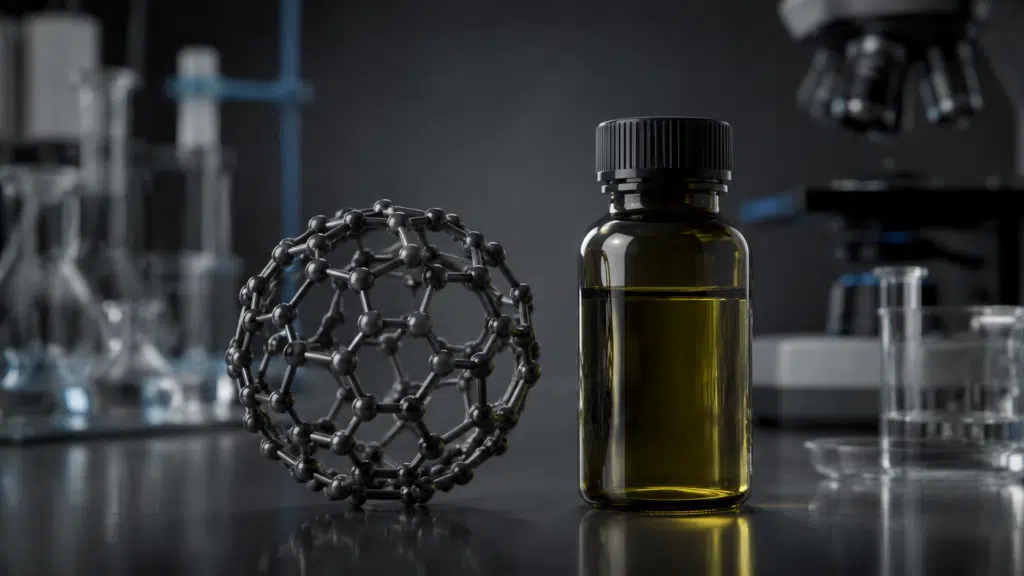
C60 dissolved or dispersed in olive oil has attracted attention because of animal studies examining oxidative stress, toxicology and lifespan. Commercial descriptions may also use terms such as “ESS60,” “liposoluble C60” or “C60 oil.” These labels can make the material sound like a clinically defined ingredient, but they do not establish a single chemical identity, manufacturing standard, exposure profile or regulatory status.
The scientific evidence is more limited and more formulation-dependent than many consumer summaries suggest. One small rat study reported a substantial lifespan difference after repeated administration of C60 in olive oil, while later mouse research did not reproduce a lifespan benefit and identified potentially serious light-dependent toxicity. More recent short-term toxicology and genotoxicity studies add useful evidence, but they do not establish long-term safety or health benefits in humans.
Pristine C60 is a closed carbon cage containing 60 carbon atoms. It is a discrete molecular material rather than an oil-soluble vitamin or conventional dietary ingredient. C60 has very low compatibility with water and can interact differently with organic solvents, lipids and dispersing systems. For a general introduction to the molecular structure, see what Fullerene C60 is.
When C60 is combined with olive oil, the resulting material must be defined by more than the names of its two starting components. Relevant variables include the identity and purity of the fullerene, actual C60 concentration, preparation method, degree of dissolution or aggregation, oil composition, residual processing solvents, oxygen exposure, light history, storage temperature and age of the formulation.
Two products labelled “C60 in olive oil” may therefore differ in composition and behavior. A study result obtained with one characterized preparation should not automatically be transferred to a formulation from another producer or to a material that has undergone different storage conditions.
“ESS60” is not the IUPAC name of a separate fullerene molecule. In commercial use, it may refer to a particular supplier’s purified C60 material or formulation concept. The underlying cage is still C60 unless analytical evidence shows that it has been chemically transformed.
A proprietary designation may communicate a manufacturing or quality position, but it does not replace chemical characterization. The term alone does not establish purity, residual-solvent content, particle or aggregate state, light stability, oral bioavailability, toxicological equivalence or regulatory approval.
Technical content should therefore distinguish among pristine C60 powder, C60 dissolved or dispersed in oil, functionalized C60 derivatives, fullerenols and formulated consumer products. These categories are not interchangeable, and evidence generated for one cannot be assigned automatically to another.
Interest in C60–olive oil formulations increased after Baati and colleagues published a 2012 study in Biomaterials. The researchers administered C60 dissolved in olive oil to rats and reported that the treated group had a longer estimated lifespan than water- and olive-oil-treated comparison groups. They also examined the formulation in a carbon-tetrachloride liver-injury model and proposed that attenuation of oxidative stress might help explain the observations.[1]
The study is scientifically notable, but its result should not be expressed as “C60 doubles lifespan” without qualification. It was an animal experiment with a limited experimental population, a specific preparation protocol and a specific dosing schedule. It was not a randomized human clinical trial and did not establish a recommended oral intake for people.
Lifespan findings are especially sensitive to animal strain, husbandry, treatment schedule, control-group survival and statistical design. A large difference within one experiment can justify further investigation, but it does not by itself demonstrate that the same effect will occur in another laboratory, another species or humans.

A 2021 study by Grohn and colleagues examined commercial C60–olive oil samples, laboratory-prepared material, acute toxicity, light exposure and lifespan in mice. The researchers reported substantial differences among commercial samples in appearance, impurity profile, concentration and biological activity.[2]
In their lifespan experiments, the investigators did not observe significant lifespan or healthspan benefits from pristine C60 in extra-virgin olive oil compared with the relevant controls. The result does not prove that the earlier rat experiment was invalid, but it shows that the proposed longevity effect has not been reproduced consistently across animal systems.
This later evidence makes several claims inappropriate for a professional material supplier:
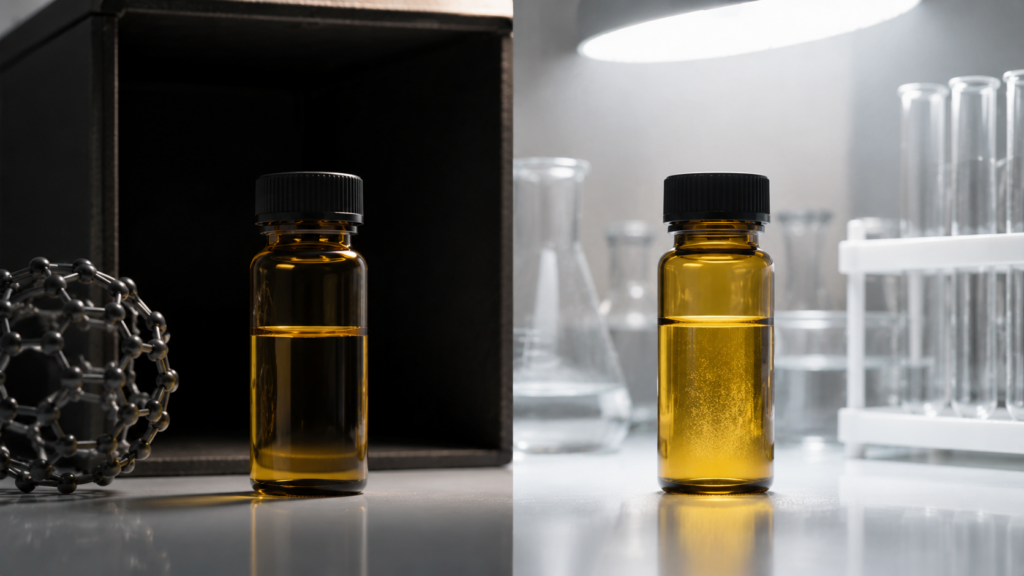
The Grohn study also reported that laboratory-prepared C60–olive oil caused no acute toxicity under the tested pristine condition but formed toxic species after exposure to levels of light consistent with ambient illumination. Some exposed formulations caused substantial morbidity and mortality in the mouse model.[2]
Light sensitivity is chemically plausible. Photochemical degradation of C60 was reported as early as 1991, demonstrating that the fullerene cage is not universally stable under irradiation.[3] In an oil formulation, the final degradation profile may involve the fullerene, oxygen, lipid components and secondary oxidation products. It is therefore insufficient to assess only the C60 powder before formulation.
This does not mean that every light-exposed C60 formulation will produce the same degradation products or toxicity. It means that photostability must be studied for the actual formulation, packaging and exposure conditions. A dark bottle is a packaging precaution, not proof of long-term chemical stability.
A research or product-development program should define the C60 concentration and analytical method, confirm the starting material, monitor the formulation over time and compare appropriately controlled light, oxygen and temperature conditions. The study should investigate whether C60 concentration changes and whether new chemical species or lipid-oxidation products appear.
Visual appearance alone is insufficient. A solution that remains dark or purple has not necessarily retained its original molecular composition, and a clear-looking formulation has not necessarily been demonstrated to be safe.
A 2024 publication reported a regulatory-compliant 14-day repeated-dose oral study of a specific C60 preparation dissolved in extra-virgin olive oil. Under the conditions tested, the investigators did not observe treatment-related adverse effects in rats at the reported dose levels.[4]
This is useful preclinical evidence, but its scope must remain precise. It supports a conclusion about a characterized formulation, animal model, route of administration, exposure duration and measured endpoints. It does not establish:
The distinction between hazard evaluation and efficacy is fundamental. A short-term study that does not detect toxicity does not demonstrate that the material improves health, and it cannot be converted directly into consumer dosing advice.
A 2025 study examined a particular C60/C70 mixture in extra-virgin olive oil using a regulatory-compliant in vivo micronucleus test. The authors reported the outcome for that defined mixture and test design while also emphasizing the need for further regulatory-compliant preclinical studies.[5]
This study should not be represented as universal proof that all C60, C70 or oil-based fullerene formulations are free from genotoxic risk. Its test material was a specified C60/C70 mixture rather than every possible pristine fullerene, derivative or commercial preparation. A negative result in one assay does not answer every chronic, reproductive, developmental, carcinogenic or formulation-specific safety question.
Material identity matters throughout toxicology. Differences in fullerene composition, aggregation, impurities, solvent residues, oxidation products and exposure route can change the result. This is why analytical characterization and toxicological interpretation must remain connected.
The animal literature does not currently establish that oral C60 improves human lifespan, sleep quality, cognition, exercise recovery, joint health, inflammation or mitochondrial performance. Mechanistic hypotheses concerning radical reactions or membrane interaction may be scientifically interesting, but they are not equivalent to demonstrated clinical outcomes.
In particular, the following propositions should not appear as established facts:
These statements would require formulation-specific human pharmacokinetic, safety and controlled efficacy evidence. Animal experiments, cell studies and user reports cannot supply that level of proof.
In 2020, the US Food and Drug Administration and Federal Trade Commission issued a warning letter concerning a C60 product marketed with claims related to preventing or treating COVID-19. The FDA determined that the disease-related marketing caused the product to be treated as an unapproved new drug under US law.[6]
The broader lesson is not limited to COVID-19. Claims that a C60 formulation treats, prevents or mitigates disease require the applicable regulatory evidence and authorization. Describing a product as a supplement does not automatically permit therapeutic claims.
Cosmetic use also requires caution. In its 2023 final opinion, the European Commission’s Scientific Committee on Consumer Safety concluded that the submitted information was insufficient to establish the safety of the assessed fullerene nanomaterials in cosmetics. The committee could not exclude genotoxic potential for C60 and C70 and highlighted concerns involving impurities, phototoxicity, dermal absorption, systemic availability and organ accumulation.[7]
These findings do not prove that every fullerene-containing cosmetic is harmful. They do demonstrate that “antioxidant” language or a high chromatographic purity value is not a substitute for a complete ingredient and finished-formulation safety assessment.
Pristine C60 supplied for chemical, material or formulation research should not be represented as a finished supplement, medicine or clinically validated cosmetic ingredient. A raw-material specification describes the material offered by the supplier; it does not establish the safety of a finished formulation or authorize a route of human exposure.
For formulation research, relevant questions may include fullerene identity, chromatographic profile, residual solvents, elemental impurities, moisture, oxidation state, dissolution or aggregation behavior and light stability. The correct analytical package depends on the proposed research system. The guide to C60 HPLC purity analysis explains why one chromatographic percentage cannot measure every relevant impurity.
Researchers should also avoid assuming that evidence for pristine C60 transfers to fullerenols, carboxyfullerenes, cationic derivatives, C60/C70 mixtures or proprietary formulations. Each material requires its own identity and evidence base.
C60 in oil remains a legitimate subject for preclinical formulation, photochemistry, toxicology and pharmacokinetic research. The available literature supports continued investigation into how fullerene identity, purity, light exposure and formulation conditions affect biological results.
It does not currently support marketing C60 in olive oil as a proven human longevity intervention. The 2012 rat result is a research finding, not a human efficacy claim. The failed reproduction of a lifespan benefit in mice, the demonstrated influence of light and the limited duration of current regulatory-style studies make a cautious, formulation-specific interpretation necessary.
The most scientifically useful position is neither to declare C60 universally safe nor universally toxic. The evidence indicates that results depend on what fullerene material was tested, how it was prepared, how it was stored, how exposure occurred and which endpoints were measured.
No. A 2012 rat study reported a lifespan difference, but later mouse research did not reproduce a significant lifespan benefit. Controlled human evidence establishing a longevity effect is not available.
No. A short-term animal study provides evidence only for the tested formulation, exposure conditions, duration and endpoints. It cannot establish chronic safety, a human dose or safety for every commercial formulation.
C60 and oil components can undergo photochemical change. A mouse study found that light-exposed C60–olive oil formed products associated with serious toxicity, so stability must be evaluated for the actual formulation and packaging.
ESS60 is a commercial or proprietary designation rather than the IUPAC name of a separate fullerene molecule. The term alone does not establish purity, composition, stability, safety or regulatory approval.
Research-grade C60 is a raw material, not a finished oral product. Its purity specification does not establish formulation safety, dosage, clinical effectiveness or regulatory suitability for human consumption.
For B2B procurement of Fullerene C60 (Pure), 99.95% Purity, No metallic residue, buyers should confirm target purity, required quantity, application, destination country, COA, MSDS/SDS, packaging, storage conditions, and shipping requirements before requesting a formal quotation.
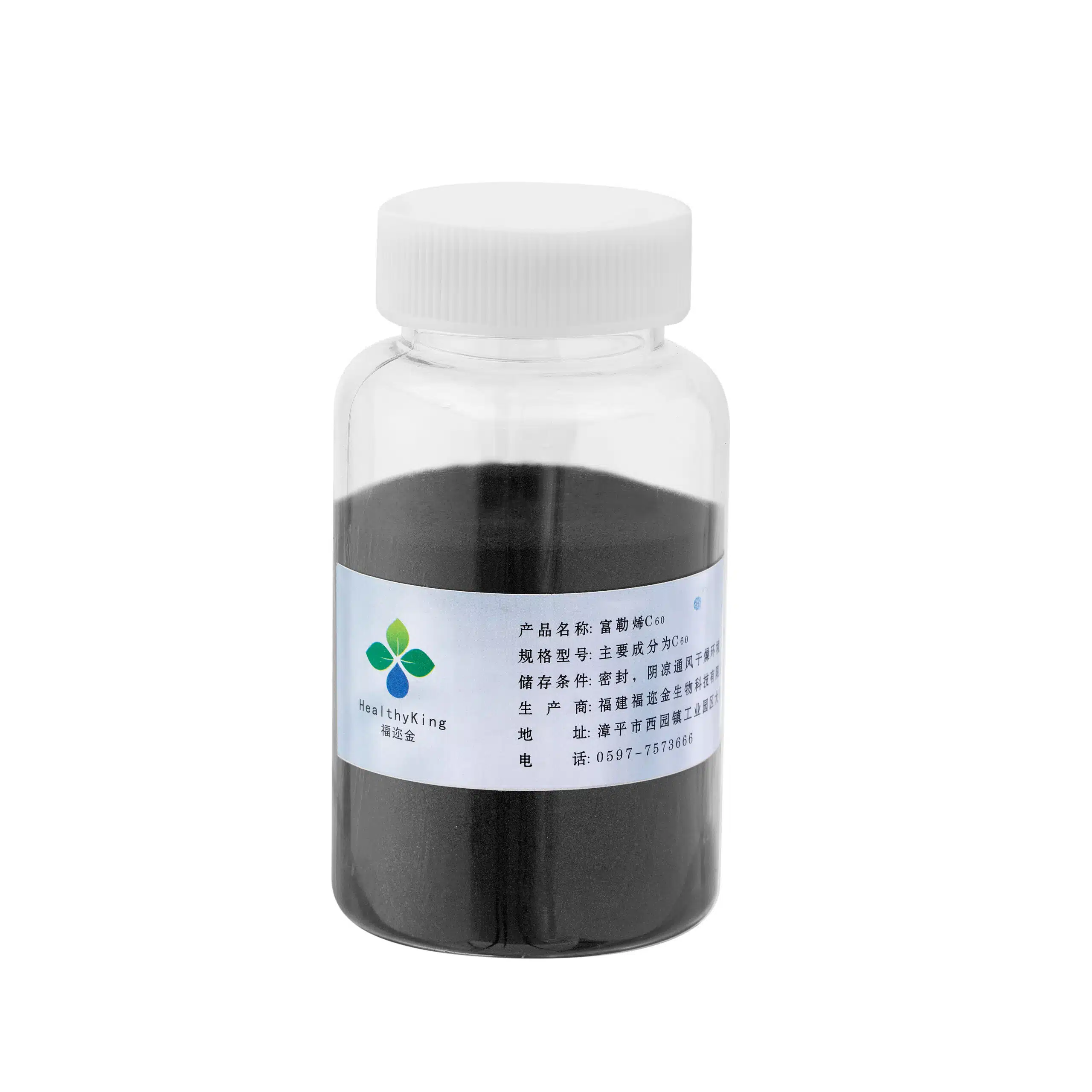
High-purity fullerene C60 is a highly refined nanomaterial designed specifically for the most demanding scientific and industrial applications. This ultra-pure form ensures…
Request product specifications, batch-specific COA, MSDS/SDS, sample availability, packaging details, and international shipping information before confirming your order.
Request DocumentsSubmit your product, purity, quantity, application, destination country, and documentation requirements. Our team will help confirm availability, COA, MSDS/SDS, packaging, and quotation details.