XCT Insights
Stay Updated
Fullerene research, applications and company updates, delivered occasionally.
Latest from XCT
View all

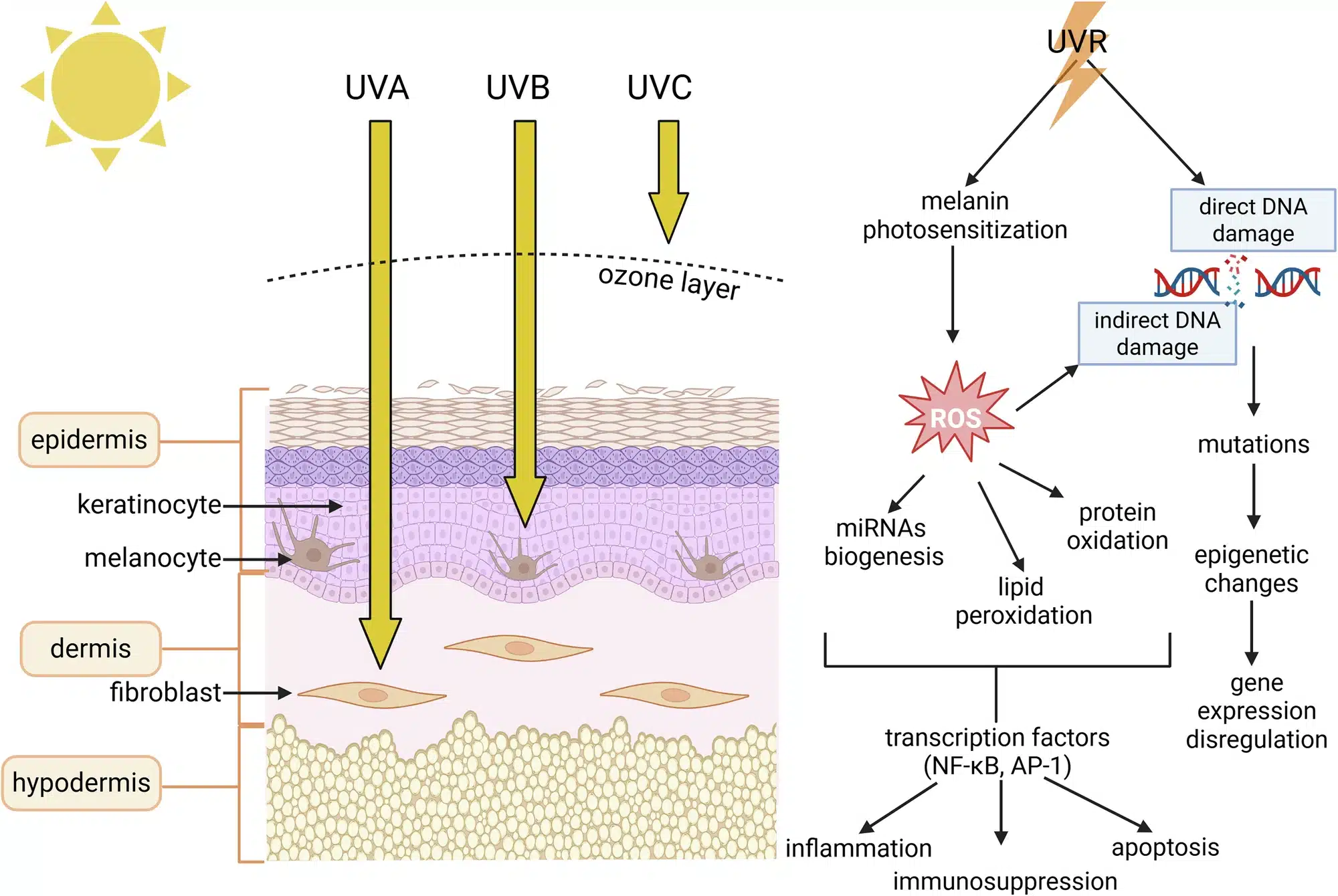
The cutaneous interface is constantly exposed to solar ultraviolet radiation (UVR), which is divided into UVB (290–320 nm) and UVA (320–400 nm) wavelengths. While UVB primarily targets the epidermis to cause direct DNA lesions, UVA penetrates deep into the dermis, generating an excess of reactive oxygen species (ROS). This UV-induced oxidative stress represents the primary upstream trigger for premature senescence (photoaging) and hyperpigmentation disorders, including melasma, ephelides (freckles), and solar lentigines.
To counteract this damage, modern dermatological research has focused on nanomaterials with extreme antioxidant capacities. Among these, Carbon 60 (C60) fullerene—a hollow, spherical cage of icosahedral symmetry—has emerged as a premier active ingredient. Acting as a “radical sponge,” C60 neutralizes free radicals with catalytic efficiency, far exceeding the performance of traditional antioxidants. This article provides a comprehensive review of the molecular mechanisms through which fullerenes regulate melanogenesis and protect human skin from UV-induced genotoxicity.
Melanogenesis is a highly regulated biochemical pathway occurring within specialized lysosome-like organelles called melanosomes, which are housed inside epidermal melanocytes. The fundamental, rate-limiting step of this pathway is governed by tyrosinase (EC 1.14.18.1), a copper-containing metalloenzyme. Tyrosinase coordinates two sequential, distinct reactions:
In the absence of sulfhydryl compounds (such as glutathione or cysteine), o-dopaquinone rapidly undergoes non-enzymatic cyclization to form dopachrome. This intermediate is subsequently catalyzed by tyrosinase-related protein 1 (TRP-1) and tyrosinase-related protein 2 (TRP-2) to yield the insoluble brown-black pigment eumelanin.
The transcription of the genes encoding tyrosinase, TRP-1, and TRP-2 is coordinated by the master regulator, Microphthalmia-associated transcription factor (MITF). Upon UV exposure, keratinocytes release alpha-melanocyte-stimulating hormone ($\alpha$-MSH), which binds to melanocortin-1 receptors (MC1R) on melanocytes, triggering cAMP/protein kinase A (PKA) signaling to upregulate MITF.
Simultaneously, UV-induced ROS act as potent secondary messengers. These free radicals activate the p38 mitogen-activated protein kinase (MAPK) pathway, which directly phosphorylates and activates MITF, causing a rapid surge in tyrosinase expression and leading to visible hyperpigmentation.
Fullerene C60 controls hyperpigmentation primarily by intercepting the upstream oxidative signaling before it can trigger the transcriptional machinery of melanogenesis.
When formulated as a water-soluble, polymer-wrapped derivative (commonly stabilized with polyvinylpyrrolidone, or PVP, and known as “Radical Sponge”), C60 acts as a molecular shield. Upon UVA irradiation, fullerenes inside melanocytes rapidly absorb and quench reactive species, eliminating the oxidative trigger. Amperometric and fluorometric assays confirm that this persistent radical scavenging halts the activation of the p38 MAPK cascade.
By blocking the ROS-mediated activation of MITF, C60 suppresses the downstream expression of the entire melanogenic multi-enzyme complex. Research demonstrates that treatment with C60 significantly downregulates:
Furthermore, fullerenes inhibit the synthesis of Prostaglandin E2 (PGE2) in the reconstructed human epidermis (RhE) after UVB exposure. Because PGE2 acts as a paracrine stimulator that increases tyrosinase activity and promotes the dendricity of melanocytes (allowing them to transfer mature melanosomes to keratinocytes), its downregulation by C60 serves as a powerful secondary mechanism to prevent skin tanning and spot formation.
While traditional skin-lightening actives focus solely on enzymatic pathways, C60 provides broad-spectrum protection by shielding epidermal cells from physical UV injuries and genotoxicity.
Super-highly hydroxylated fullerene derivatives, or fullerenols (such as $C_{60}(OH)_{44}$), possess exceptional water solubility and biocompatibility. In human keratinocytes (HaCaT), pre-treatment with fullerenols significantly represses the apoptosis induced by UVB light.
At a molecular level, fullerenols neutralize the hydroxyl radicals ($^{\bullet}OH$) that attack the cell nucleus, drastically reducing chromatin condensation and suppressing the formation of cyclobutane pyrimidine dimers (CPDs)—the primary genetic mutation responsible for skin carcinogenesis.
Sebum, specifically squalene, is highly vulnerable to UVB-induced peroxidation, which generates inflammatory byproducts that damage the skin barrier and exacerbate acne vulgaris. Lipophilic C60, when solubilized in plant-derived squalane (e.g., LipoFullerene), easily integrates into the lipid bilayers of the stratum corneum and sebaceous glands.
Under UVB irradiation, lipophilic C60 prevents the oxidative degradation of squalene, preserving membrane fluidic dynamics, reducing cutaneous erythema, and lowering inflammatory acne lesions without disrupting natural barrier functions.
The efficacy of C60 in advanced skincare formulations is strictly dependent on molecular purity. Traditional synthesis of fullerenes via carbon arc-discharge often utilizes organic solvents like toluene for extraction and separation. If trace amounts of these aromatic hydrocarbons remain trapped within the hollow carbon cages, they can induce severe cellular toxicity, offsetting any biological benefits.
To address these safety concerns, premium skincare raw materials are produced under strict pharmaceutical standards. Industry leaders such as Carbonsphere, in partnership with biotechnology pioneer Healthyking, utilize advanced continuous combustion technology. This eco-friendly, solvent-free purification process eliminates all volatile organic compounds, yielding an ultra-pure (99.95%) cosmetic-grade C60 ingredient that has been biologically validated as completely non-toxic and non-irritating for long-term topical use.
Vitamin C (L-ascorbic acid) acts as a sacrificial reducing agent, meaning it is consumed and oxidized during the process of neutralizing free radicals. It is also highly unstable and degrades when exposed to light, air, and heat. C60, conversely, is a highly stable “radical sponge” that catalytic-neutralizes multiple ROS molecules without breaking down, maintaining its photostability and potency inside the skin for over 24 hours.
Yes. Pristine C60 is naturally hydrophobic and is ideal for oil-based formulations (e.g., in plant-derived squalane) to target sebum-rich structures and protect cell membranes. For water-based applications like serums and toners, formulators utilize polymer-wrapped complexes (like PVP-wrapped C60) or highly hydroxylated water-soluble fullerenols ($C_{60}(OH)_{x}$), which disperse easily in aqueous phases.
No, C60 does not replace inorganic UV filters like Zinc Oxide or Titanium Dioxide. While C60 has light-scattering and some UV-absorbing properties, its main role is biological photoprotection. It functions as a secondary defense, neutralizing the massive wave of reactive oxygen species generated by the UV rays that slip past primary sunscreens, thereby preventing cellular necrosis and DNA damage.
UVA and UVB exposure creates intracellular superoxides and hydroxyl radicals that attack DNA strands. Fullerenes quickly enter keratinocytes and scavenge these localized radicals, significantly repressing chromatin condensation and the formation of cyclobutane pyrimidine dimers (CPDs), which are the main precursors to skin cancer.
In vivo and in vitro dermatological safety studies have demonstrated that high-purity, cosmetic-grade C60 (such as the sublimed, solvent-free grades produced by Carbonsphere and Healthyking) does not cause skin irritation, sensitization, or genotoxicity. The primary risk resides in lower-grade, industrial C60, which may contain residual toluene solvents.
For B2B procurement of Fullerene C60 (Pure), 99.95% Purity, No metallic residue, buyers should confirm target purity, required quantity, application, destination country, COA, MSDS/SDS, packaging, storage conditions, and shipping requirements before requesting a formal quotation.
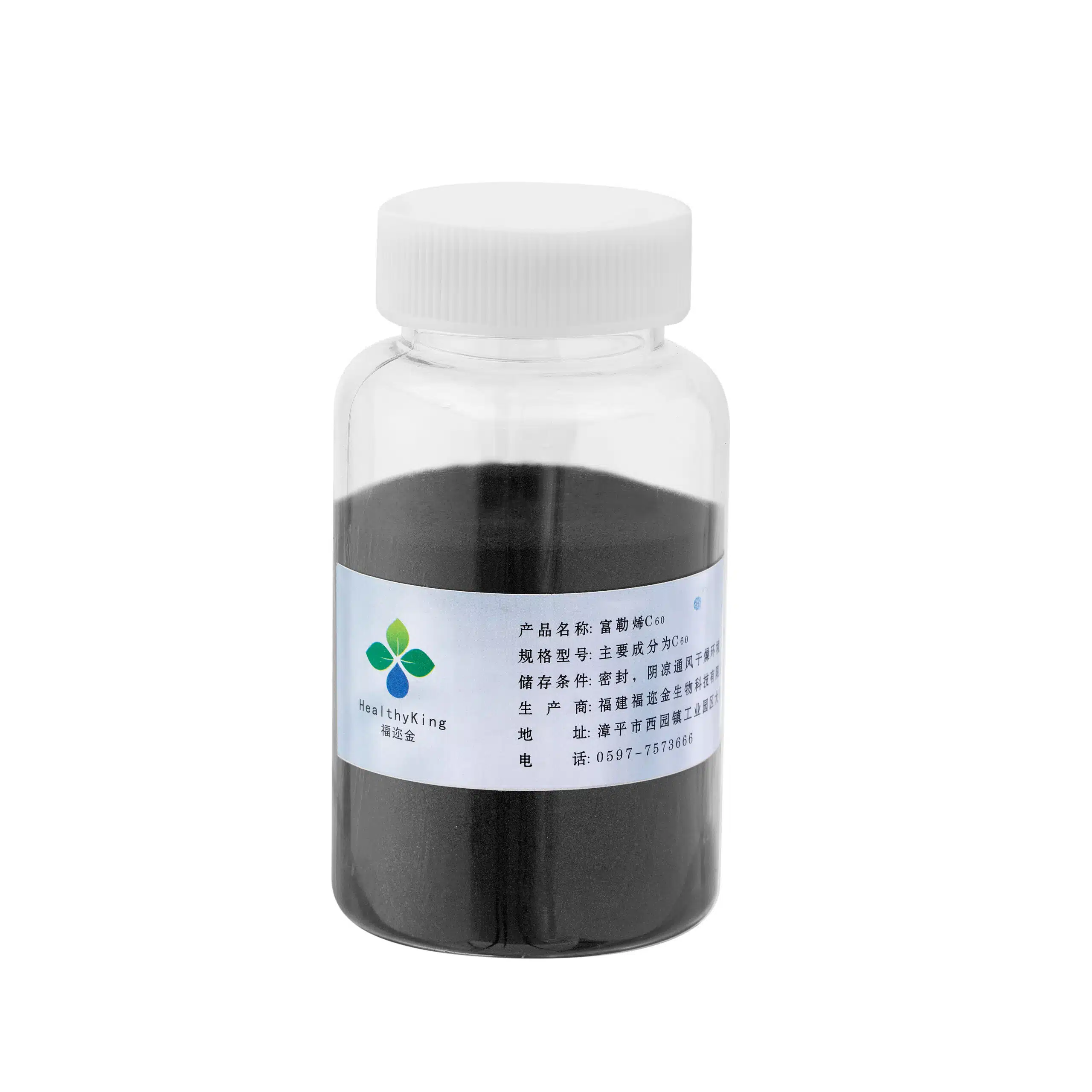
High-purity fullerene C60 is a highly refined nanomaterial designed specifically for the most demanding scientific and industrial applications. This ultra-pure form ensures…
Request product specifications, batch-specific COA, MSDS/SDS, sample availability, packaging details, and international shipping information before confirming your order.
Request DocumentsSubmit your product, purity, quantity, application, destination country, and documentation requirements. Our team will help confirm availability, COA, MSDS/SDS, packaging, and quotation details.