XCT Insights
Stay Updated
Fullerene research, applications and company updates, delivered occasionally.
Latest from XCT
View all
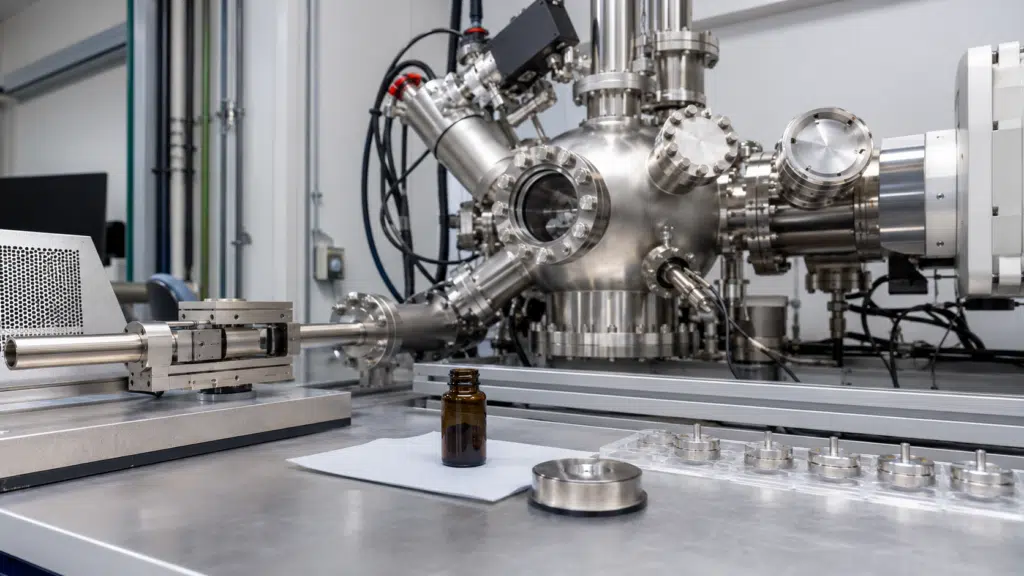
X-ray photoelectron spectroscopy, commonly abbreviated XPS, is a valuable method for studying the near-surface composition and electronic environment of fullerene C60 powders, films and interfaces. It can help researchers examine whether oxygen or another element is present at the surface, compare C60 deposited on different substrates, investigate functionalization and monitor changes caused by processing or environmental exposure.
C60 XPS data are also easy to overinterpret. The method samples only the outermost region of a material, so its elemental percentages do not automatically describe an entire powder batch or film thickness. A broad C 1s envelope does not justify fitting an unlimited number of chemical components, and a higher-binding-energy signal may include intrinsic shake-up structure rather than an oxygen-containing functional group.
This guide explains what XPS can measure in a C60 sample, how survey and high-resolution spectra serve different purposes, why the characteristic C 1s line shape requires careful treatment, and how charging, contamination, substrate interactions and X-ray exposure affect the result.
XPS irradiates a sample with X-rays and measures the kinetic energy of emitted photoelectrons. From the photon energy, measured kinetic energy and instrument work-function terms, the system determines photoelectron binding energies. Elemental identity and local electronic environment influence the positions and shapes of the resulting signals.
Because electrons lose energy while travelling through matter, only those generated sufficiently close to the surface can escape without substantial inelastic scattering. XPS therefore probes a shallow near-surface region rather than the complete volume of a powder particle or thick film. The exact information depth depends on photoelectron energy, material, emission angle and instrument geometry.1
For a nominally pristine C60 specimen, XPS can be used to investigate:
XPS does not directly count intact C60 molecules. It measures photoelectrons from elements and chemical environments in the sampled region. Molecular identity therefore requires evidence from the overall spectrum and complementary techniques.
An XPS survey spectrum scans a broad binding-energy range. It is normally used to identify which detectable elements are present and to select regions for closer examination. A survey can reveal whether the expected carbon signal dominates and whether oxygen, nitrogen, silicon, metals or other elements appear above the method’s practical detection capability.
A high-resolution scan covers a narrower energy range using acquisition settings intended to provide more detail. In C60 studies, the C 1s region is usually central. O 1s and substrate-related regions may also be important when the analytical question concerns oxidation, functionalization or an interface.
The survey and narrow scans should not be treated as interchangeable. A survey may be adequate for detecting an unexpected element but insufficient for defensible peak-shape analysis. Conversely, a narrow C 1s scan alone cannot establish which other elements are present.
All 60 carbon atoms in an isolated C60 molecule are symmetry-equivalent, although the molecule contains two types of carbon–carbon bond. In an idealized interpretation, pristine molecular C60 therefore produces a principal C 1s photoelectron feature rather than the many chemically distinct carbon components expected from a complex oxygenated polymer.
The measured line is not an infinitely narrow peak. Instrument resolution, molecular and solid-state effects, lifetime broadening, energy losses, sample charging and substrate interactions all contribute to the observed shape.
A common mistake is to fit every shoulder or asymmetry as a separate conventional carbon functional group. Reliable C 1s analysis requires the analyst to begin with the known material chemistry, inspect the survey spectrum and residuals, and use the minimum defensible set of components. Practical guidance for C 1s analysis emphasizes that unsupported peak fitting can create apparently precise but chemically meaningless results.2
C60 has a conjugated electronic system. During photoemission, the removal of a core electron can be accompanied by excitation of a valence electron into an unoccupied state. The photoelectron then leaves with less kinetic energy, producing additional intensity at higher apparent binding energy than the main C 1s peak.
These energy-loss features are commonly described as shake-up satellites. They are not automatically separate oxygen-containing carbon species. Studies comparing experimental and calculated carbon spectra have specifically used C60 to examine low-energy π-type shake-up structure.3
This distinction is critical when evaluating nominally pristine fullerene material. Assigning all higher-binding-energy intensity to C–O, C=O or O–C=O components may exaggerate apparent oxidation, especially if the corresponding O 1s evidence is weak or absent.
An analyst should consider:
Peak area alone cannot establish the identity of a satellite or functional group.
An O 1s signal can have several possible origins. It may reflect oxygen chemically attached to the fullerene cage, adsorbed water, residual solvent, substrate oxide, airborne contamination or another oxygen-containing material introduced during sample preparation.
For a thin C60 film, the substrate may contribute oxygen if the film is incomplete or sufficiently thin for substrate photoelectrons to be detected. Oxidized silicon, conductive oxide glass and many technical substrates already contain oxygen. A powder mounted using tape or another support can likewise expose signals unrelated to C60 if coverage is incomplete.
Research on chemically oxidized C60 has used XPS as part of a broader method set to support the presence of oxygen-containing functionality.4 That does not mean an oxygen peak alone proves a particular C60 oxide structure. Functional-group assignments should be supported by consistent C 1s and O 1s behavior, controlled reference samples and complementary methods such as FTIR, Raman, NMR or mass spectrometry where applicable.
The safest conclusion may sometimes be limited to “oxygen-containing species were detected in the XPS sampling region.” That statement is more defensible than assigning a specific fullerene epoxide, hydroxyl group or carbonyl structure without adequate evidence.
C60 powder must be mounted securely enough to survive transfer into the vacuum system without contaminating the instrument. The method should also avoid exposing the analysis area to an adhesive, dirty tool or incompatible support.
A powder pressed into a suitable holder may present a different surface from loose particles attached to conductive tape. Pressing can change particle contact and expose a newly prepared surface, while tape can contribute its own carbon, oxygen or silicon signals. The mounting procedure must therefore be documented.
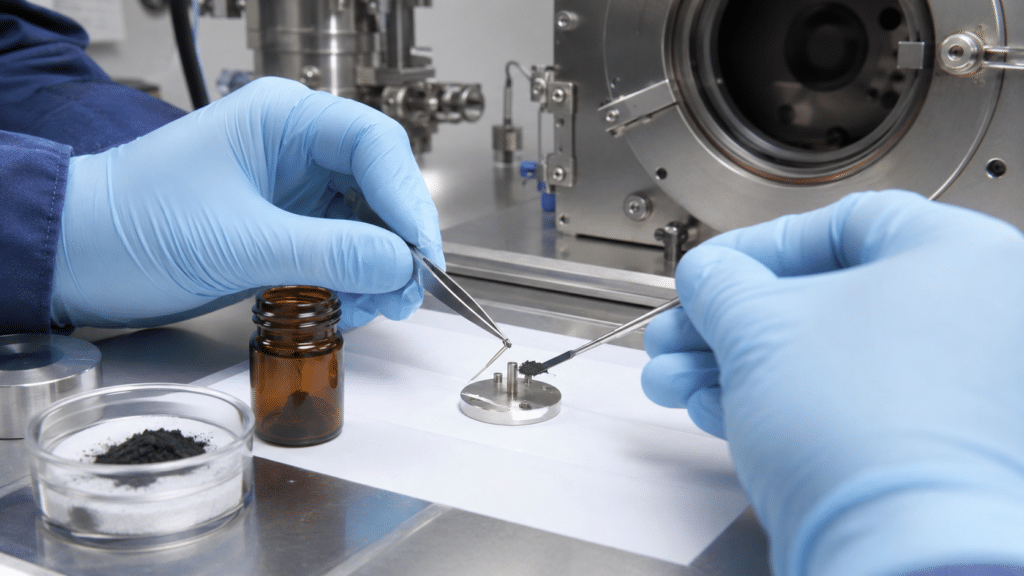
Handling tools should be clean, and analysts should minimize contact with the measurement area. Air exposure can introduce adsorbates and adventitious contamination. If the research question concerns the as-produced surface, transfer time and storage atmosphere become part of the experiment.
Vacuum treatment may remove weakly adsorbed species, but it should not be assumed to restore a pristine surface. The time, pressure and temperature history should be recorded, particularly if the sample is heated before analysis.
C60 powders and films may charge during XPS, particularly when they are poorly connected to ground or deposited on an insulating substrate. Positive charge left by photoelectron emission can shift and distort measured peaks. Non-uniform charging can broaden a signal or cause different sample regions to shift by different amounts.
Charge neutralizers can supply low-energy electrons, sometimes together with low-energy ions, to reduce charge accumulation. Effective neutralization depends on the sample, geometry and instrument. It does not eliminate the need for a defensible binding-energy reference.
Using adventitious carbon at a fixed C 1s value is widespread, but it is not universally valid. This is especially important for a sample whose principal material is itself carbon. Modern XPS guidance describes the limitations of charge correction and recommends reporting the reference and neutralization procedure explicitly.5
For C60 films on conductive substrates, referencing may use the substrate Fermi level, a known substrate feature or another method appropriate to the experimental design. For insulating specimens, the laboratory should select and validate a strategy rather than silently shifting the main fullerene peak to a convenient literature value.
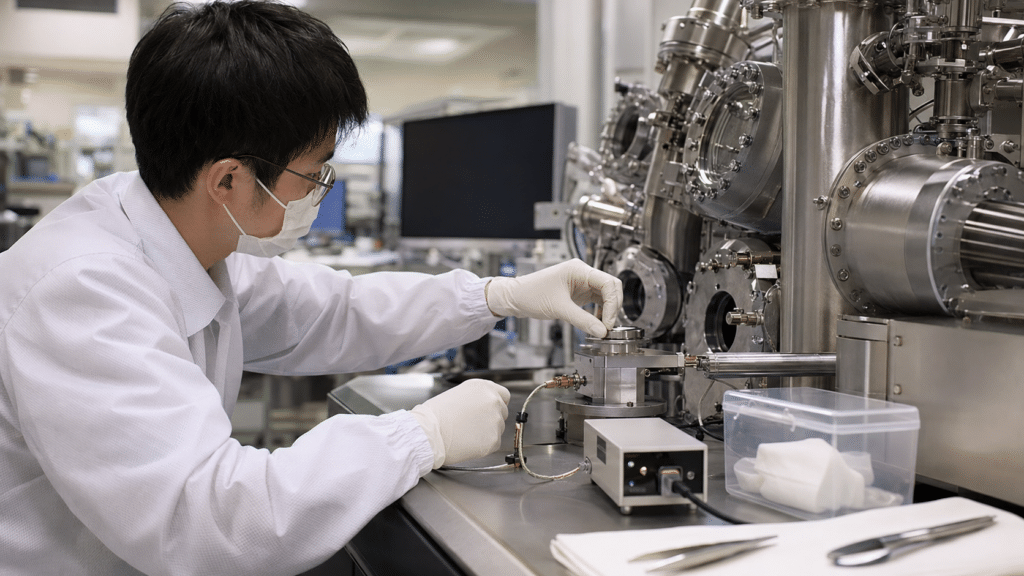
XPS is particularly useful for studying C60 thin films because its surface sensitivity can reveal changes with film thickness and substrate. However, that same sensitivity complicates interpretation.
For a very thin or discontinuous film, the spectrum may contain substantial substrate intensity. As coverage increases, substrate signals are attenuated while the C60 signal becomes stronger. This behavior can help evaluate relative coverage, but converting attenuation into a numerical thickness requires assumptions about film uniformity, electron attenuation and geometry.
C60 islands, pinholes and rough films do not behave like a perfectly uniform overlayer. A thickness obtained from an attenuation model should therefore be described as model-dependent unless verified by profilometry, ellipsometry, microscopy or another suitable method.
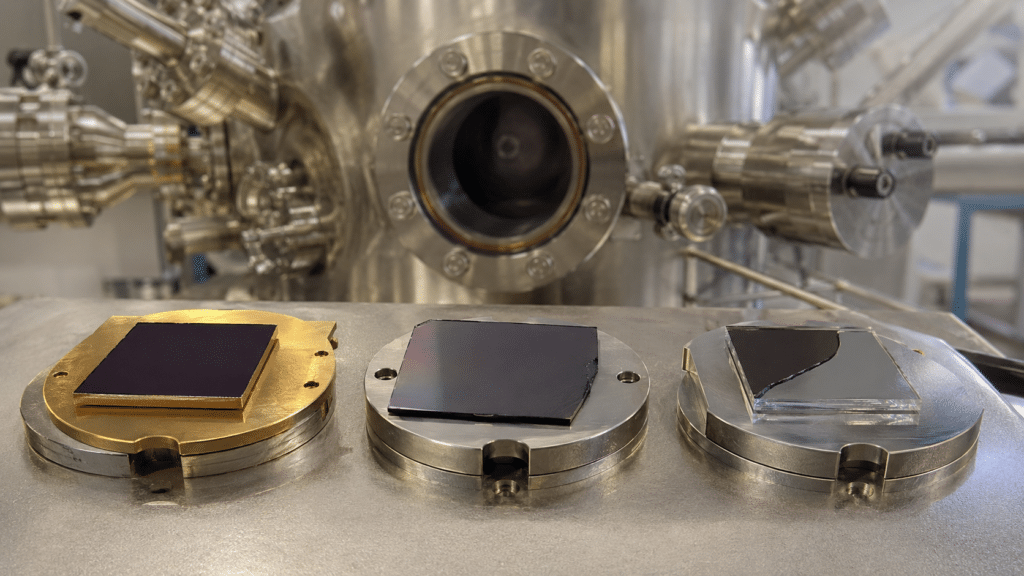
Photoemission studies of C60 on metal and modified metal substrates have shown that interface dipoles and electronic interactions can depend on the underlying surface.6 The spectrum of a thick, bulk-like C60 film should not automatically be used as the reference for the first molecular layer on a reactive substrate.
When the purpose is device-interface analysis, the report should define substrate cleaning, C60 deposition method, nominal thickness, vacuum history and whether the specimen was transferred through air.
C60 surfaces can change between deposition and measurement. Air exposure introduces oxygen, moisture and hydrocarbon contamination. Light exposure may contribute to photochemical changes under some conditions, particularly when oxygen is present. Heating can desorb material, alter film morphology or promote interactions with a substrate.
Studies of C60 films exposed to ambient conditions have found that oxygen can be present without every film necessarily showing the same degree of fullerene degradation.7 Oxygen detection and cage destruction are therefore separate questions.
A meaningful comparison requires matched sample histories. Comparing an in-vacuum-deposited reference with an air-stored specimen can be useful, but only if the exposure duration, atmosphere, light conditions and storage procedure are recorded.
For process-development work, researchers may analyze several checkpoints: the clean substrate, freshly deposited C60, air-exposed film and processed device stack. This sequence separates changes caused by deposition from those introduced later.
XPS is often described as non-destructive because it does not normally remove material during a conventional spectrum. That description should not be interpreted as a guarantee that every organic or molecular sample remains unchanged.
Prolonged X-ray exposure, secondary electrons, local charging and residual-gas chemistry may modify sensitive materials. The likelihood depends on source power, analysis area, exposure duration, temperature and sample environment.
A practical damage check is to acquire comparable spectra from the same area at different accumulated doses. Changes in peak position, width, satellite intensity or elemental composition may indicate exposure-related modification. A fresh position or duplicate sample provides an additional control.
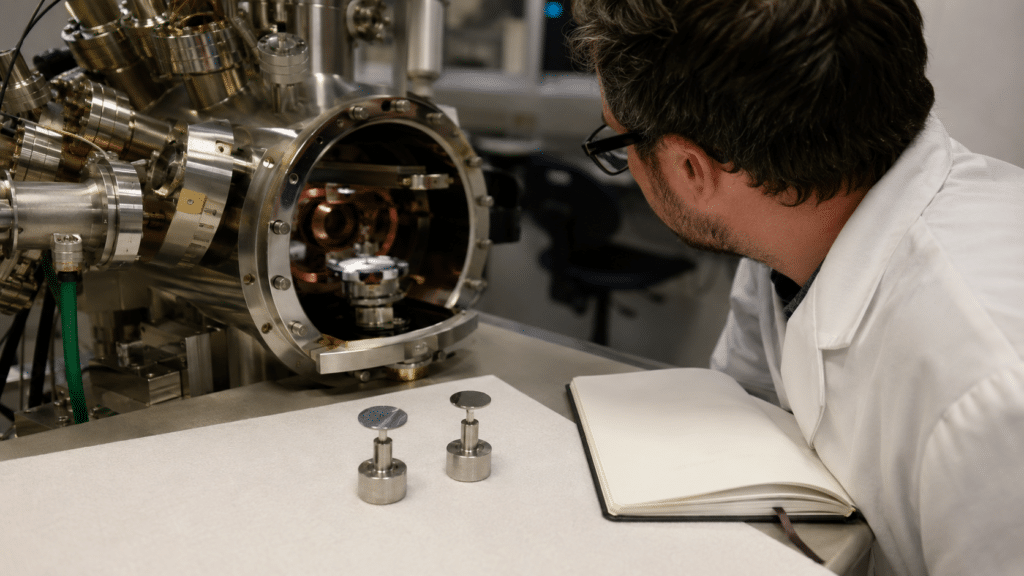
The lowest exposure that provides adequate signal-to-noise is generally preferable. Analysts should report repeated scans or long acquisition times when these could influence the interpretation.
Ion sputtering is widely used to remove contamination or construct depth profiles, but it can chemically damage molecular carbon materials. Conventional monoatomic argon ions can break bonds, implant species, preferentially remove components and transform the surface being measured.
After sputtering, the spectrum may describe an ion-modified carbonaceous layer rather than pristine C60. A “cleaner” C 1s peak does not prove that the original fullerene surface has been recovered.
Gas-cluster ion sources can reduce damage for some organic materials compared with monoatomic ions, but performance depends on cluster energy, dose and material. Any depth profile should include controls that demonstrate whether the C60 molecular structure is retained.
If removal of surface contamination is necessary, an unsputtered spectrum should be preserved as the original surface reference.
XPS cannot normally establish the molecular purity percentage of an entire C60 powder batch. It examines a near-surface region and quantifies detectable elements under a selected sensitivity-factor and background model.
A specimen containing only carbon-based molecular impurities could produce an apparently carbon-rich XPS spectrum. C70, amorphous carbon, hydrocarbon contamination and another carbonaceous species are not reliably converted into a C60 purity percentage by standard elemental XPS.
Conversely, a surface oxygen signal does not determine how much oxygen is present throughout the complete powder mass. Surface enrichment or contamination can cause the XPS result to differ substantially from bulk analysis.
When the question is the relative amount of soluble C60 and related fullerene components, C60 HPLC analysis is more directly aligned with the objective. Mass spectrometry, elemental analysis, residual-solvent testing and other methods address additional impurity classes. XCT’s C60 characterization guide explains why a complete assessment requires a defined method set.
XPS, Raman spectroscopy and XRD are complementary rather than interchangeable.
C60 Raman spectroscopy can examine characteristic molecular vibrations and detect certain structural changes. XPS provides surface elemental and chemical-state information but does not reproduce the vibrational fingerprint.
C60 XRD characterization examines crystalline order, phases and diffraction-domain behavior. A film may retain a carbon-rich XPS surface while becoming less crystalline, or it may remain crystalline while acquiring surface oxygen.
Using the methods together can separate three questions: whether molecular C60-related structure is retained, whether crystalline order is present, and whether the surface composition or electronic environment has changed.
A reproducible report should identify the sample form, preparation method, substrate or mounting support, air and light exposure, vacuum or thermal treatment, X-ray source, analysis area, acquisition settings, emission geometry and charge-neutralization method.
It should also state:
Raw or minimally processed survey and high-resolution spectra should be retained. Reporting only a fitted component table makes it difficult to evaluate whether the model was justified.
C60 XPS is most valuable when the analytical question is defined before measurement. It can compare surface oxygen before and after exposure, evaluate substrate-related changes in a thin film, support evidence for surface functionalization or investigate whether processing introduces detectable elements.
It should not be used as a universal purity certificate or as standalone proof of an exact molecular structure. The strongest conclusions combine controlled sample history, appropriate referencing, restrained fitting and complementary characterization.
Researchers evaluating fullerene C60 material can share the intended substrate, deposition method, surface-analysis plan and target application with XCT. Method validation and device qualification should remain tied to the customer’s actual process and instrument.
Submit your C60 material requirements or contact XCT to discuss material needs for XPS, thin-film deposition and advanced-material research.
C60 XPS measures photoelectron signals from the near-surface region of a powder, film or interface. It can provide elemental and chemical-environment information, but it does not directly count intact C60 molecules throughout the entire sample.
No. Pristine C60 can produce intrinsic shake-up satellite structure associated with electronic excitations. Oxygen-containing species may also contribute, so assignments should consider the O 1s spectrum, sample history, reference materials and complementary analysis.
No. XPS is surface-sensitive and cannot normally distinguish or quantify every carbon-based molecular impurity throughout a powder batch. HPLC and complementary methods are required when molecular C60 purity is the analytical question.
Differences can result from charging, charge neutralization, energy calibration, binding-energy referencing, substrate work function, film thickness, chemical interaction and acquisition conditions. The referencing method must be known before small shifts are interpreted chemically.
Ion sputtering may remove contamination, but it can also damage fullerene molecules and create an altered carbon surface. An unsputtered spectrum and suitable damage controls are needed before interpreting sputtered C60 data.
For B2B procurement of Fullerene C60 (Pure), 99.95% Purity, No metallic residue, buyers should confirm target purity, required quantity, application, destination country, COA, MSDS/SDS, packaging, storage conditions, and shipping requirements before requesting a formal quotation.
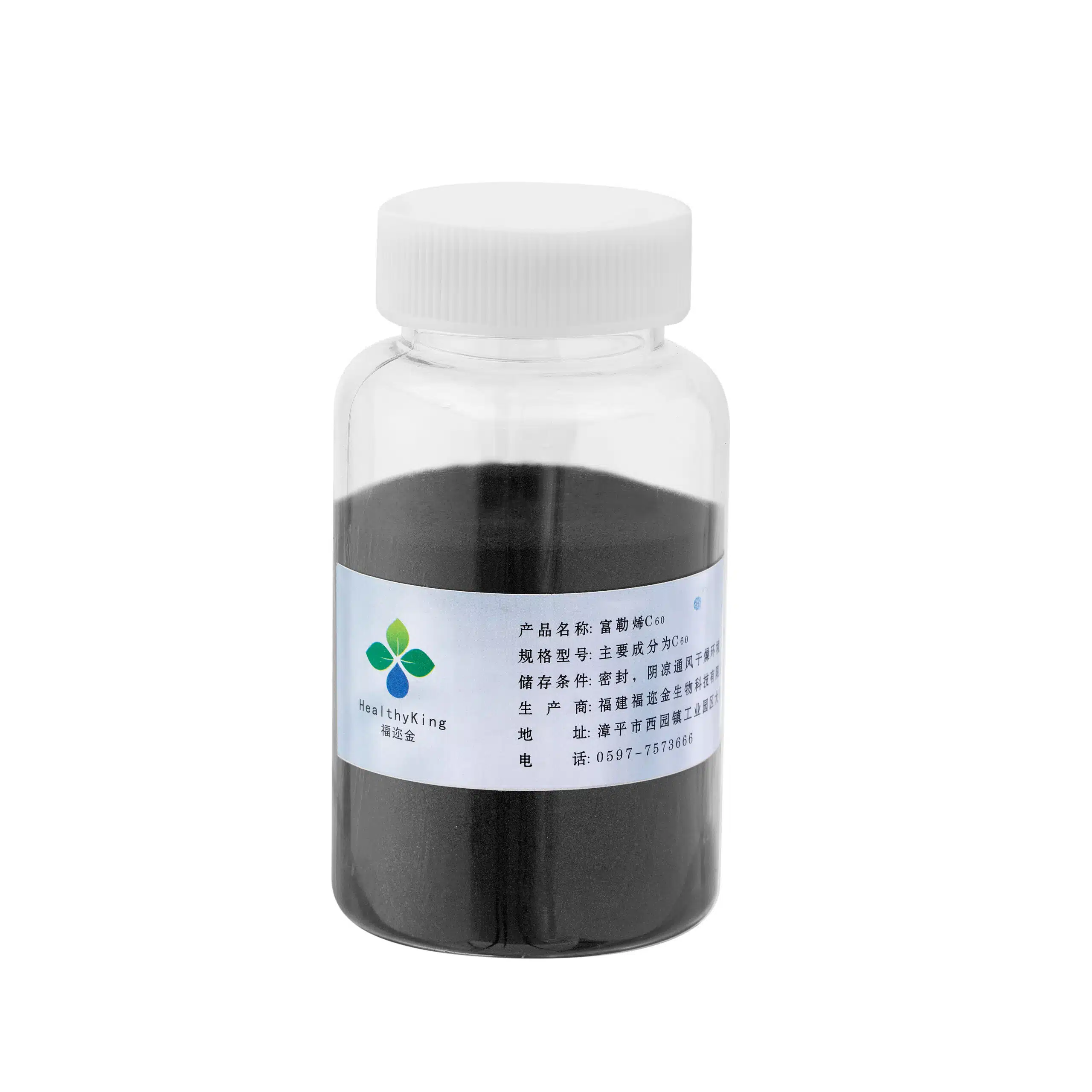
High-purity fullerene C60 is a highly refined nanomaterial designed specifically for the most demanding scientific and industrial applications. This ultra-pure form ensures…
Request product specifications, batch-specific COA, MSDS/SDS, sample availability, packaging details, and international shipping information before confirming your order.
Request DocumentsSubmit your product, purity, quantity, application, destination country, and documentation requirements. Our team will help confirm availability, COA, MSDS/SDS, packaging, and quotation details.