



重要なポイント
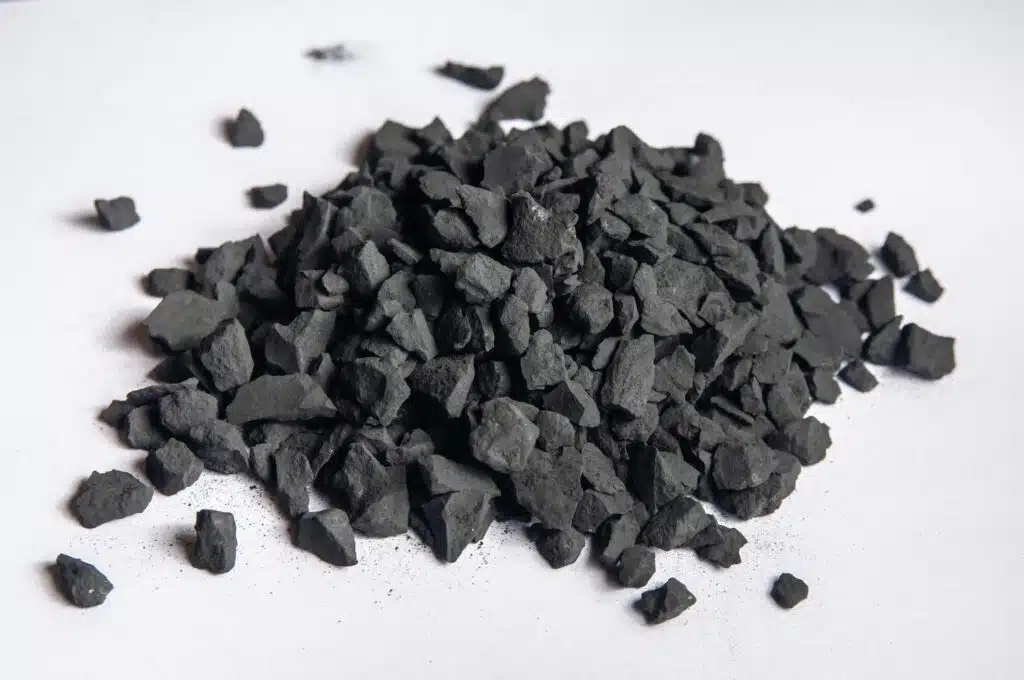
- フラーレンC60(純品)、純度99.95%、金属残留物は認められず、純度、バッチの一貫性、文書、および用途適合性によって評価されるべきである。.
- 正式な見積もり前に、COA、MSDS/SDS、包装、保管、数量、および仕向国を確認する必要がある。.
- 研究および産業用として、フラーレンのグレードは目的の材料系および試験要件に適合するものでなければならない。.
微量金属管理は、触媒に敏感な合成、薄膜研究、または原料組成のわずかな変化が解釈を複雑にするその他のプロセスにおいて重要となり得る。しかし、実際的な問題は、製品が「金属フリー」と記載されているかどうかではない。測定された元素、試料の調製方法、使用された分析方法、および報告下限値が下流プロセスに適切かどうかが重要である。 フラーレン C60 金属触媒を意図的に使用しない製造経路は、汚染の一つの潜在的な発生源を低減する可能性があるが、完成バッチの元素組成を確定するものではない。原料、電極、反応器、回収システム、精製媒体、粉砕工具、移送機器、および包装はすべて、製造および取り扱い中に材料を混入させる可能性がある。.
本ガイドは、実験室および産業研究開発チームが、検出されたすべての元素を触媒毒として扱ったり、プロセス記述を裏付けのない純度主張に変換したりすることなく、微量金属不純物に対するリスクベースの仕様を構築する方法を説明する。.
「金属フリー」が意味すべきこと フラーレン C60 「金属フリー」は完全な分析仕様ではない。供給元または研究の文脈に応じて、以下のいずれかを意味する場合がある:.
これらの意味は互換性がない。「金属触媒未使用」はプロセス入力を記述する。「ICP-MSによるニッケルが指定報告下限値未満」は、特定の試料に対する分析結果を記述する。C60を購入する者は、元素組成が計画された作業に影響を与える場合、後者の種類の情報を求めるべきである。 フラーレン C60”対象元素リストも明確でなければならない。ニッケル、コバルト、パラジウムを網羅する報告書は、鉄、銅、クロム、ナトリウム、カルシウム、またはその他の元素が存在しないことを確定するものではない。関連するリストは、製造経路、機器、精製プロセス、および下流用途に依存する。
“金属残留物は金属内包フラーレンとは異なる
- 化学的に異なるいくつかの材料が、「金属がフラーレンに関連する」と大まかに記述されることがある。分析結果を解釈する前に、これらを区別する必要がある。;
- 外部元素汚染は、機器、試薬、精製媒体、粉塵、または包装に由来する可能性がある。;
- 金属含有粒子または塩は、フラーレン粉末と物理的に混合されている可能性がある。;
- エキソヘドラル金属-フラーレン錯体は、ケージの外部に配位または堆積した金属種を含む。.
エンドヘドラル金属内包フラーレンは、原子またはクラスターがフラーレンケージ内部に封入された、明確に定義された分子構造である。.
完全分解後のICP-MS結果は、提出された材料中の選択された元素を定量化する可能性があるが、それらの元素がどのように化学的に結合していたかをそれ自体で確定するものではない。逆に、分子質量分析は特定の金属-フラーレン種の同一性を支持する可能性があるが、必ずしも総元素汚染の定量的測定ではない。.
この区別が重要なのは、意図的に合成された金属-フラーレン研究材料は、未修飾C60の不純バージョンではないからである。それは、独自の同一性、組成、および分析計画を必要とする異なる目標材料である。
微量元素がC60プロセスに混入する可能性のある箇所.
- 潜在的な汚染源は、経路名のみに帰属させるのではなく、完全な製造および取り扱いチェーン全体にわたってマッピングされるべきである。 形成と回収:炭素原料、電極、反応器ハードウェア、および回収表面は、異なる元素バックグラウンドをもたらす可能性がある。アーク放電、燃焼、およびその他の形成経路はそれぞれプロセス固有の汚染リスクを持つが、バッチデータなしに固定された金属プロファイルを生成すると想定すべきではない。.
- 溶媒、クロマトグラフィー媒体、ポンプ、バルブ、フィルター、および再利用可能な容器は、無機残留物をもたらす可能性がある。精製はある不純物クラスを除去しながら別のものを導入する可能性があるため、フラーレン種純度と総元素組成は別個の質問として扱われるべきである。 サイズ低減、ブレンド、および包装:粉砕、ふるい分け、ブレンド、および移送操作は、工具および環境表面との接触を増加させる。ステンレス鋼機器は、鉄、クロム、またはニッケルをリスク評価に関連させる可能性がある一方、ガラス、セラミック、またはポリマー部品は異なる可能性のあるバックグラウンドを導入する。.
- したがって、有用な供給元調査は、材料が金属含有機器と接触した場所、専用または共用機器が使用されたかどうか、および代表的な試料がどのように収集されたかを尋ねる。 不純物はいつ触媒に影響を与える可能性があるか?.
- IUPACは、触媒失活を、他の条件が一定であるにもかかわらず時間とともに転化率が低下することと定義している。被毒は失活の一つの可能性のある原因であるが、唯一の原因ではない。ファウリング、シンタリング、相変化、活性材料の損失、および反応環境の変化も活性を低下させる可能性がある。 微量種が毒として作用するかどうかは、触媒、酸化状態、配位子、溶媒、反応物、温度、および濃度に依存する。ある化合物は活性部位に強く結合するものもあれば、化学的に不活性であるか、促進剤として作用するか、存在する濃度で測定可能な効果を持たないものもある。したがって、C60中のすべての微量遷移金属がパラジウム、白金、ルテニウム、または別の触媒を被毒すると述べることは不正確である。.
C60の官能基化または誘導体合成プログラムの場合、実験室は実際の反応から始めるべきである。プロセスが敏感な均一系触媒を使用する場合、どの元素または無機種がその触媒サイクルに干渉する可能性があるかを定義する。次に、マッチングしたC60バッチを比較するか、疑わしい不純物を管理された実験にスパイクする。反応転化率、選択性、触媒充填量、誘導時間、および再現性は、「金属フリー」材料に関する一般的な記述よりも直接的な証拠を提供する。.
米国エネルギー省は、触媒を、全体反応で消費されることなく、反応を促進するか、またはより穏やかな条件下で進行させる材料と説明している。その機能を保護するには、無関係な触媒系からコピーされた普遍的な禁止金属リストではなく、プロセス固有の証拠が必要である。.
微量元素と光電子研究
材料純度は有機半導体実験に影響を与える可能性があるが、「不純物」は広範なカテゴリーである。残留溶媒、酸素、水、フラーレン誘導体、分解生成物、対イオン、粒子、および金属は、異なるメカニズムを通じて膜形成または電気測定に影響を与える可能性がある。.
低分子有機物に関する研究は、精製履歴が測定された材料およびデバイス特性を実質的に変化させ得ることを示している。これは注意深い不純物管理を支持するが、すべてのデバイス損失が微量金属に起因することを確定するものではない。
2つのC60バッチが異なるデバイス結果を生じた場合、調査は元素データのみを比較する以上のことを行うべきである。関連する変数には、フラーレン種組成、残留溶媒、水への曝露、昇華履歴、堆積速度、膜厚、基板準備、界面層、およびデバイス封止が含まれる可能性がある。.
抽出および精製
微量元素分析は、管理されたデバイス比較に結び付けられた場合に最も有用である。マッチングした堆積条件と複製デバイスは、バッチ間の差異が再現可能かどうかを示すことができる。その後、追加の表面または膜分析により、疑わしい不純物が堆積層中に存在するかどうか、およびそれが電気的応答と相関するかどうかを調査できる。.
分析方法とその限界
Grinding, sieving, blending and transfer operations increase contact with tools and environmental surfaces. Stainless-steel equipment may make iron, chromium or nickel relevant to a risk assessment, while glass, ceramic or polymer components introduce different possible backgrounds.
A useful supplier investigation therefore asks where the material contacted metal-bearing equipment, whether dedicated or shared equipment was used, and how representative samples were collected.
When Can an Impurity Affect a Catalyst?
IUPAC describes catalyst decay as a decrease in conversion with time under otherwise constant conditions.[1] 触媒被毒 is one possible cause of deactivation, but it is not the only one. Fouling, sintering, phase changes, loss of active material and changes in the reaction environment can also reduce activity.
Whether a trace species behaves as a poison depends on the catalyst, oxidation state, ligands, solvent, reactants, temperature and concentration. Some compounds bind strongly to active sites; others may be chemically inactive, act as promoters or have no measurable effect at the concentration present. It is therefore inaccurate to state that every trace transition metal in C60 will poison palladium, platinum, ruthenium or another catalyst.
For a C60 functionalization or derivative-synthesis program, the laboratory should begin with the actual reaction. If the process uses a sensitive homogeneous catalyst, define which elements or inorganic species could interfere with that catalytic cycle. Then compare matched C60 batches or spike the suspected impurity into a controlled experiment. Reaction conversion, selectivity, catalyst loading, induction time and reproducibility provide more direct evidence than a general statement about “metal-free” material.
The U.S. Department of Energy describes catalysts as materials that accelerate reactions or allow them to proceed under less severe conditions without being consumed in the overall reaction.[2] Protecting that function requires process-specific evidence, not a universal prohibited-metal list copied from an unrelated catalytic system.
Trace Elements and Optoelectronic Research
Material purity can influence organic semiconductor experiments, but “impurity” is a broad category. Residual solvents, oxygen, water, fullerene derivatives, degradation products, counterions, particles and metals can affect film formation or electrical measurements through different mechanisms.
Research on small-molecule organic 半導体 has shown that purification history can materially change measured material and device properties.[3] This supports careful impurity control, but it does not establish that every device loss originates from trace metals.
If two C60 batches produce different device results, the investigation should compare more than elemental data. Relevant variables can include fullerene-species composition, residual solvent, water exposure, sublimation history, deposition rate, film thickness, substrate preparation, interfacial layers and device encapsulation.
Trace-element analysis is most useful when it is connected to a controlled device comparison. Matched deposition conditions and replicate devices can show whether a batch difference is reproducible. Additional surface or film analysis can then investigate whether the suspected impurity is present in the deposited layer and whether it correlates with the electrical response.
Analytical Methods and Their Boundaries
| 方法 | 主要な質問 | Useful output | Important boundary |
|---|---|---|---|
| ICP-MS | Which selected elements are present after suitable sample preparation? | Element-specific concentration with method reporting limits | Accuracy depends on digestion, blanks, calibration and matrix control |
| ICP-OES | Which elements are present at concentrations appropriate for optical-emission measurement? | Multi-element concentration data | Typically less sensitive than ICP-MS for many ultra-trace requirements |
| HPLC | What soluble fullerene components are resolved under the selected conditions? | Relative chromatographic composition | Does not establish total elemental impurity content |
| Molecular mass spectrometry | Which molecular ions or fullerene species are detected? | Molecular-mass and isotope-pattern evidence | Not automatically quantitative for total metals |
| XPS | What elements and chemical states are present near the surface? | Surface-sensitive elemental and chemical-state information | Does not represent bulk concentration without a suitable sampling model |
| Device or reaction test | Does the batch behave differently in the intended process? | Conversion, selectivity, film or device response | Does not identify the impurity without complementary analysis |
ICP-MS is widely used for trace and ultra-trace elemental analysis, including industrial chemicals and semiconductor-related materials.[4] It is not simply a matter of placing C60 powder in an instrument. The sample must be introduced in a form compatible with the method, and the laboratory must demonstrate that the preparation recovered the target elements without introducing significant contamination.
For carbon-rich samples, matrix effects and incomplete digestion require particular attention. Instrument and method literature recommends contamination control, high-purity reagents, suitable blanks and sample-preparation procedures matched to the material.[5]
Further method-specific context is available in XCT’s guide to C60特性評価法.
What a Useful Elemental Report Should Include
A result such as “metal-free” or “zero metals” is less informative than a structured analytical report. For each target element, the reader should be able to identify:
- the submitted batch and sampling point;
- the sample mass and preparation or digestion method;
- the analytical method and instrument category;
- method blank and relevant quality-control samples;
- calibration approach and, where appropriate, recovery data;
- unit of reporting;
- method detection or reporting limit;
- whether a value was measured or reported below a limit.
“Not detected” means that the measured signal did not meet the laboratory’s defined detection or reporting criterion under that method. It does not mean that the element is absent at every possible concentration.
Likewise, a supplier result applies first to the tested sample. Buyers with highly sensitive processes may use independent incoming analysis or periodic verification to determine whether the supplier data remain representative of received lots.
Build the Specification from the Downstream Risk
A practical specification begins with the process failure that the team is trying to prevent.
For catalyst-sensitive synthesis
Identify the catalyst, ligands, reaction conditions and known interferents. Select target elements based on the reaction chemistry and contamination history. If the sensitivity threshold is unknown, use controlled spiking or matched-batch studies before establishing a purchasing limit.
For optoelectronic devices
Define whether C60 will be solution processed, thermally evaporated or used as a precursor. Connect raw-material analysis to film and device controls. A metal result is meaningful only when deposition history, layer thickness and device architecture are also controlled.
For exploratory research
A broader screening list may be appropriate at the start. Once the experiment identifies which variables materially affect the outcome, the specification can be narrowed to the measurements that support reproducibility.
This risk-based approach prevents two opposite errors: accepting an undefined “metal-free” label, and imposing an expensive ultra-trace specification that has no demonstrated relationship to the application.
Production Route Is Context, Not a Certificate
Production-route information can help identify likely contamination sources and guide the analytical plan. A route that does not intentionally use a metal catalyst may reduce catalyst-derived contamination risk. It does not remove possible contributions from feedstocks, reactor materials, extraction systems or handling equipment.
Similarly, material produced through arc discharge should not automatically be described as contaminated. The electrode composition, apparatus, collection method and purification history determine the actual risk. Compare routes through representative batch data rather than categorical claims.
XCT’s separate guide to verifying metal-free Fullerene C60 examines the analytical meaning of the term in greater detail.
A Qualification Workflow for C60 Buyers
- Define the C60 application, material form and downstream process.
- Identify elements or impurity classes that could change that process.
- Review the supplier’s test methods, element list and reporting limits.
- Confirm whether the tested sample represents the offered batch.
- Run incoming or independent analysis when the process sensitivity justifies it.
- Compare material data with reaction, film or device performance.
- Review the specification when the process, equipment or supplier route changes.
For an overview of synthesis, purification and batch controls, see the C60 supply-chain quality-control guide.
Discuss a Trace-Metal Requirement with XCT
If your project uses C60 in catalyst-sensitive synthesis or optoelectronic research, send XCT the intended process, required quantity, target purity, elements of concern and required reporting limits. XCT can review the available material and batch documentation against the stated research requirement without treating a production-route label as a universal performance guarantee.
Submit your Fullerene C60 requirement.
よくある質問
金属フリーのフラーレンC60とは、金属原子が存在しないことを意味しますか?
いいえ。「金属フリー」という表現は、特定の元素に対する製造工程または結果を説明する場合があります。意味のある仕様書には、試験対象元素、分析方法、単位、および報告下限値が明記されるべきです。.
HPLCは、フラーレンC60に微量金属が含まれていないことを証明できますか?
いいえ。HPLCは、規定されたクロマトグラフィー条件下で可溶性フラーレン成分を分離・比較することが可能ですが、特定の微量金属を評価するには、ICP-MSやICP-OESなどの元素分析法が必要です。.
すべての微量金属が触媒を被毒するのでしょうか?
いいえ。元素または化合物が触媒を阻害するかどうかは、その化学形態、濃度、触媒系、配位子、反応物、溶媒、および操作条件に依存します。リスクは実際の反応に基づいて評価されるべきです。.
金属触媒を使用しない製造経路は、金属を含まないC60を保証するものですか?
いいえ。意図的に添加された金属触媒を避けることで、一つの発生源を排除することは可能ですが、原料、装置、精製媒体、取り扱い、包装などが他の元素不純物を持ち込む可能性があります。.
微量金属に敏感なC60研究において、購入者は何を要求すべきか。
買主は対象元素、要求される報告下限値、用途、材料形態及び数量を定義し、その後、供給者のサンプリング、前処理及び分析方法をレビューするものとする。重要なプロセスについては、受入時の独立した検証が適切な場合がある。.
参考文献
- International Union of Pure and Applied Chemistry. “Catalyst Decay.” IUPAC Gold Book. https://goldbook.iupac.org/terms/view/C00880
- U.S. Department of Energy, Office of Science. “DOE Explains…Catalysts.” https://www.energy.gov/science/doe-explainscatalysts
- Yumusak, C. et al. “Purity of Organic 半導体 as a Key Factor for the Performance of Organic Electronic Devices.” Materials Chemistry Frontiers, 2020. https://pubs.rsc.org/en/content/articlelanding/2020/qm/d0qm00583f
- Thermo Fisher Scientific. “Trace Elemental Analysis.” https://www.thermofisher.com/us/en/home/industrial/spectroscopy-elemental-isotope-analysis/trace-elemental-analysis.html
- Thermo Fisher Scientific. “Best Practices for the Analyses of Complex Samples by ICP-OES and ICP-MS.” 2022. Official technical presentation
- Agilent Technologies. “Analysis of Inorganic Impurities in Semiconductor Materials.” https://www.agilent.com/en/solutions/materials-testing-research/semiconductors-electronics-testing/inorganic-impurities
調達に関する洞察
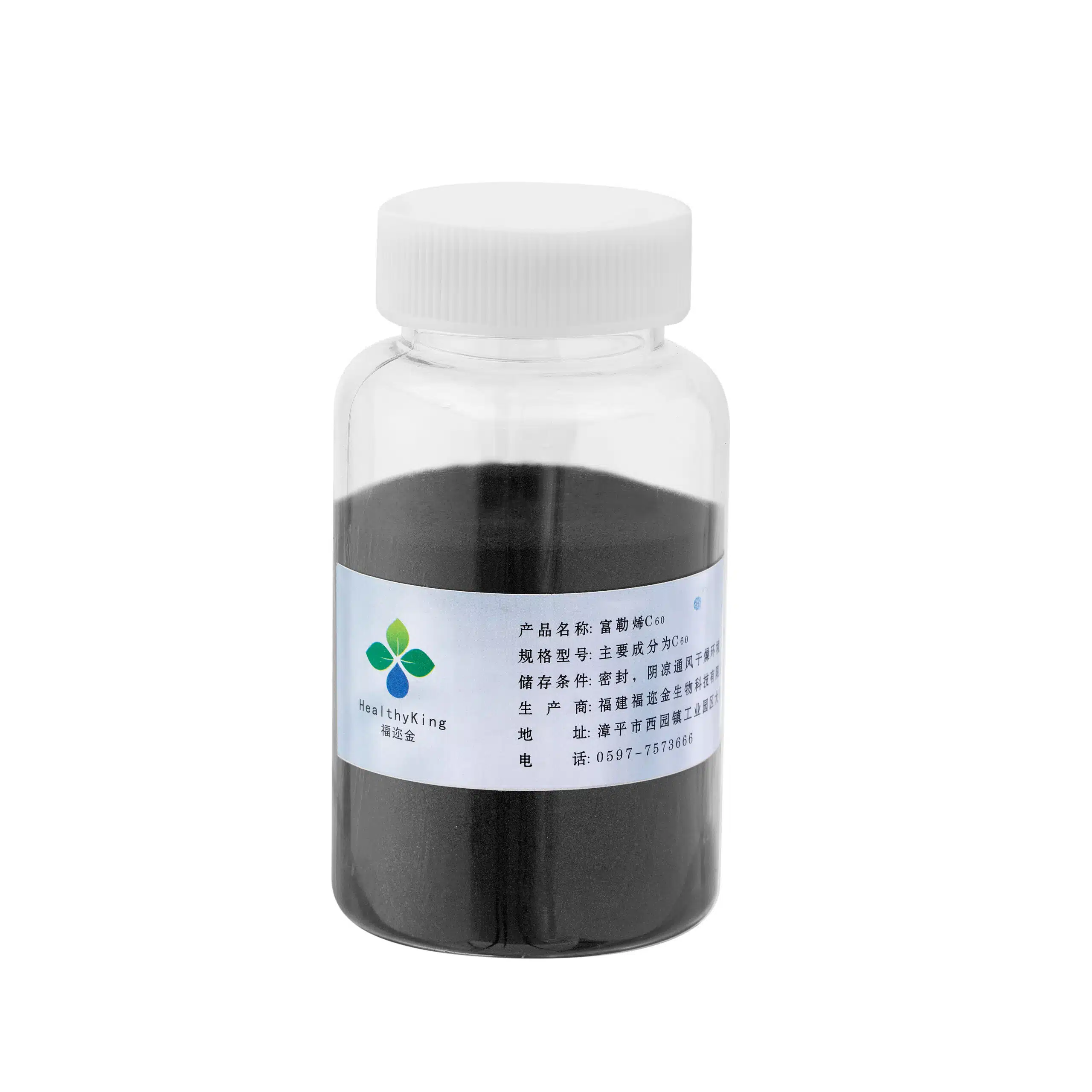
フラーレンC60(純品)、純度99.95%、金属残留物なしのB2B調達において、バイヤーは正式な見積もりを依頼する前に、目標純度、必要数量、用途、仕向国、COA、MSDS/SDS、包装、保管条件、および出荷要件を確認すべきである。.
COAまたはMSDS/SDSが必要ですか?
ご注文を確定する前に、製品仕様、バッチ固有のCOA、MSDS/SDS、サンプルの入手可能性、包装詳細、および国際配送情報を請求してください。.
書類を請求する見積もり依頼前のバイヤーチェックリスト
- 製品名およびCAS番号(既知の場合)
- 目標純度
- 必要数量
- サンプルまたはバルク注文
- 用途または意図する使用目的
- 仕向国
- 必要な文書
- 包装の希望
関連技術記事


高純度フラーレンの調達をご検討中ですか?
製品、純度、数量、用途、仕向国、および必要書類をご提出ください。当社チームが在庫状況、COA、MSDS/SDS、包装、および見積もり詳細の確認をお手伝いします。.