
XCT Insights
Stay Updated
Fullerene research, applications and company updates, delivered occasionally.
Latest from XCT
View all

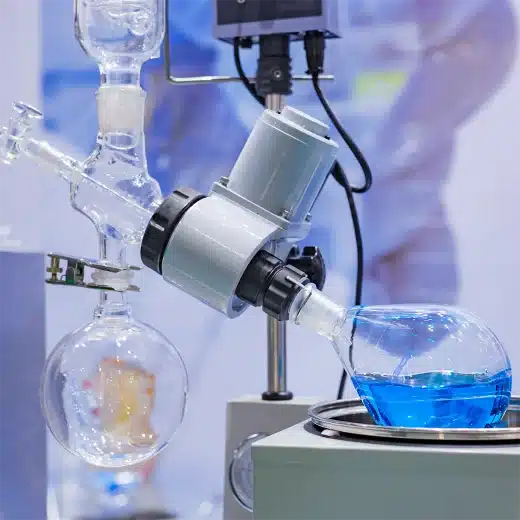
The term metal-free Fullerene C60 sounds unambiguous, but it is not a complete analytical specification. It may describe a synthesis route that does not intentionally use a metal catalyst, a material in which selected metals were not detected above stated limits, or simply a commercial grade intended for applications where metallic contamination is undesirable. These meanings are not interchangeable.
For synthetic chemists, the practical question is not whether a product carries a “metal-free” label. It is whether the batch has been characterized using methods capable of detecting the impurities that could affect the planned reaction. High-performance liquid chromatography can evaluate chromatographically detectable fullerene components, while mass spectrometry can support molecular identity. Neither method, by itself, establishes the total elemental impurity content of a powder.
This guide explains how trace metals can enter a C60 material, what the main analytical methods actually measure, and how laboratories can qualify high-purity C60 for fullerene functionalization, cycloaddition, cross-coupling, cage-opening chemistry and other precision synthetic work.
Fullerene C60 is a discrete molecular form of carbon containing 60 carbon atoms in a closed cage. Early isolation and characterization work established pure C60 and C70 through complementary evidence that included separation, mass spectrometry and carbon-13 nuclear magnetic resonance spectroscopy.[1] That historical example remains instructive: a strong material identity is normally supported by more than one analytical technique.
In commercial material descriptions, “metal-free” may refer to one of three different propositions.
The first is a process statement: no metal catalyst or intentionally metal-containing feedstock was used in the main fullerene-forming step. This can reduce one potential source of contamination, but it does not establish the final elemental composition. Metals can still enter from raw materials, reactors, transfer lines, milling equipment, purification systems, filters, laboratory tools, packaging or environmental deposition.
The second is a screening statement: selected metals were tested and were below the detection or quantitation limits of a specified method. This is analytically meaningful only when the report identifies the elements, sample-preparation procedure, instrument, units and limits.
The third is a specification statement: named elements must remain below agreed limits for the batch to be released. This is usually the most useful form for technical procurement because it connects the marketing term to measurable acceptance criteria.
Absolute language such as “contains zero metals” is generally not scientifically defensible. Analytical measurements have finite detection limits. A laboratory can report that a particular element was not detected above a defined limit; it cannot demonstrate the absolute absence of every metallic element at every concentration.
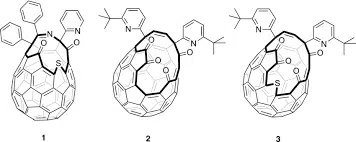
C60 is used as a starting material for a wide range of fullerene transformations. Its curved, electron-deficient carbon framework undergoes additions, cycloadditions, radical reactions, nucleophilic reactions and multi-step cage modification. Modern fullerene chemistry also includes controlled functionalization, supramolecular assembly and molecular-surgery routes that temporarily open the cage before it is closed again.[2]
Metal contamination does not affect every reaction in the same way. The relevance depends on the chemistry being performed.
In a transition-metal-catalyzed reaction, an unintended metal may alter catalyst activation, ligand coordination, redox balance or side-reaction pathways. The effect cannot be predicted simply from the total metal concentration. Identity and chemical form matter. Iron, nickel, copper, cobalt, palladium and other elements have different coordination and redox behavior, while an insoluble particle may behave differently from a soluble ionic species.
It would therefore be an overstatement to claim that any detectable metal automatically poisons a fullerene reaction. The correct conclusion is narrower: when a synthesis is known to be sensitive to particular metals, those elements should be included in the material-control strategy and evaluated against reaction-specific evidence.
Some transition metals can participate in electron-transfer, radical-generation or quenching processes. In reactions involving light, oxygen, radical intermediates or redox-active reagents, unintended elemental impurities may become mechanistically relevant even when they are present at low levels. A control experiment using different C60 batches can help determine whether an observed effect is genuinely connected to the starting material.
Trace elements may also matter when the reaction product is evaluated by sensitive spectroscopic, electrochemical or electronic measurements. In these cases, the concern is not necessarily reaction yield. It may be background signal, inconsistent film behavior, altered redox response or difficulty assigning the origin of an observed feature.
Fullerene reactions often require demanding chromatographic separation because unreacted C60, mono-adducts, multi-adducts and positional isomers can have similar properties. An impurity that is insignificant during the reaction may become troublesome if it accumulates on a stationary phase, interacts with a functionalized product or complicates a later analytical method.
These possibilities justify controlled testing, but they do not justify universal claims that a particular purity grade guarantees higher yield or reproducibility. Those outcomes must be demonstrated in the actual synthetic system.
Fullerene production begins with the formation of carbonaceous material containing C60, C70, higher fullerenes and non-fullerene carbon. The target molecule must then be extracted, separated, purified and dried. Each stage can influence the final impurity profile.
A fullerene-generating process that does not intentionally require a metal catalyst may have a lower process-related metal burden than one involving metal-containing components. Nevertheless, final-material evaluation must account for the entire manufacturing chain rather than only the cage-formation mechanism.
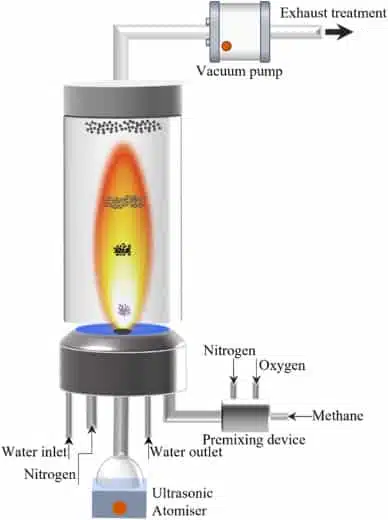
Hydrocarbon feedstocks, graphite, process gases, water, solvents and processing aids may contain elemental impurities. Stainless-steel equipment can be a source of iron, chromium or nickel under some processing conditions. Grinding, scraping and high-temperature handling can also introduce particles from equipment surfaces.
C60 and C70 were historically separated through solvent extraction and chromatographic techniques because they occur together with related carbon species.[1] Solvents, stationary phases, adsorbents, filters and collection vessels can each add impurities if their suitability and cleanliness are not controlled.
Small research batches may undergo many manual operations. Spatulas, sieves, metal caps, sample holders and reused glassware can become relevant when very low limits are required. Packaging is therefore part of the analytical chain, particularly when a batch is tested before packaging but stored or transferred afterward.
HPLC is an important method for fullerene analysis. It can separate C60 from C70, higher fullerenes, fullerene derivatives and other compounds that interact with the selected stationary phase and produce a detector response. However, the chromatogram represents the substances that were dissolved, injected, separated and detected under that method.
An HPLC peak-area result is not automatically equivalent to total powder composition. Insoluble inorganic material may be removed during sample preparation. Dissolved metals may not generate a meaningful signal at the selected ultraviolet wavelength. Co-eluting compounds may be hidden beneath the main peak, and detector response can differ between components.
The site’s dedicated guide to C60 HPLC purity analysis explains these limitations in detail. For the present purpose, the central rule is simple: HPLC can support a chromatographic C60 purity claim, but it cannot independently support a total trace-metal claim.
Mass spectrometry played an important role in establishing the molecular identity of isolated C60 and C70.[1] A mass spectrum can show a signal associated with the C60 molecular ion and its carbon-isotope distribution. Depending on the technique and sample, it may also reveal fullerene derivatives, fragments, clusters or adducts.
This is useful evidence of molecular identity. It does not mean that every component of the bulk powder is represented quantitatively in the spectrum.
Laser desorption/ionization and MALDI signals depend on ionization behavior, instrument settings, target preparation and the material’s response to laser irradiation. A strong C60 ion signal does not establish that the powder contains no metal, residual solvent, water, inorganic residue or amorphous carbon. Likewise, the absence of a metal-adduct peak does not prove that the corresponding element is absent from the bulk sample.
Mass spectrometry should therefore be presented as an identity or molecular-composition method unless a validated quantitative procedure has been established for the particular analyte and matrix.
Inductively coupled plasma mass spectrometry is commonly used for sensitive multi-element analysis. The sample is converted into a form that can be introduced into the plasma, where elements are ionized and measured by mass spectrometry. For C60 powder, the critical step is not merely placing the sample in the instrument; it is developing a digestion or preparation procedure that recovers the target elements without contamination or loss.
A technically useful report should identify the measured elements, sample mass, digestion reagents, blanks, calibration approach, reporting units, limit of detection, limit of quantitation and any results below those limits.
Inductively coupled plasma optical emission spectroscopy can also perform multi-element analysis. It measures element-specific light emitted by excited atoms and ions. ICP-OES may be suitable when the required limits are within its sensitivity range or when higher concentrations are expected. Method selection should be driven by the specification rather than by the assumption that one instrument is always superior.
Atomic absorption spectroscopy, X-ray fluorescence and related methods may be appropriate for specific elements or concentration ranges. Surface-sensitive techniques such as X-ray photoelectron spectroscopy can provide valuable information about surface composition and chemical states, but a surface result should not automatically be treated as representative of the total bulk powder.
When the intended use falls under a regulated pharmaceutical development program, elemental impurity controls may be informed by frameworks such as ICH Q3D. ICH Q3D is directed at medicinal products and permitted daily exposures; it is not a universal C60 raw-material specification. Its relevance must therefore be established from the actual use and regulatory context rather than copied into a general research-grade specification.[3]
A low elemental impurity result does not establish overall C60 purity. Laboratories should distinguish at least four analytical questions.
Identity can be supported by an appropriate combination of mass spectrometry, chromatography, ultraviolet-visible spectroscopy, infrared or Raman spectroscopy, nuclear magnetic resonance where applicable, and comparison with qualified reference material or literature evidence. The exact package depends on the purpose of the analysis.
A well-designed HPLC method is often central to this question. Column chemistry, mobile phase, wavelength, integration rules and reference standards influence the result. Two “99.9% by HPLC” values are not necessarily comparable when the underlying methods differ.
Residual solvents require a method intended for volatile compounds, commonly headspace gas chromatography. Molecular mass spectrometry of C60 is not a substitute for residual-solvent testing. ICH Q3C provides a risk-based residual-solvent framework for pharmaceutical contexts, but it should not be presented as automatically applicable to every industrial or research C60 product.[4]
Thermogravimetric analysis, controlled ashing, microscopy and other complementary methods may help characterize nonvolatile material, thermal behavior or particulate residue. Interpretation requires care because C60 itself sublimes, reacts or decomposes according to the atmosphere and temperature program. A single thermal curve is not a universal mass-balance assay.
A report is more useful when it answers the analytical question directly instead of relying on a generic “pass” statement. Researchers should look for the following information in the underlying method or supporting document:
“Not detected” must always be interpreted together with the reporting limit. A result of “ND at an LOQ of 10 mg/kg” is not equivalent to “ND at an LOQ of 0.1 mg/kg.” Neither should be rewritten as zero.
The most defensible specification begins with the experiment rather than with the largest available purity number.
Identify what could realistically compromise the work. For one project, the concern may be C70 or higher-fullerene contamination. For another, it may be iron or nickel. A third may be limited by residual toluene, water, insoluble particles or variability in dissolution behavior.
Use methods that answer different questions. A possible research qualification package might combine HPLC for fullerene-related organic components, mass spectrometry or spectroscopy for identity, ICP-MS for selected elements and headspace GC for volatile solvents. This is not a mandatory universal panel; it illustrates why one technique should not be asked to prove unrelated properties.
Limits should be linked to reaction development, historical batch performance, regulatory requirements or a documented quality agreement. A blanket “zero metal” requirement is usually less useful than named limits for the elements that matter to the process.
Analytical qualification reduces uncertainty but does not replace reaction testing. When changing supplier, grade or batch, a controlled comparison should examine conversion, selectivity, isolated yield, purification behavior and relevant analytical outcomes. The quantity and design of this work should reflect the cost of failure.
A non-metal-catalyzed production route can be a meaningful process advantage. It may eliminate intentionally added catalysts and reduce the probability that specific metals enter at the cage-formation stage. However, the final wording must preserve the distinction between process design and measured composition.
Scientifically defensible examples include:
Statements such as “completely metal-free,” “zero trace metals” or “guaranteed free of every metallic contaminant” require a level of proof that routine analytical chemistry cannot provide. The same caution applies to claims based solely on theoretical process descriptions.
Fullerene synthesis has developed from the first isolation of C60 and C70 into a broad field involving selective functionalization, host–guest chemistry, supramolecular assemblies and cage-opening transformations.[2] As reaction sequences become more complex, material characterization becomes part of experimental design.
A chemist investigating a new cycloaddition may require strong chromatographic identity and reproducible dissolution. A laboratory performing palladium-catalyzed functionalization may add selected elemental limits. A team preparing an electronic material may place greater weight on film formation, electrochemical behavior and application-specific device testing.
These projects do not necessarily need the same C60 grade. The technical objective is not to purchase the most aggressively described material; it is to use a material whose tested attributes match the experimental risk.
The Fullerene supports research and industrial evaluation of multiple Fullerene C60 purity grades. For a technically useful discussion, describe the planned reaction or material process, target quantity and the impurities that are relevant to your method.
Where available for the selected product and batch, XCT can provide or discuss the appropriate product specification and analytical documentation. Element-specific limits, test methods and batch results must be confirmed from the actual documentation rather than inferred from a general product description.
Discuss a C60 specification for your research
No. A scientifically meaningful claim should identify the metals tested, the analytical method and the detection or quantitation limits. “Not detected above the stated limit” is different from absolute absence.
No. HPLC can evaluate dissolved, chromatographically detectable components under the selected method, but it does not generally quantify total elemental impurities in the powder.
No. MALDI-TOF or related laser-desorption mass spectrometry can support molecular identity and reveal certain ions or adducts, but a dominant C60 signal does not establish the absence of bulk metals, residual solvents, water or insoluble carbonaceous material.
ICP-MS is commonly used for sensitive multi-element analysis, while ICP-OES and other elemental methods may also be appropriate. The result depends on sample preparation, target elements, calibration and method reporting limits.
No. HPLC purity describes the result produced by a chromatographic method. A metal-sensitive synthesis may also require element-specific testing, residual-solvent control and direct reaction qualification.
Request the batch identity, tested elements, analytical method, numerical results or reporting limits, sample-preparation information where available, HPLC purity definition and any other application-relevant tests such as residual-solvent analysis.
For B2B procurement of Fullerene C60 (Pure), 99.95% Purity, No metallic residue, buyers should confirm target purity, required quantity, application, destination country, COA, MSDS/SDS, packaging, storage conditions, and shipping requirements before requesting a formal quotation.
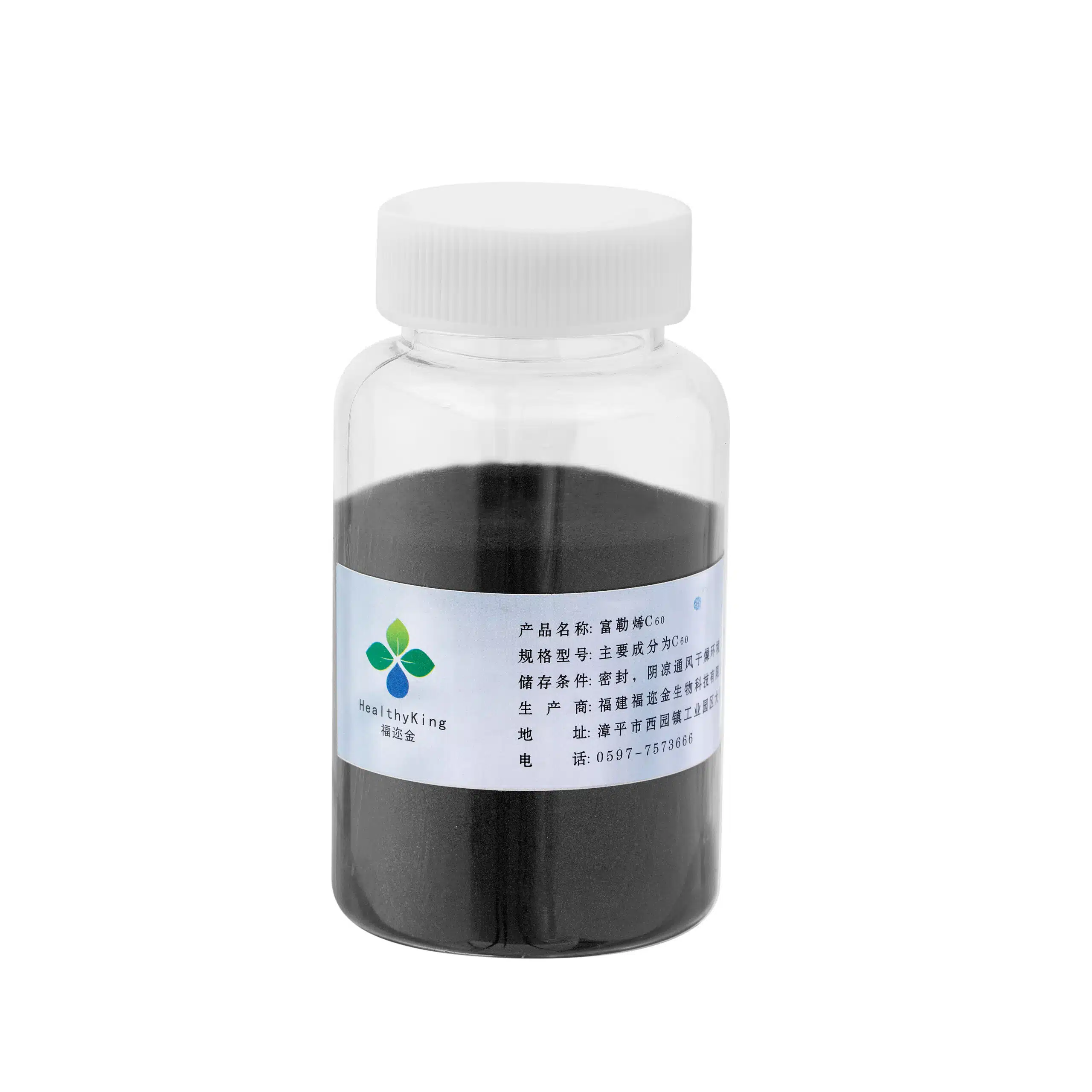
High-purity fullerene C60 is a highly refined nanomaterial designed specifically for the most demanding scientific and industrial applications. This ultra-pure form ensures…
Request product specifications, batch-specific COA, MSDS/SDS, sample availability, packaging details, and international shipping information before confirming your order.
Request DocumentsSubmit your product, purity, quantity, application, destination country, and documentation requirements. Our team will help confirm availability, COA, MSDS/SDS, packaging, and quotation details.