



The global transition to sustainable energy has placed Organic Photovoltaics (OPV) at the forefront of materials science. Characterized by their lightweight, flexible, and semi-transparent properties, OPVs offer a versatile alternative to traditional silicon. In 2024, the field reached a milestone where molecular design and computational engineering converged to produce record-breaking efficiencies. This report examines the mechanisms, materials, and manufacturing innovations defining this new era.
Table of Contents
The Evolution of Carbon 60 in the Organic Electronics Landscape
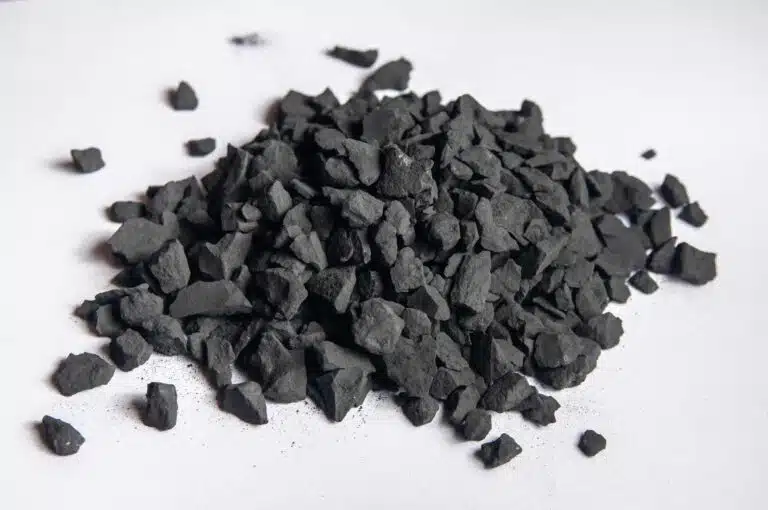
The discovery of Carbon 60 ($C_{60}$), or Buckminsterfullerene, marked a transformative epoch in carbon allotrope research, providing a unique truncated icosahedron structure that has become foundational to the field of organic electronics. As a molecule composed of 60 carbon atoms arranged in a spherical cage of 20 hexagons and 12 pentagons, $C_{60}$ exhibits exceptional electron-accepting capabilities due to its high electron affinity and the high degree of symmetry in its molecular orbitals. Over the past three decades, the application of fullerenes has transitioned from fundamental physics explorations to critical industrial components, particularly in the realm of Organic Photovoltaics (OPVs).
The utility of $C_{60}$ and its soluble derivatives, such as $[6,6]$-phenyl-$C_{61}$-butyric acid methyl ester (PC61BM) and its $C_{71}$ counterpart (PC71BM), stems from their ability to form bulk heterojunctions (BHJ) with donor polymers. This architectural paradigm allows for the efficient dissociation of excitons into free charge carriers, a process that is central to the operation of organic solar cells. Despite the recent emergence of non-fullerene acceptors (NFAs), fullerene-based materials remain indispensable for their isotropic charge transport properties and their role in stabilizing ternary blends. As we enter 2024, the focus has shifted toward closing the efficiency gap between laboratory-scale small cells and large-area modules, leveraging advanced simulation tools and scalable manufacturing processes to achieve record-breaking performance.
Physical Mechanisms and Architectural Divergence: Organic Photovoltaics versus OLEDs
To appreciate the scientific nuances of $C_{60}$ in energy harvesting, one must first distinguish the operational mechanisms of Organic Photovoltaics (OPVs) from those of Organic Light-Emitting Diodes (OLEDs). While both technologies utilize organic semiconductors, they function as thermodynamic inverses. OLEDs are designed for the conversion of electrical energy into light, a process initiated by the injection of electrons and holes from opposing electrodes into an emission layer (EML). These carriers drift through charge transport layers to form excitons—bound electron-hole pairs—which then decay radiatively to emit photons. The primary challenge in OLED stability currently resides in the blue-emitting subpixels, where high photon energy leads to rapid photochemical degradation and limited device longevity.
Conversely, OPVs convert light into electrical energy. The process begins with photon absorption in the active layer, generating excitons that must migrate to a donor-acceptor interface before they recombine. At this interface, the energy level offset between the Lowest Unoccupied Molecular Orbitals (LUMO) of the donor and the acceptor provides the driving force required to break the exciton’s binding energy, resulting in charge separation. The efficiency of this process is often limited by the Power Conversion Efficiency (PCE) and the inherent energy losses ($E_{loss}$) during carrier transport, which typically range between $0.8$ eV and $0.9$ eV in low-bandgap systems.
Comparative Physical Mechanisms of OLEDs and OPVs
| Feature | Organic Light-Emitting Diodes (OLEDs) | Organic Photovoltaics (OPVs) |
| Primary Process | Electrical-to-Optical Conversion | Optical-to-Electrical Conversion |
| Active Species | Recombining Excitons (Radiative) | Dissociating Excitons (Charge Generation) |
| Charge Carrier Goal | Injection and Recombination | Separation and Collection |
| Stability Bottleneck | Blue Pixel Photochemical Degradation | Metastable Morphology and Phase Separation |
| Material Synergy | Fluorescent/Phosphorescent Emitters | Donor-Acceptor Bulk Heterojunctions |
| Energy Loss Type | Non-radiative decay of excitons | $E_{loss}$ in carrier transport |
A critical obstacle in OPV commercialization is the stability of the active layer’s morphology. The donor and acceptor materials in a BHJ blend are inherently metastable, meaning they are prone to phase separation over time, which reduces the effective interface area for exciton dissociation. Environmental factors such as oxygen and water vapor infiltration further exacerbate this issue by reacting with organic materials and metallic electrodes, leading to performance decay.
Key Materials: C60, PC61BM, and PC71BM as Electron Acceptors
The dominance of $C_{60}$ and its derivatives in the history of organic electronics is primarily due to their superior electron mobility and isotropic charge transport. Unlike many planar organic molecules, the spherical geometry of $C_{60}$ allows for charge movement in all directions, making it an ideal acceptor in bulk heterojunctions where the interface is oriented randomly.
Advantages and Limitations of Fullerene Acceptors
PC61BM ($[6,6]$-phenyl-$C_{61}$-butyric acid methyl ester) was the first significant derivative designed to address the poor solubility of pristine $C_{60}$ in common organic solvents like toluene and chlorobenzene. The addition of the butyric acid methyl ester side chain facilitates solution processing, allowing for the fabrication of thin films via spin coating or blade coating. PC71BM ($C_{71}$ derivative) later emerged as a more efficient alternative for certain systems because its lower symmetry allows for broader absorption in the visible spectrum, specifically in the $400-500$ nm range, which contributes to a higher short-circuit current density ($J_{SC}$).
Despite these advantages, the limitations of fullerenes have led to the rise of non-fullerene acceptors (NFAs). Fullerenes have relatively fixed energy levels, which limits the ability of researchers to optimize the open-circuit voltage ($V_{OC}$) by tuning the LUMO level. Furthermore, fullerenes exhibit weak absorption in the near-infrared region, where a significant portion of the solar spectrum resides.
Performance Metrics of Common Fullerene Acceptors
| Material | Spectral Absorption | Charge Mobility | Morphological Stability | Primary Use Case |
| $C_{60}$ | Low (UV-visible) | High (Isotropic) | Moderate | Vacuum-deposited devices, Molecular wires |
| PC61BM | Moderate (Visible) | Excellent | High (in polymers) | Classic BHJ blends, Interfacial layers |
| PC71BM | High (Extended Visible) | Excellent | Moderate | High-current OPV blends |
Current research often utilizes PC61BM as an additive in ternary blends (e.g., Polymer:NFA:Fullerene) to optimize the microstructure. The presence of the fullerene can bridge the gaps between NFA domains, enhancing the electron transport network and improving the overall fill factor (FF) and PCE of the device.
Electron Donor Materials: Oligomeric Innovation and Fluorination
The advancement of OPVs is equally dependent on the design of the donor material, which typically consists of p-type conjugated polymers or oligomers. Two of the most successful building blocks in this category are Carbazole and Benzodithiophene (BDT). Carbazole is a fused-ring aromatic system that is inherently electron-rich due to the lone pair of electrons on the nitrogen atom, which participates in the $\pi$-conjugated system. Benzodithiophene (BDT), on the other hand, is highly valued for its planar structure, which promotes strong $\pi$-$\pi$ stacking and high charge carrier mobility.
Fluorination: A Strategic Tool for Energy Level Tuning
One of the most significant innovations in donor material design is “Backbone Fluorination.” Because fluorine is the most electronegative element, its introduction into the conjugated backbone or side chains of a polymer (such as BDT or Carbazole) significantly lowers the Highest Occupied Molecular Orbital (HOMO) energy level.
This deepening of the HOMO level has several profound effects on device performance:
- Increased $V_{OC}$: Since the open-circuit voltage is proportional to the difference between the HOMO of the donor and the LUMO of the acceptor, fluorination directly enhances $V_{OC}$.
- Improved Crystallinity: Fluorine atoms can induce intramolecular interactions (such as $F \cdots H$ or $F \cdots S$), which enhance the planarity of the polymer chain and improve molecular packing.
- Enhanced Stability: Fluorinated polymers often exhibit higher thermal and oxidative stability, making them more resistant to the degradation mechanisms that plague organic electronics.
Impact of Fluorination on Donor Polymer Properties
| Polymer System | Fluorination Status | HOMO Level (eV) | PCE (%) | Morphological Impact |
| PCDTBT | Non-fluorinated | $-5.30$ | $3.6 – 6.7$ | Standard stacking |
| PBDT-TVT-FBT | Fluorinated | Deepened | $+16\%$ increase | Increased mobility ($u_h, u_e$) |
| FBDT-Fu | Fluorinated | Deepened | $5.5$ | Enhanced crystallinity in transistors |
| DTC(4Ph)-4FIC | Fluorinated | $-5.50$ | $13.15$ | Face-on preference in films |
The shift from “edge-on” to “face-on” preference in fluorinated molecules is a critical second-order insight. In a solar cell, charge carriers must travel vertically to reach the electrodes. A “face-on” orientation, where the $\pi$-stacking direction is perpendicular to the substrate, facilitates this vertical transport far more effectively than an “edge-on” orientation, leading to significant increases in $J_{SC}$ and FF.
Interface Engineering and Complex Molecular Structures
The performance of $C_{60}$-based devices is not solely determined by the bulk properties of the materials but also by the engineering of interfaces. This includes the development of Porphyrin-Fullerene dyads, Organic Field-Effect Transistor (OFET) memories, and unique self-assembled structures.
Porphyrin-Fullerene Diades and Triads: Artificial Photosynthesis
Research into porphyrin-fullerene linked systems serves as a model for artificial photosynthesis. Porphyrins, which are chlorophyll analogues, act as photosensitizers that absorb sunlight and transfer the energy to the $C_{60}$ acceptor. The goal is to achieve an extremely long-lived charge-separated state with a high quantum yield.
By utilizing relays of multistep electron transfers (e.g., in a ferrocene-zincporphyrin-freebaseporphyrin-fullerene tetrad), scientists have successfully achieved charge-separated state lifetimes of up to $0.38$ seconds—a value comparable to those found in natural bacterial photosynthetic centers. This is accomplished by shifting the charge recombination (CR) process deep into the “Marcus inverted region,” where the driving force ($-\Delta G^0_{ET}$) is significantly larger than the reorganization energy ($\lambda$), thereby retarding the energy-wasting recombination.
Organic Memory and OFET Performance
$C_{60}$ also plays a pivotal role in the development of nonvolatile organic field-effect transistor (OFET) memories. These devices utilize fullerenes as charge-trapping sites or as photosensitive hybrid floating gates.
- PCBM/PMMA Composites: OFET memories using these composites have demonstrated data retention times exceeding $12,000$ seconds and stable on/off current switching over $800$ cycles.
- Pentacene/$C_{60}$ Bilayers: These devices achieve high on/off ratios of $10^5$ to $10^7$ by leveraging electric field-induced charge transfer. The $C_{60}$ self-assembled monolayer (SAM) modulates the device’s conductive state, allowing for both electrical and optical (laser-triggered) data storage.
Self-Assembled “Peapod” Structures
The encapsulation of $C_{60}$ within single-walled carbon nanotubes (SWCNTs), creating “peapod” structures ($C_{60}@SWCNT$), represents a frontier in one-dimensional nanotechnology. In these structures, the fullerenes form molecular chains held together by van der Waals forces within the nanotube.
- Charge Transfer Kinetics: Ultrafast spectroscopic studies have revealed that photoinduced electron transfer between the SWCNT and the $C_{60}$ occurs on a time scale of $\tau_{pet} \leq 120$ fs, with a yield of approximately $38\%$.
- Electronic Modification: The intercalation of $C_{60}$ leads to a charge transfer that forms a free charge carrier plasmon, effectively modifying the semiconducting or metallic behavior of the SWCNT for applications in nano-scale transistors.
2026 Efficiency Milestones: The 14.5% Module Record
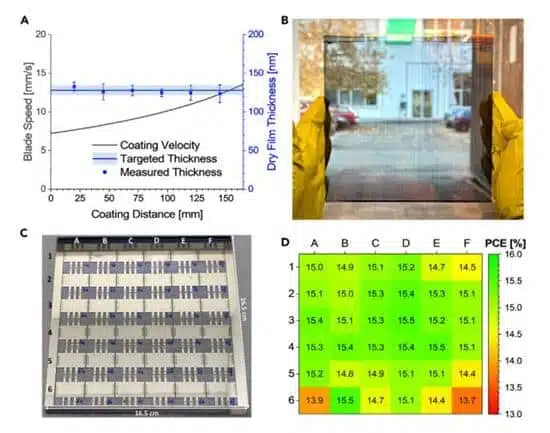
The year 2026 has seen a landmark achievement in the upscaling of OPV technology. Researchers at the University of Erlangen-Nuremberg, led by Andreas Distler, reported a certified world record efficiency of $14.5\%$ for an OPV module with an area of $204$ $cm^2$. This breakthrough is crucial because the efficiency of large-area modules has historically lagged far behind small-area cells (which have reached nearly $20\%$).
CFD/FEM Simulations and the Blade Coating Process
The achievement was facilitated by the integration of Computational Fluid Dynamics (CFD) and Finite Element Method (FEM) simulations to optimize both the material deposition and the device layout.
- Computational Fluid Dynamics (CFD): Used to develop an accelerated blade coating process. Blade coating is a scalable, meniscus-guided technique compatible with roll-to-roll processing. The CFD simulations ensured a uniform coating with thickness deviations of less than $5\%$ across the entire $200$ $cm^2$ area.
- Finite Element Method (FEM): Used to optimize the module layout, specifically the elementary cell connections and electrode geometry. This reduced losses from electrode resistance to $1.9\%$ and losses from non-active interconnect areas to $3.5\%$.
Summary of 2026 OPV Milestone Data (Joule 2026)
| Metric | Achievement Value | Significance |
| Certified PCE | $14.5\%$ | New world record for large-area modules |
| Active Area PCE | $15.0\%$ | Demonstrates minimal loss from small-cell level |
| Module Area | $204$ $cm^2$ | Proves scalability of PM6:Y6-C12:PC61BM system |
| Coating Uniformity | $< 5\%$ deviation | Achieved via CFD-supported blade coating |
| Interconnect Loss | $3.5\%$ | Optimized via FEM simulation |
This breakthrough suggests that OPVs are rapidly approaching the performance levels necessary for building-integrated photovoltaics (BIPV) and aerospace applications, where lightweight and flexible modules are prioritized over absolute peak efficiency.
Transient Electronics: PCBM as a Catalytic Photosensitizer
Transient electronics—devices designed to physically disappear after a period of stable operation—represent a novel solution to electronic waste. $C_{60}$ derivatives, particularly PCBM, have been discovered to act as potent triggers for this transience when blended into commodity polymers like polystyrene (PS).
The UV/Water-Triggered Degradation Mechanism
The degradation of PS:PCBM films is driven by a synergistic effect between ultraviolet (UV) light and an aqueous environment.
- Catalytic Photodegradation: The addition of PCBM acts as a catalyst. When exposed to UV light, PCBM mediates the breakdown of the polymer matrix, likely through the generation of reactive oxygen species (ROS) or by facilitating chain scission.
- Photoswitchable Solubility: UV exposure changes the solubility of the polymer-fullerene blend, allowing it to be washed away or disintegrated in water.
- Tunability: The degradation onset and rate are highly controllable. By adjusting the concentration of PCBM, the UV intensity, and the film thickness, the lifetime of the device can be precisely tailored.
This “on-demand” transience is a significant advancement over previous passive dissolution strategies, which offered little control over when a device would fail. Applications range from temporary environmental sensors to biocompatible electronics that degrade after a medical procedure.
Molecular Wires: C60 as the Ideal Gold Anchor
In the field of single-molecule electronics, the “anchoring group” that connects a molecule to metal electrodes (usually gold) determines the junction’s stability and conductance. While thiol ($-S-$) and amine ($-NH_2$) groups have been standard, they are prone to significant conductance fluctuations due to the sensitivity of the $Au-S$ or $Au-N$ bond to the specific atomic arrangement of the gold surface.
Electronic and Mechanical Advantages of the C60-Au Bond
$C_{60}$ has emerged as a superior alternative for anchoring molecular wires to gold surfaces for several reasons:
- Strong Hybridization: $C_{60}$ hybridizes strongly with the gold surface, resulting in a robust and stable chemical anchor. The bond energy is invariant to the surrounding environment, providing highly reproducible electronic coupling.
- Reduced Fluctuations: Single-molecule junctions anchored by $C_{60}$ (e.g., $BDC_{60}$) exhibit a considerably lower conductance spread than those anchored by thiols. This makes them ideal for scientific comparisons with theoretical models.
- High Conductance: $C_{60}$ moieties can lead to single-molecule conductances on the order of $0.1 G_0$ (where $G_0 = 2e^2/h \approx 77 \mu S$). A peak in conductance histograms for fullerene-anchored molecules is typically observed around $3 \times 10^{-4} G_0$.
- Symmetry: The high symmetry of the $C_{60}$ cage minimizes the impact of the specific adsorption site on the gold surface, leading to more consistent performance.
Conductance and Stability Comparison of Anchoring Groups
| Anchor Type | Bond Type | Stability | Conductance Spread | Key Application |
| Thiol ($-S-$) | $Au-S$ | High (Covalent) | Large (Sensitive to geometry) | Standard molecular junctions |
| Amine ($-NH_2$) | $Au-N$ | Moderate | Moderate | Variable conductance studies |
| Fullerene ($C_{60}$) | $Au-C$ (Hybridized) | Very High | Small (Robust motif) | High-stability molecular wires |
| Trimethyltin | Direct $Au-C$ | Extremely High | Very Small | High-conductance rectifiers |
Research indicates that the $C_{60}$ anchor effectively shifts the limiting barrier for electronic conduction from the metal-molecule contact to the internal covalent bonds of the molecule, which is a critical design principle for reliable molecular-scale electronics.
FAQ
Why is Carbon 60 preferred over other carbon allotropes like graphene in OPVs?
While graphene has excellent conductivity, $C_{60}$’s spherical geometry provides isotropic charge transport, meaning it can accept and transport electrons effectively regardless of its orientation in a bulk heterojunction blend. This makes it more versatile for solution-processed solar cells where molecules are randomly oriented.
What are the side effects of Carbon 60 in industrial applications?
In an industrial context, the primary “side effect” or drawback is the material’s sensitivity to UV light and oxygen, which can cause the formation of $C_{60}$ epoxides or polymers. This changes the electronic structure and can degrade the performance of solar cells or transistors over time.
Is there a specific wavelength that triggers the degradation in transient electronics? The degradation of PS:PCBM films is primarily triggered by the UVA and UVB ranges of ultraviolet light. UVB is particularly effective because the blend absorbs more energy in this range, accelerating the catalytic scission of the polymer chains.
How does the 14.5% record efficiency in 2024 compare to silicon solar cells?
Silicon solar cells typically have efficiencies between $20\%$ and $26\%$. While $14.5\%$ is lower, organic solar cells offer advantages like flexibility, transparency, and a much lower energy payback time. The 2026 record is significant because it proves that organic modules can be manufactured at scale with minimal efficiency loss compared to lab-scale cells.
References
- Nonvolatile Photomemory Elements: Analysis of $C_{60}$ self-assembled monolayers (SAMs) in Pentacene OFETs for high-performance organic memory. Read at ACS Materials Letters
- Electronic Properties of C60 Peapods: A study on the intercalation of fullerenes within single-wall carbon nanotubes and their resulting 1D electronic behavior. View on ResearchGate
- Ultrafast Charge Transfer Dynamics: Spectroscopic signatures revealing the sub-picosecond electron movement between nanotubes and $C_{60}$ cages. Source: PubMed
- 2024 Record Module Efficiency (14.5%): The landmark achievement in upscaling organic photovoltaics (OPV) using blade coating and CFD simulation. Visit i-MEET FAU