



关键要点
- 富勒烯C60(纯品),纯度99.95%,不应仅通过纯度评估,还需结合批次一致性、文件记录及应用适用性进行综合考量,且不得含有金属残留。.
- 在正式报价前,应确认分析证书(COA)、安全数据表(MSDS/SDS)、包装方式、储存条件、数量及目的国信息。.
- 用于科研及工业用途时,富勒烯的等级应与目标材料体系及测试要求相匹配。.
痕量金属控制可能在以下情况下至关重要: 富勒烯C60 用于催化剂敏感合成、薄膜研究或其他工艺时,原料成分的微小变化会干扰结果解读。然而,实际问题并非产品是否被描述为“无金属”,而是测量了哪些元素、样品如何制备、使用了何种分析方法,以及报告限是否适用于下游工艺。.
不有意使用金属催化剂的生产路线可能减少一种潜在污染源,但并不能确定最终批次产品的元素组成。原料、电极、反应器、收集系统、纯化介质、研磨工具、转移设备和包装均可能在生产和处理过程中引入杂质。.
本指南解释了实验室和工业研发团队如何为痕量金属杂质建立基于风险的规格标准, 富勒烯C60 而无需将每种检测到的元素视为催化剂毒物,或将工艺描述转化为无依据的纯度声明。.
“无金属 富勒烯C60”应具有的含义
“无金属”并非完整的分析规格。根据供应商或研究背景,它可能意味着:
- 在富勒烯形成过程中未有意使用金属催化剂;;
- 通过指定方法未检测到特定金属;;
- 特定金属低于规定的报告限;;
- 该材料适用于对金属污染敏感的应用。.
这些含义不可互换。“未使用金属催化剂”描述的是工艺输入。“通过ICP-MS检测,镍低于规定报告限”描述的是特定样品的分析结果。当元素组成影响计划工作时,购买C60的买方应要求提供第二种信息。.
目标元素列表也必须明确。涵盖镍、钴和钯的报告并不能证明不存在铁、铜、铬、钠、钙或其他元素。相关列表取决于制造路线、设备、纯化工艺和下游应用。.
金属残留与金属富勒烯不同
几种化学性质不同的材料可能被笼统地描述为“与富勒烯相关的金属”。在解读分析结果前,应对它们进行区分。.
- 外部元素污染 可能来自设备、试剂、纯化介质、灰尘或包装。.
- 含金属颗粒或盐类 可能物理混合在富勒烯粉末中。.
- 外配位金属-富勒烯配合物 包含配位或沉积在笼外部的金属物种。.
- 内嵌金属富勒烯 是定义明确的分子结构,其中原子或原子团被包裹在富勒烯笼内。.
完全消解后的ICP-MS结果可能定量了提交材料中的选定元素,但本身并不能确定这些元素的化学结合方式。相反,分子质谱可能支持特定金属-富勒烯物种的鉴定,但并非自动成为总元素污染的定量测量。.
这一区别至关重要,因为有意合成的金属-富勒烯研究材料并非原始C60的不纯版本。它是一种不同的目标材料,需要其自身的身份、组成和分析计划。.
痕量元素可能进入C60工艺的环节
应在整个生产和处理链中绘制潜在污染源,而非仅归因于路线名称。.
形成与收集
碳原料、电极、反应器硬件和收集表面可能引入不同的元素背景。电弧放电、燃烧和其他形成路线各有工艺特定的污染风险,但在无批次数据的情况下,不应假设任何路线会产生固定的金属分布。.
提取与纯化
纯化.
溶剂、色谱介质、泵、阀门、过滤器和可重复使用的容器可能引入无机残留。纯化可去除一类杂质,同时引入另一类杂质,因此富勒烯物种纯度和总元素组成应作为独立问题处理。
粒径减小、混合与包装.
研磨、筛分、混合和转移操作增加了与工具和环境表面的接触。不锈钢设备可能使铁、铬或镍成为风险评估的相关因素,而玻璃、陶瓷或聚合物组件则引入不同的可能背景。.
因此,有用的供应商调查应询问材料在何处接触了含金属设备、是否使用了专用或共享设备,以及如何收集代表性样品。
杂质何时会影响催化剂?.[1] 催化剂中毒 IUPAC将催化剂失活描述为在其他条件不变的情况下,转化率随时间下降。.
是失活的一种可能原因,但并非唯一原因。结垢、烧结、相变、活性物质损失和反应环境变化也可能降低活性。.
痕量物种是否表现为毒物取决于催化剂、氧化态、配体、溶剂、反应物、温度和浓度。某些化合物与活性位点强结合;其他可能化学惰性、作为促进剂,或在现有浓度下无显著影响。因此,声称C60中的每种痕量过渡金属都会毒化钯、铂、钌或其他催化剂是不准确的。.
对于C60功能化或衍生物合成项目,实验室应从实际反应开始。如果工艺使用敏感均相催化剂,需定义哪些元素或无机物种可能干扰该催化循环。然后比较匹配的C60批次,或将可疑杂质掺入对照实验。反应转化率、选择性、催化剂负载量、诱导时间和可重复性比关于“无金属”材料的笼统声明提供更直接的证据。.[2] 美国能源部将催化剂描述为加速反应或允许反应在较温和条件下进行、且在整个反应中不被消耗的材料。.
保护该功能需要工艺特定的证据,而非从无关催化系统复制的通用禁止金属列表。
痕量元素与光电研究.
材料纯度可能影响有机半导体实验,但“杂质”是一个宽泛类别。残留溶剂、氧气、水、富勒烯衍生物、降解产物、抗衡离子、颗粒和金属可能通过不同机制影响薄膜形成或电学测量。 半导体 对小分子有机物的研究表明,纯化历史可能显著改变测量的材料和器件性能。.[3] 这支持谨慎的杂质控制,但并不能证明每种器件性能损失都源于痕量金属。.
如果两个C60批次产生不同的器件结果,调查应比较更多数据而不仅仅是元素数据。相关变量可包括富勒烯物种组成、残留溶剂、水暴露、升华历史、沉积速率、薄膜厚度、基底制备、界面层和器件封装。.
痕量元素分析在连接至受控器件比较时最为有用。匹配的沉积条件和重复器件可显示批次差异是否可重复。随后可通过额外的表面或薄膜分析,调查可疑杂质是否存在于沉积层中,以及是否与电学响应相关。.
分析方法及其局限性
| 方法 | 主要问题 | 有用的输出 | Important boundary |
|---|---|---|---|
| ICP-MS | Which selected elements are present after suitable sample preparation? | Element-specific concentration with method reporting limits | Accuracy depends on digestion, blanks, calibration and matrix control |
| ICP-OES | Which elements are present at concentrations appropriate for optical-emission measurement? | Multi-element concentration data | Typically less sensitive than ICP-MS for many ultra-trace requirements |
| 高效液相色谱法 | What soluble fullerene components are resolved under the selected conditions? | Relative chromatographic composition | Does not establish total elemental impurity content |
| Molecular mass spectrometry | Which molecular ions or fullerene species are detected? | Molecular-mass and isotope-pattern evidence | Not automatically quantitative for total metals |
| XPS | What elements and chemical states are present near the surface? | Surface-sensitive elemental and chemical-state information | Does not represent bulk concentration without a suitable sampling model |
| Device or reaction test | Does the batch behave differently in the intended process? | Conversion, selectivity, film or device response | Does not identify the impurity without complementary analysis |
ICP-MS is widely used for trace and ultra-trace elemental analysis, including industrial chemicals and semiconductor-related materials.[4] It is not simply a matter of placing C60 powder in an instrument. The sample must be introduced in a form compatible with the method, and the laboratory must demonstrate that the preparation recovered the target elements without introducing significant contamination.
For carbon-rich samples, matrix effects and incomplete digestion require particular attention. Instrument and method literature recommends contamination control, high-purity reagents, suitable blanks and sample-preparation procedures matched to the material.[5]
Further method-specific context is available in XCT’s guide to C60表征方法.
What a Useful Elemental Report Should Include
A result such as “metal-free” or “zero metals” is less informative than a structured analytical report. For each target element, the reader should be able to identify:
- the submitted batch and sampling point;
- the sample mass and preparation or digestion method;
- the analytical method and instrument category;
- method blank and relevant quality-control samples;
- calibration approach and, where appropriate, recovery data;
- unit of reporting;
- method detection or reporting limit;
- whether a value was measured or reported below a limit.
“Not detected” means that the measured signal did not meet the laboratory’s defined detection or reporting criterion under that method. It does not mean that the element is absent at every possible concentration.
Likewise, a supplier result applies first to the tested sample. Buyers with highly sensitive processes may use independent incoming analysis or periodic verification to determine whether the supplier data remain representative of received lots.
Build the Specification from the Downstream Risk
A practical specification begins with the process failure that the team is trying to prevent.
For catalyst-sensitive synthesis
Identify the catalyst, ligands, reaction conditions and known interferents. Select target elements based on the reaction chemistry and contamination history. If the sensitivity threshold is unknown, use controlled spiking or matched-batch studies before establishing a purchasing limit.
For optoelectronic devices
Define whether C60 will be solution processed, thermally evaporated or used as a precursor. Connect raw-material analysis to film and device controls. A metal result is meaningful only when deposition history, layer thickness and device architecture are also controlled.
For exploratory research
A broader screening list may be appropriate at the start. Once the experiment identifies which variables materially affect the outcome, the specification can be narrowed to the measurements that support reproducibility.
This risk-based approach prevents two opposite errors: accepting an undefined “metal-free” label, and imposing an expensive ultra-trace specification that has no demonstrated relationship to the application.
Production Route Is Context, Not a Certificate
Production-route information can help identify likely contamination sources and guide the analytical plan. A route that does not intentionally use a metal catalyst may reduce catalyst-derived contamination risk. It does not remove possible contributions from feedstocks, reactor materials, extraction systems or handling equipment.
Similarly, material produced through arc discharge should not automatically be described as contaminated. The electrode composition, apparatus, collection method and purification history determine the actual risk. Compare routes through representative batch data rather than categorical claims.
XCT’s separate guide to verifying metal-free Fullerene C60 examines the analytical meaning of the term in greater detail.
A Qualification Workflow for C60 Buyers
- Define the C60 application, material form and downstream process.
- Identify elements or impurity classes that could change that process.
- Review the supplier’s test methods, element list and reporting limits.
- Confirm whether the tested sample represents the offered batch.
- Run incoming or independent analysis when the process sensitivity justifies it.
- Compare material data with reaction, film or device performance.
- Review the specification when the process, equipment or supplier route changes.
For an overview of synthesis, purification and batch controls, see the C60 supply-chain quality-control guide.
Discuss a Trace-Metal Requirement with XCT
If your project uses C60 in catalyst-sensitive synthesis or optoelectronic research, send XCT the intended process, required quantity, target purity, elements of concern and required reporting limits. XCT can review the available material and batch documentation against the stated research requirement without treating a production-route label as a universal performance guarantee.
Submit your Fullerene C60 requirement.
常见问题解答
无金属富勒烯C60是否意味着不存在金属原子?
不。“无金属”可能描述某种生产工艺或针对特定元素的结果。有意义的规格说明应明确列出所检测的元素、分析方法、单位及报告限值。.
HPLC能否证明富勒烯C60不含痕量金属?
不能。高效液相色谱法(HPLC)可在特定色谱条件下分离并比较可溶性富勒烯组分,但评估特定痕量金属时需采用元素分析方法,如电感耦合等离子体质谱法(ICP-MS)或电感耦合等离子体发射光谱法(ICP-OES)。.
所有痕量金属都会毒化催化剂吗?
否。元素或化合物是否抑制催化剂,取决于其化学形态、浓度、催化剂体系、配体、反应物、溶剂以及操作条件。应针对实际反应评估该风险。.
无金属催化剂的生产路线是否能保证无金属的C₆₀?
不能。避免有意添加金属催化剂虽然消除了一个可能的来源,但原料、设备、纯化介质、操作及包装仍可能引入其他元素杂质。.
对于痕量金属敏感的C60研究,买方应要求什么?
买方应明确目标元素、所需报告限值、应用场景、材料形态及数量,随后审核供应商的取样、制样及分析方法。对于敏感工艺,可考虑实施独立的来料验证。.
参考文献
- International Union of Pure and Applied Chemistry. “Catalyst Decay.” IUPAC Gold Book. https://goldbook.iupac.org/terms/view/C00880
- U.S. Department of Energy, Office of Science. “DOE Explains…Catalysts.” https://www.energy.gov/science/doe-explainscatalysts
- Yumusak, C. et al. “Purity of Organic 半导体 as a Key Factor for the Performance of Organic Electronic Devices.” Materials Chemistry Frontiers, 2020. https://pubs.rsc.org/en/content/articlelanding/2020/qm/d0qm00583f
- Thermo Fisher Scientific. “Trace Elemental Analysis.” https://www.thermofisher.com/us/en/home/industrial/spectroscopy-elemental-isotope-analysis/trace-elemental-analysis.html
- Thermo Fisher Scientific. “Best Practices for the Analyses of Complex Samples by ICP-OES and ICP-MS.” 2022. Official technical presentation
- Agilent Technologies. “Analysis of Inorganic Impurities in Semiconductor Materials.” https://www.agilent.com/en/solutions/materials-testing-research/semiconductors-electronics-testing/inorganic-impurities
采购洞察
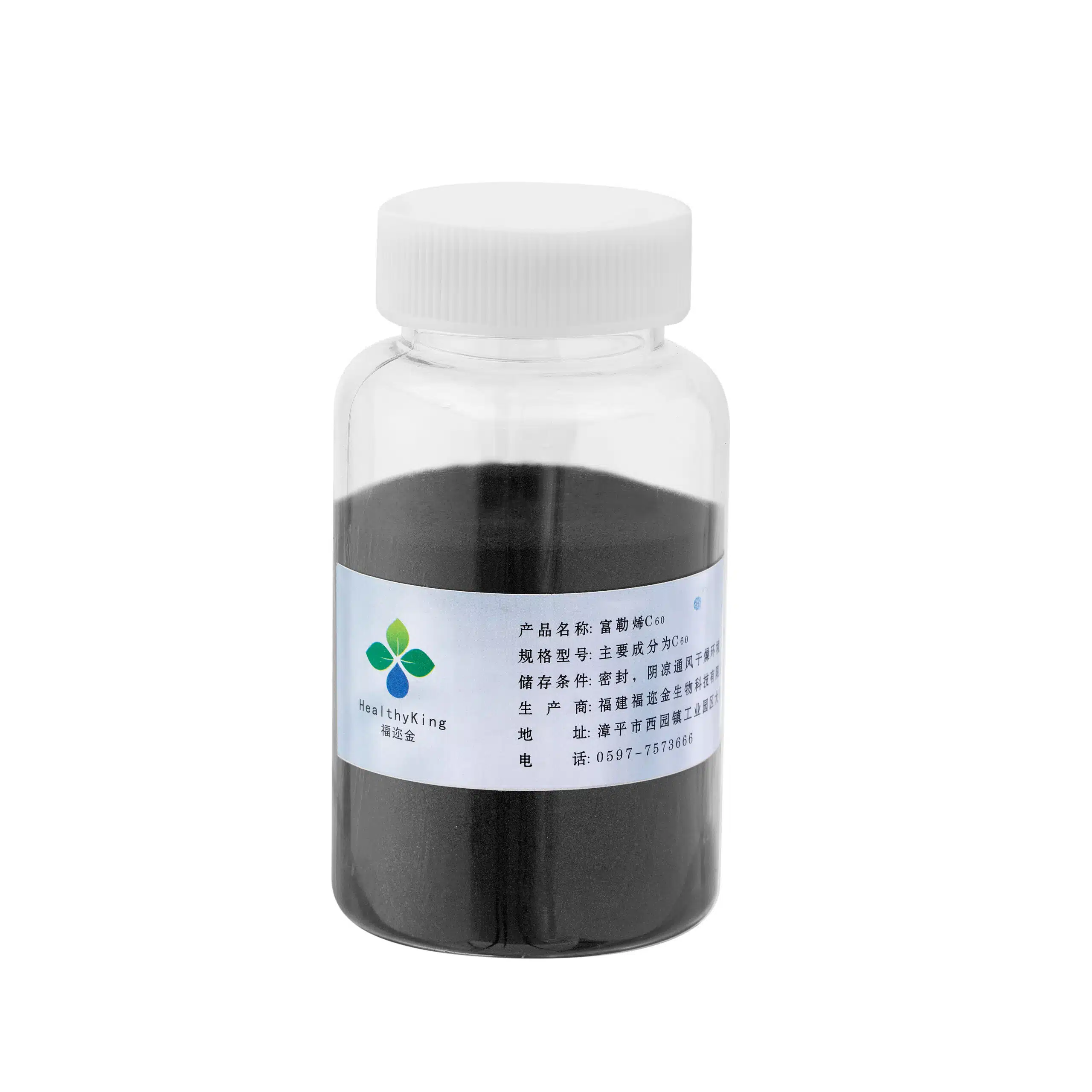
对于富勒烯 C60(纯品,纯度 99.95%,无金属残留)的 B2B 采购,买方在请求正式报价前应确认目标纯度、所需数量、应用、目的国、COA、MSDS/SDS、包装、存储条件及运输要求。.
需要 COA 或 MSDS/SDS?
在确认订单前,请索取产品规格、批次特定 COA、MSDS/SDS、样品可用性、包装详情及国际运输信息。.
索取文件询价前买方检查清单
- 产品名称及 CAS 号(如已知)
- 目标纯度
- 所需数量
- 样品或批量订单
- 应用或预期用途
- 目的国
- 所需文件
- 包装偏好
相关技术文章



准备采购高纯度富勒烯?
提交您的产品、纯度、数量、应用、目的国及文件要求。我们的团队将协助确认可用性、COA、MSDS/SDS、包装及报价详情。.