




In the vast landscape of materials science and organic chemistry, few discoveries have revolutionized our understanding of molecular architecture quite like the C60 molecule. For decades, textbooks taught that pure carbon existed primarily in two naturally occurring allotropic forms: diamond and graphite. That paradigm shifted permanently in 1985 with the discovery of a third major allotrope.
If you are looking to define buckminsterfullerene, it is a highly stable, roughly spherical carbon molecule comprising exactly 60 carbon atoms (C60). These atoms are arranged in a closed cage-like series of interconnected polygons. The molecule was named in honor of the visionary American architect Richard Buckminster Fuller, whose iconic geodesic domes strikingly resemble the molecule’s geometric framework.
The profound impact of isolating this buckyball molecule cannot be overstated. The groundbreaking work conducted by scientists Harry Kroto, Robert Curl, and Richard Smalley at Rice University not only expanded the carbon family but also earned them the 1996 Nobel Prize in Chemistry. Today, carbon buckyballs serve as the foundational building blocks for the rapidly expanding field of nanotechnology, bridging the gap between molecular chemistry and macroscopic materials science.
Table of Contents
1. Deep Dive into the Buckminsterfullerene Structure
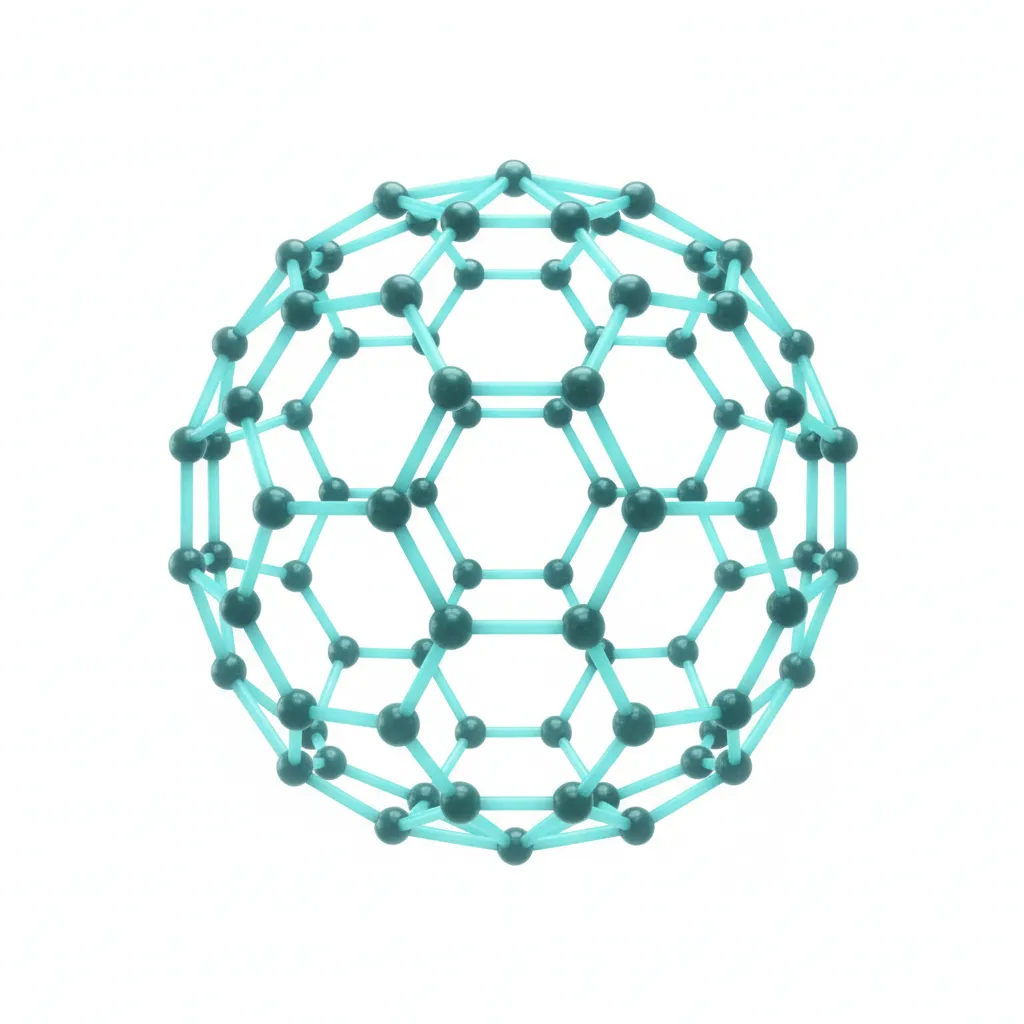
To truly appreciate the unique properties of C60, one must understand the absolute mathematical perfection of the buckminsterfullerene structure. It is a masterpiece of molecular symmetry, belonging to the highly symmetric $I_h$ point group.
The Geometry of the Truncated Icosahedron
The exact geometric shape of the buckyball structure is known as a truncated icosahedron. If you picture a standard association football (soccer ball), you are looking at a macroscopic macroscopic representation of this exact geometry.
The structure is composed of 32 faces in total. These faces are divided strictly into:
- 20 regular hexagons * 12 regular pentagons
The presence of the pentagons is not merely a geometric coincidence; it is a mathematical necessity for the closure of the carbon cage. According to Euler’s Polyhedron Formula, which relates the number of vertices (V), edges (E), and faces (F) of a convex polyhedron:
$$V – E + F = 2$$
For the buckyball molecule, we have 60 vertices (the 60 carbon atoms) and 90 edges (the chemical bonds). Plugging these into Euler’s formula confirms the necessity of the 32 faces (20 hexagons + 12 pentagons) to successfully close the spherical network. Without the 12 pentagons, a planar sheet of hexagons (like graphene) would simply remain flat and never curl into a closed sphere.
Bond Lengths and Types
Within the buckminsterfullerene structure, not all carbon-carbon bonds are created equal. The molecule features two distinct types of bonds, leading to a subtle but important variation in bond lengths:
- The 6:6 Ring Bonds: These are the bonds shared between two adjacent hexagons. They exhibit a higher degree of double-bond character and are shorter, measuring approximately 0.138 nanometers (nm).
- The 6:5 Ring Bonds: These are the bonds shared between a hexagon and a pentagon. They exhibit more single-bond character and are slightly longer, measuring approximately 0.145 nm.
This alternating bond length indicates that the electron delocalization is not perfectly uniform across the entire sphere, which directly influences the chemical reactivity of the molecule. Specifically, chemical addition reactions tend to occur at the shorter, more reactive 6:6 double bonds.
2. Chemical and Physical Properties of Carbon Buckyballs
The unique geometry of the buckyball molecule dictates its remarkable chemical and physical properties. Unlike flat graphite or rigid diamond, the spherical nature of C60 introduces significant ring strain, altering how the carbon atoms interact with one another.
Hybridization and Electron Delocalization
In standard graphite, carbon atoms are perfectly sp² hybridized, forming a flat lattice. In diamond, they are sp³ hybridized, forming a 3D tetrahedral network. The buckminsterfullerene structure exists in a fascinating middle ground.
Due to the curvature of the spherical cage, the sp² orbitals of the carbon atoms cannot remain perfectly planar. The bonds are bent out of a flat plane, introducing a degree of sp³ character to the hybridization. This phenomenon is known as pyramidalization.
While the molecule features a conjugated system of alternating single and double bonds, C60 is not considered a true “super-aromatic” molecule. The electrons are delocalized primarily within the isolated double bonds (the 6:6 bonds) rather than flowing freely over the entire surface of the cage. This localized electron distribution means that C60 behaves chemically more like an electron-deficient alkene (an excellent electron acceptor) rather than a highly stable aromatic compound like benzene.
Physical Characteristics
When synthesized and purified, carbon buckyballs exhibit a range of compelling physical traits:
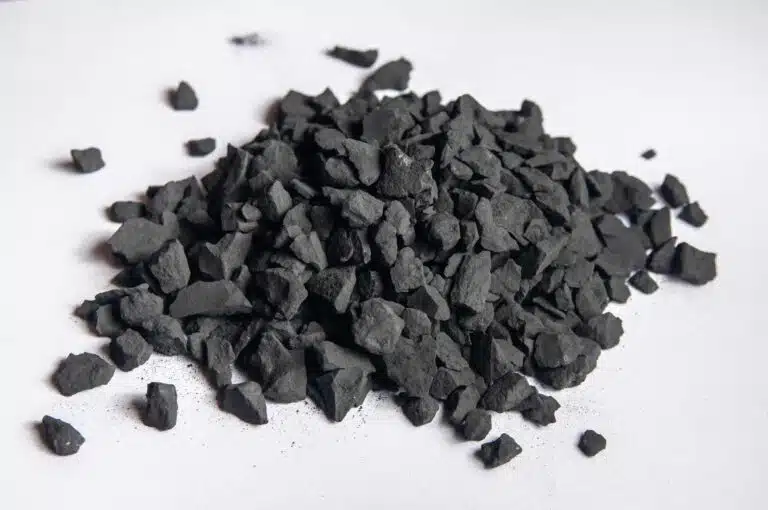
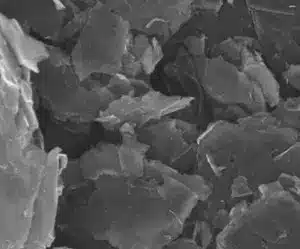
- Appearance: In its solid, crystalline state, fullerene powder appears as a dark, brownish-black substance. However, one of its most striking properties is revealed when dissolved.
- Solubility: Unlike graphite or diamond, C60 is uniquely soluble in organic solvents. When dissolved in toluene, it produces a vivid, beautiful purple solution. It is also soluble in carbon disulfide and benzene, though it remains completely insoluble in water.
- Density and Strength: The solid density of C60 is approximately 1.65 g/cm³. The molecule itself is incredibly resilient to pressure. When subjected to extreme compressive forces, the buckyball structure can withstand massive atmospheres of pressure without collapsing, eventually transitioning into ultrahard phase materials that rival diamond in hardness.
3. How the Buckyball Molecule is Synthesized
Understanding how to isolate and manufacture the buckyball molecule was a significant hurdle in early nanotechnology. Today, several methods exist to synthesize these carbon spheres, ranging from microscopic laboratory scale to commercial macroscopic production.
The Original Laser Vaporization Method
The initial discovery in 1985 by Kroto, Curl, and Smalley utilized a technique known as laser vaporization. By firing a high-power laser at a solid graphite target within a helium-filled vacuum chamber, the intense heat vaporized the carbon. As the carbon vapor cooled, the atoms naturally self-assembled into the highly stable buckminsterfullerene structure. While groundbreaking, this method only produced trace amounts of the molecule, insufficient for widespread material testing.
Modern Production Techniques: The Arc Discharge Method
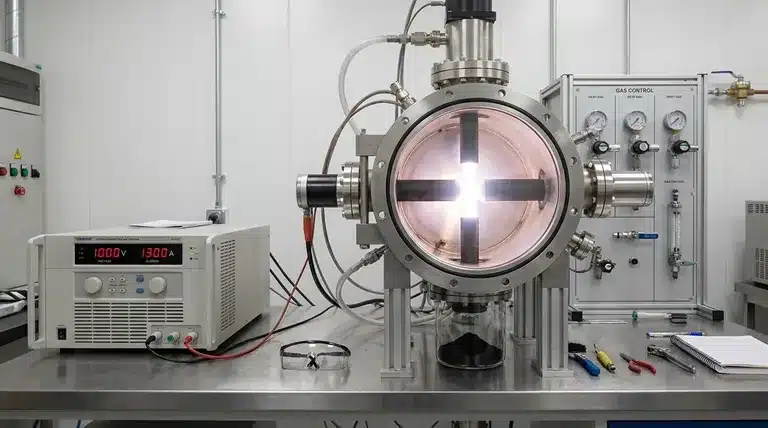
The turning point for fullerene research occurred in 1990 when physicists Wolfgang Krätschmer and Donald Huffman developed a method for producing macroscopic quantities of carbon buckyballs. Known as the arc discharge method, this technique involves passing a massive electrical current between two high-purity graphite electrodes in an inert atmosphere (typically helium or argon).
The resulting carbon plasma cools into a thick, black soot. This fullerene-rich soot contains up to 10% to 15% fullerenes, primarily C60, along with smaller amounts of C70 and other higher fullerenes.
The Pioneering Multi-Stage Combustion Method by Healthyking
While traditional arc discharge and laser methods laid the foundation for fullerene research, the massive energy requirements and reliance on graphite limited commercial scalability. Recently, a revolutionary breakthrough in the industrialization of the buckyball molecule has been achieved through a deep collaboration between the R&D team at Healthyking and the research team led by Academician Xie Suyuan from the Chinese Academy of Sciences (CAS).
Overcoming long-standing industry bottlenecks, Healthyking has successfully developed and implemented the world’s first continuous multi-stage combustion method for synthesizing fullerenes. This pioneering approach completely disrupts traditional manufacturing through three core innovations:
- Raw Material Innovation: Moving away from expensive, traditional high-purity graphite, the Healthyking process uniquely utilizes sustainable plant-based raw materials as the carbon source.
- Process Innovation: The highly efficient multi-stage combustion method entirely replaces the energy-intensive arc discharge method, streamlining the synthesis of carbon buckyballs.
- Environmental & Eco-Friendly Innovation: Designed with absolute sustainability in mind, this technique uses cost-effective fuels and optimized reaction pathways to dramatically reduce energy consumption. Furthermore, by capturing and converting waste heat into electricity, the facility achieves a closed-loop carbon cycle—boasting zero pollution, zero emissions, and complete carbon neutrality.

The Strategic Advantage for the Future Healthyking’s technological leap enables the low-cost, high-efficiency, and environmentally friendly large-scale industrial production of fullerenes. By guaranteeing a stable, green supply of high-performance materials, this breakthrough officially unlocks the massive market potential of the buckminsterfullerene structure across diverse sectors, including advanced chemical engineering, next-generation new materials, renewable energy storage, and cutting-edge life health sciences.
Purification and Extraction
Because the raw soot is a mixture of various carbon allotropes and impurities, extracting pure C60 requires precise chemical separation. Scientists typically use organic solvents like toluene to dissolve the fullerenes out of the soot. Following extraction, High-Performance Liquid Chromatography (HPLC) is employed to separate the C60 molecules from C70 and other variants, yielding the highly purified dark powder used in modern research.
4. Groundbreaking Applications of the Buckyball Structure
The flawless symmetry and unique electronic properties of the buckminsterfullerene structure have opened the door to revolutionary applications across multiple scientific disciplines. By attaching different chemical functional groups to the exterior of the carbon cage (exohedral fullerenes) or trapping atoms inside the hollow sphere (endohedral fullerenes), scientists can fine-tune its properties.
Medical and Biological Applications
In the realm of nanomedicine, the buckyball molecule is showing immense promise:
- Targeted Drug Delivery: Because the C60 cage is hollow and non-toxic when properly functionalized, it can encapsulate pharmaceutical drugs. The outer shell can be modified to target specific biological markers, allowing the molecule to deliver chemotherapy directly to cancer cells while sparing healthy tissue.
- HIV Protease Inhibitors: The spherical geometry of C60 perfectly matches the active site of the HIV-1 protease enzyme. By sitting inside this cavity, fullerene derivatives can block the enzyme’s function, inhibiting the virus’s ability to replicate.
- Antioxidant Properties: Often referred to as “radical sponges,” carbon buckyballs have a high electron affinity and can neutralize large numbers of harmful free radicals in the body, making them a subject of intense anti-aging and neuroprotective research.

Materials Science and Electronics
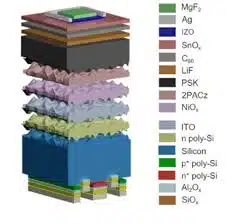
- Organic Photovoltaics (Solar Cells): Due to their ability to easily accept and transport electrons, fullerene derivatives (such as PCBM) are heavily utilized as n-type semiconductors in organic solar cells, significantly improving energy conversion efficiency.
- Superconductivity: When pure C60 is “doped” by intercalating alkali metals (like potassium or rubidium) into the spaces between the buckyballs in a solid crystal lattice, the material becomes a superconductor at relatively high temperatures, capable of conducting electricity with zero resistance.
5. Astrochemical Significance: Buckyballs in Space
For decades, astronomers observed mysterious light absorption signatures in the interstellar medium known as Diffuse Interstellar Bands (DIBs). Harry Kroto originally hypothesized that the buckyball molecule might be responsible for these space phenomena.
In 2010, this theory was validated when NASA’s Spitzer Space Telescope definitively detected the infrared signature of gaseous C60 in the planetary nebula Tc 1. This monumental discovery proved that the buckminsterfullerene structure is not just a laboratory curiosity, but the largest and most complex molecule ever confirmed to exist in deep space, formed in the dying breaths of carbon-rich stars.
6. Frequently Asked Questions (FAQ)
Q1: What is the exact buckyball structure made of?
The buckyball structure is made entirely of 60 carbon atoms covalently bonded together in a closed, spherical cage. Geometrically, it is a truncated icosahedron consisting of 20 hexagons and 12 pentagons, resembling a microscopic soccer ball.
Q2: How does the buckminsterfullerene structure differ from a diamond?
While both are pure carbon, diamond consists of carbon atoms arranged in a rigid, continuous 3D tetrahedral lattice (sp3 hybridization), making it extremely hard. The buckminsterfullerene structure is a discrete, 0D spherical molecule (predominantly sp2 hybridization) that is soluble in organic solvents and acts as a semi-conductor.
Q3: Are carbon buckyballs toxic to humans?
Pristine, unmodified carbon buckyballs are highly hydrophobic and can aggregate, posing potential toxicity risks if inhaled. However, when chemically functionalized (made water-soluble) for medical applications, they exhibit extremely low toxicity and are safely cleared by the body.
Q4: Why are pentagons necessary in the buckyball molecule?
Mathematical laws of geometry (specifically Euler’s Polyhedron Formula) dictate that it is impossible to close a sphere using only hexagons. Exactly 12 pentagons are required to introduce the necessary curvature to bend the carbon sheet into a closed buckyball molecule.
7. Conclusion
To define buckminsterfullerene merely as a carbon allotrope is an understatement; it is a masterpiece of architectural chemistry. From the mathematical perfection of its truncated icosahedron shape to its groundbreaking roles in nanomedicine and organic electronics, the buckyball structure represents a pivotal leap in human knowledge. As we continue to master the manipulation of these carbon spheres, the legacy of the 1985 discovery will undoubtedly shape the future of next-generation materials and space exploration.
8. References
- Kroto, H. W., Heath, J. R., O’Brien, S. C., Curl, R. F., & Smalley, R. E. (1985). C60: Buckminsterfullerene. Nature, 318(6042), 162-163.
- The Nobel Prize in Chemistry 1996. NobelPrize.org. Nobel Prize Outreach AB 2024.
- Cami, J., Bernard-Salas, J., Peeters, E., & Malek, S. E. (2010). Detection of C60 and C70 in a Young Planetary Nebula. Science, 329(5996), 1180-1182.
- National Center for Biotechnology Information (2024). PubChem Compound Summary for CID 123591, Buckminsterfullerene.